


Choosing where to invest your marketing budget has never been more consequential for ecommerce brands. The rise of TikTok Shop has introduced a third path alongside the two traditional options—organic dropshipping and paid advertising—and each model carries a distinct set of trade-offs around conversion, cost and scalability. For founders and marketers trying to allocate limited resources, understanding those differences is the difference between a profitable test and an expensive mistake.
This article breaks down how each channel actually works in practice, what realistic margins and conversion outcomes look like, and how to match the right strategy to your budget and goals. Whether you are exploring TikTok Shop vs dropshipping for the first time or looking to reallocate an existing ad budget, the framework here is designed to help you decide with clarity rather than chasing hype.
How paid ads compare: costs, scale and margins
Paid advertising—primarily through platforms like Meta and Google—remains the channel where high-volume ecommerce brands generate the most revenue. The core advantage is control: you can target specific audiences, test multiple creatives simultaneously and scale winning campaigns by increasing spend. That level of precision and scalability is difficult to replicate through organic or marketplace models alone.
The trade-off is cost. Reaching profitable scale with paid ads typically requires a meaningful testing budget before a single winner emerges. Creative production, audience testing and iterative campaign optimization all add up. For most sellers, expect to run multi-thousand-dollar tests before identifying ad creatives and product combinations that convert efficiently enough to justify scaling.
Profit margins tell an important part of the story. At early revenue levels—say, the first $10,000 in sales—margins can look encouraging, sometimes exceeding 30%. But as ad spend grows to fuel scale, those margins compress. A realistic expectation for a well-run paid ads store at scale is roughly 10 to 20% net profit margin. That means a store generating $200,000 in revenue may yield $20,000 to $40,000 in actual profit after ad spend, product costs and operational expenses.
One pattern worth noting: public revenue dashboards often show impressive top-line numbers that obscure thin margins or break-even operations. A dashboard showing $50,000 in monthly revenue may correspond to only $5,000 to $10,000 in actual profit. Before benchmarking against what you see online, apply realistic margin math to the numbers shown.
TikTok Shop: higher conversion and platform incentives
TikTok Shop changes the purchase dynamic in a meaningful way. Instead of routing a viewer from a video to a profile, then to a link in bio, then to an external website, TikTok Shop enables a direct in-video buy flow. A viewer watching a short-form video can initiate a purchase without ever leaving the app. That reduction in friction is a genuine conversion advantage.
The practical result is that TikTok Shop can convert at two to three times the rate of organic dropshipping in some product categories, particularly for impulse-driven or visually compelling items. The fewer the steps between discovery and checkout, the higher the proportion of interested viewers who complete a purchase.
Platform-level incentives amplify this further. TikTok has been actively promoting Shop-enabled content as part of its strategy to compete with established marketplaces. Posts with a linked product tend to receive preferential distribution, which increases the probability of virality for sellers who have completed their TikTok Shop setup correctly. This creates a window of opportunity that does not yet exist at the same scale on older platforms.
TikTok Shop is especially well-suited for products that are visually demonstrable, solve an obvious problem or carry strong impulse appeal. If your product fits that profile, the combination of higher conversion rates and platform-supported reach makes this channel worth prioritizing—even before investing heavily in paid ads.
Organic dropshipping: friction, virality and long-term viability
Organic dropshipping is not obsolete, but the buyer journey is longer and more dependent on content quality and timing. The typical path looks like this: a viewer sees a short-form video, visits the creator’s profile, finds a link in bio, navigates to an external website and then completes a purchase. Each step represents a point where potential buyers drop off.
The clear advantage of organic is cost. With no ad spend required, margins can be significantly higher per unit sold. For early-stage sellers or content-first creators who are building an audience over time, this model allows for brand development without burning through capital on paid traffic. Creator partnerships and consistent content creation also build an organic asset that compounds over time.
The challenge is volume and predictability. Organic reach depends heavily on content retention, algorithm timing and the virality of individual posts. A single video can drive a spike in sales, but sustaining consistent revenue without paid amplification is difficult. The conversion rate is also structurally lower than in-platform purchases because of the extra steps involved.
Organic dropshipping still makes sense for sellers who are bootstrapped, willing to invest time rather than capital, and focused on product discovery through content. It is a viable long-term strategy when paired with strong product-market fit and consistent creative output—but it is not the fastest path to predictable revenue.
How to choose: a decision framework by budget and goals
Matching a channel to your situation starts with three variables: available budget, risk tolerance and time horizon. There is no universally correct answer, but the following framework makes the decision more structured.
- Bootstrapped (under $10,000): TikTok Shop is the most practical starting point. Low setup cost, platform-supported discoverability and a shorter buy flow allow fast product validation without heavy ad spend. Organic content creation supplements this at minimal cost.
- Growth stage ($10,000 to $100,000): This is where you can begin testing paid ads in parallel with TikTok Shop. Use the Shop to validate product-market fit first, then allocate a defined testing budget toward paid campaigns with proven creatives.
- Scale stage (above $100,000): Paid ads become the primary growth lever for brands with differentiated products, strong creative capabilities and the capital to absorb testing costs. At this level, TikTok Shop and organic should support the funnel rather than replace paid acquisition.
Risk tolerance matters too. Paid ads require accepting that a meaningful portion of the testing budget will not generate a positive return. If losing $3,000 to $5,000 on ad tests before finding a winner is not financially manageable, paid ads are premature. TikTok Shop and organic allow for lower-stakes experimentation while you build data and confidence.
Finally, be honest about your skillset. Paid ads demand creative production capabilities and analytical fluency in campaign optimization. TikTok Shop rewards short-form video skills and an understanding of platform promotion mechanics. Organic dropshipping requires consistent content output and patience. Match the channel to what your team can actually execute well.
Practical steps to test, scale and avoid common traps
Regardless of which channel you prioritize, the underlying principle is the same: test small, measure unit economics and scale only what proves out. Here is a practical sequence for getting started.
- Step 1: Run low-budget TikTok Shop video tests with two to three product variations. Measure conversion rate and profit per unit before increasing volume.
- Step 2: Track four core metrics across every channel: conversion rate, customer acquisition cost (CAC), return on ad spend (ROAS) and net profit margin. Do not scale a campaign until you have clean data on all four.
- Step 3: Invest in product listing optimization before scaling traffic. A strong listing—clear visuals, concise copy, competitive pricing—improves conversion regardless of the channel sending traffic.
- Step 4: Scale creatives and formats that hit your target margin, not just the ones with the highest revenue. Revenue without margin is vanity; profit per unit is the actual measure of a healthy store.
The most common trap is scaling before unit economics are proven. A campaign with a strong ROAS at $500 in spend often deteriorates at $5,000 in spend due to audience saturation and rising CPMs. Scale gradually and monitor margin at each step, not just at launch.
A second trap is anchoring decisions on public dashboards. Revenue screenshots and store showcases are routinely shared without the corresponding cost breakdowns. Before benchmarking your own results or setting targets based on what you see online, run the full margin calculation yourself using realistic cost of goods, ad spend and fulfillment expenses.
Conclusion
Paid ads, TikTok Shop and organic dropshipping each have a legitimate role in an ecommerce strategy—the question is which one fits your current stage. Paid advertising offers unmatched scale but requires capital, creative expertise and acceptance of compressed margins at volume. TikTok Shop delivers a materially shorter buy flow, can convert significantly better than organic funnels and currently benefits from active platform promotion that rewards Shop-enabled content. Organic dropshipping remains viable for content-first brands and bootstrapped sellers, though the additional steps in the buyer journey make conversion rate optimization more difficult.
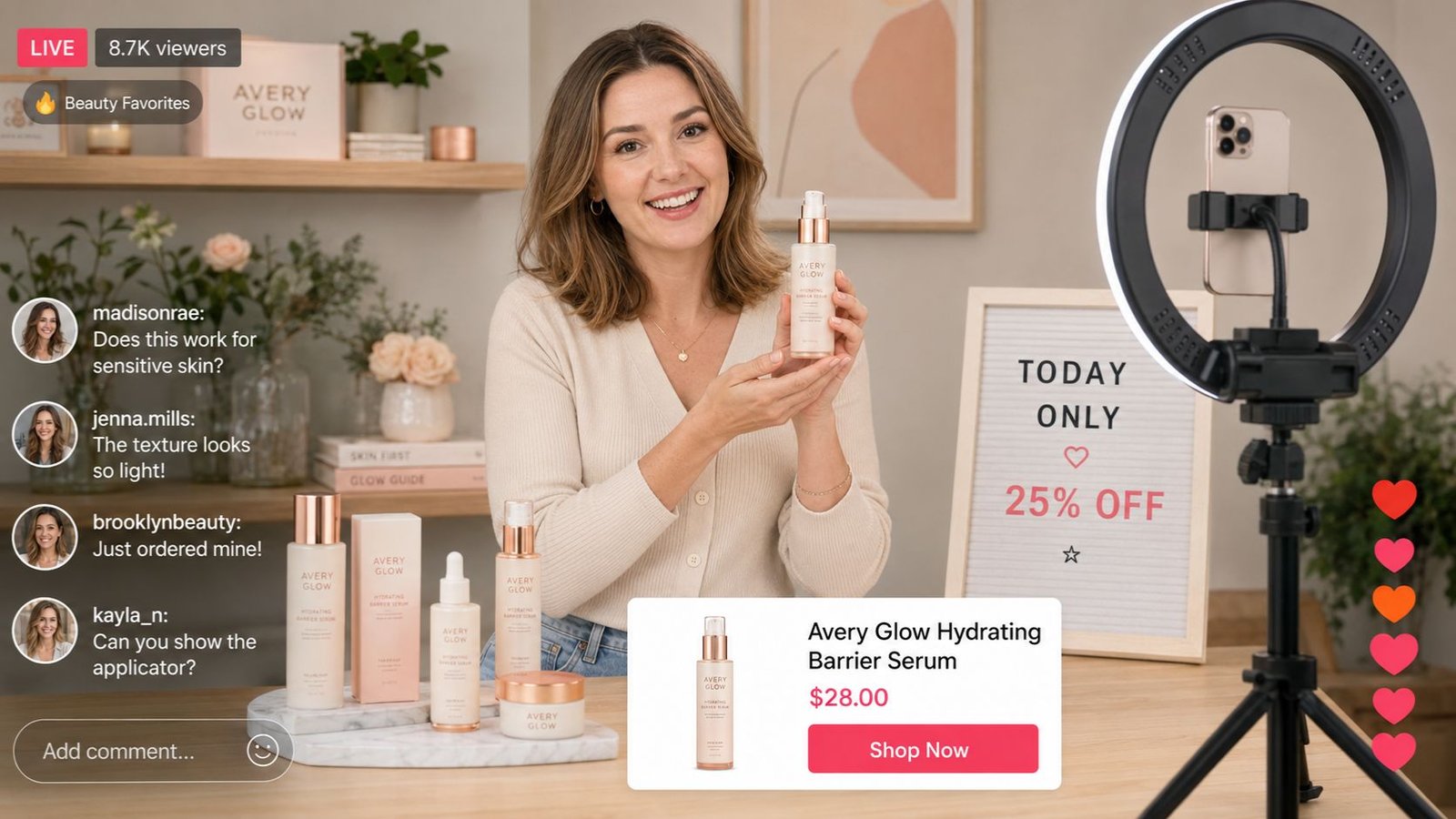
For brands operating in the social commerce space, these dynamics directly shape how to approach TikTok Shop setup, campaign planning, creator partnerships and product listing optimization. Getting the foundation right—from shop configuration and content strategy to TikTok Ads management and campaign optimization—determines how effectively each channel performs and how quickly you can identify winners and scale them responsibly.
RGC Mkt specializes in exactly this segment, offering services that cover the full social commerce cycle: Initial TikTok Shop Setup, TikTok Ads Management, Marketplace Management, Product Listing Optimization, Creator and Influencer Outreach, Campaign Planning and Campaign Optimization. Whether you are evaluating TikTok Shop vs dropshipping for the first time or looking to improve the performance of an existing store, the team at RGC Mkt can help you build a strategy grounded in real data and tested execution. Reach out to the RGC Mkt team for a consultation or audit and get a clearer picture of where your next investment should go.