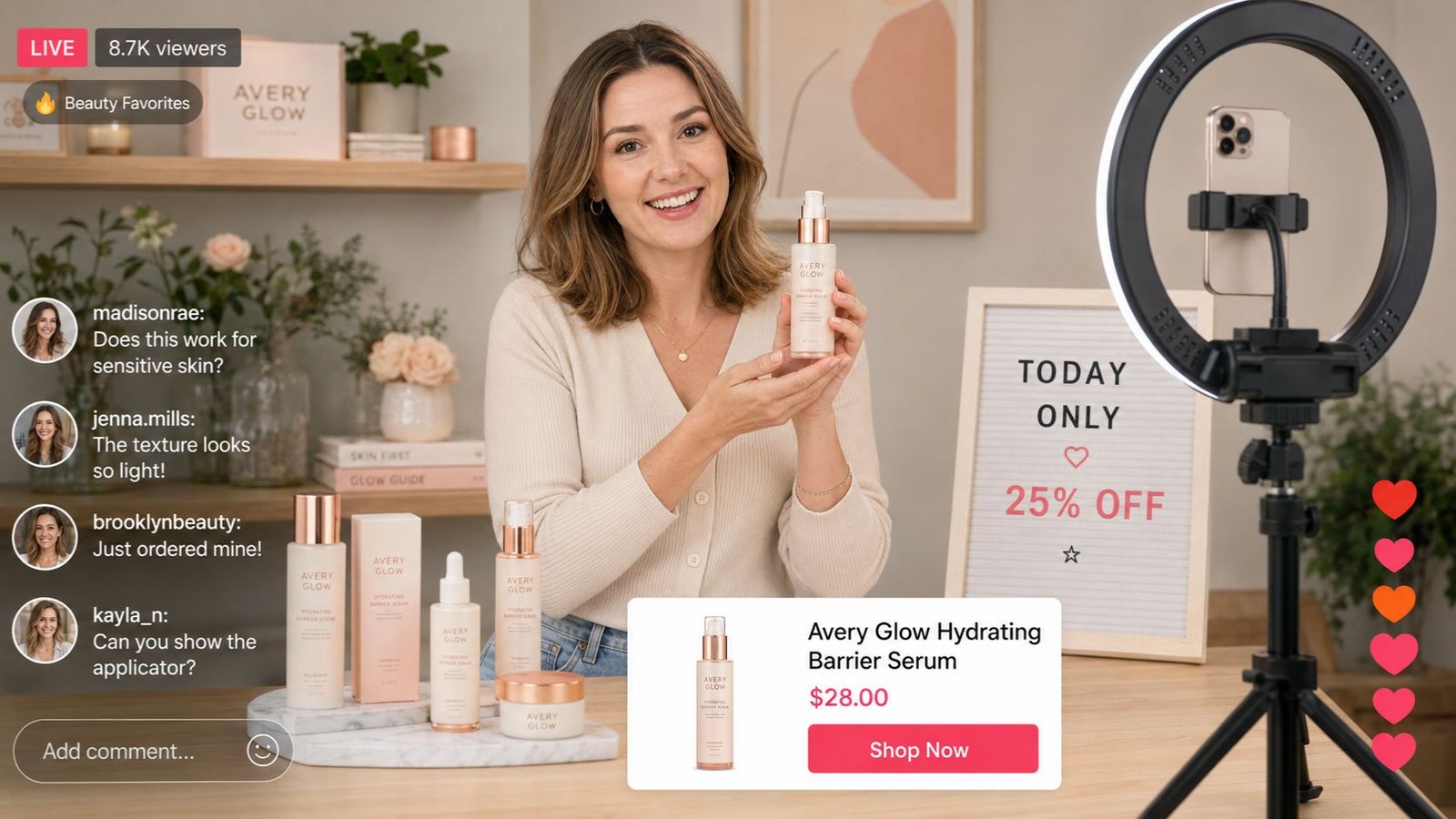


Most ecommerce brands approach TikTok Shop the same way they approached every channel before it: as a place to generate direct sales and measure ROAS. That framing misses the larger opportunity. When structured correctly, TikTok Shop functions as a distribution engine that produces organic reach, creator-generated content, and cross-channel assets simultaneously, all while driving revenue on the platform itself.
This playbook covers the strategic shift behind that thinking and then works through the tactical steps that make it real: listing optimization, creator qualification, content repurposing, and the automation and metrics needed to sustain it at scale. Whether you are launching a new TikTok Shop or trying to extract more value from an existing one, the approach here applies.
Why TikTok Shop is more than a revenue channel
The default metric for TikTok Shop is revenue, and that makes sense on the surface. But the brands generating the most total value from the platform are measuring something broader. TikTok Shop creates organic reach at a volume that few paid channels can match, and every creator video attached to your product is a content asset that can work far beyond the platform itself.
Consider what a single successful creator post actually produces: a sale on TikTok Shop, a piece of UGC that can become a Meta ad creative, a lifestyle image for your Amazon product detail page, and a social proof signal that builds trust with new audiences. One anonymized brand used this approach to drive multi-million dollar sales on the platform while simultaneously building a creative library that fueled paid campaigns on Meta. Another product reached six-figure units sold and became the primary source of creative assets across email and Amazon listings.
Evaluating TikTok Shop only by its direct ROAS ignores that value entirely. The platform generates audience signals, engagement data, and content velocity that improve performance in every channel it touches. That is the distribution engine framing: TikTok Shop is not a checkout button, it is a system for producing assets and demand at scale.
Optimize your TikTok Shop listing for discovery and conversion
Before creator outreach or paid amplification can work, the listing itself needs to be ready. TikTok Shop uses listing quality as an internal signal that affects visibility and influences whether creators are willing to promote a product. A weak listing produces weak results at every stage downstream.
Start with visuals. Images should clearly show the product form, flavor or variant (where applicable), key ingredients or materials, and a message directed at the target audience. Think of each image as an ad unit that needs to communicate benefit before the shopper reads a single word. Copy should follow the same logic: lead with the primary benefit, use bullet points for features, and keep the description scannable on mobile.
Social proof needs to be in place before you reach out to creators. Import existing reviews from your website and other marketplaces to populate the listing from day one. A listing with strong review volume signals credibility to both the algorithm and the creators evaluating whether to promote you. Adding product variations, such as a two-pack alongside the single unit, also increases perceived sales volume and can improve average order value as shoppers choose the bundle.
Finally, check your shop badges. Shipping speed, return policy, and fulfillment details all contribute to platform scoring and buyer trust. These are often overlooked but they directly affect whether a listing ranks and converts after a creator drives traffic to it.
How to find and qualify creators at scale
The most common mistake in creator outreach is sending samples to a large list without a qualification process. The result is wasted inventory, low-quality content, and posts that generate no meaningful views. A structured approach changes the economics entirely.
Pre-qualification filters should come before any sample ships. Define minimum thresholds for the creators you target: follower count within a relevant niche, average views per video over the last 30 to 60 days, audience fit based on category and demographics, and content style alignment with your brand. A simple rubric with four or five criteria eliminates the majority of low-probability outreach before it starts.
Post-qualification matters just as much. Once a creator posts, track views, engagement rate, watch time, and whether the video drove clicks or conversions on your listing. Creators who meet your post-performance thresholds move into a higher-priority tier for future campaigns, ongoing affiliate arrangements, or paid amplification. Those who do not provide useful data for refining the rubric.
Automation tools make this workflow scalable. Manual batch invites through the native interface are slow and lack the tracking infrastructure needed to manage a meaningful creator program. Use automation for discovery, outreach sequencing, and performance logging so your team can focus on relationship management and content evaluation rather than spreadsheet maintenance.
Turn single creator videos into cross-channel revenue assets
A creator video that performs well on TikTok Shop has already proven something important: it communicates the product clearly, it holds attention, and it drives purchase intent. That proof transfers. The question is whether your team has a system to capture it and distribute it.
Identify winning content by monitoring views, watch time, and conversion signals within the first 48 to 72 hours after posting. A video with strong organic performance is your signal to move quickly. Request usage rights from the creator before repurposing anything. Rights negotiation should be part of your creator brief from the start, not an afterthought once a video takes off.
Once you have rights secured, the repurposing workflow is straightforward. A 60-second product demo clip can be cut into a 15-second Meta ad. A strong product-in-use frame becomes an Amazon PDP image. A testimonial segment works as an email creative. A landing page hero built around creator content typically outperforms brand-produced assets because it carries authentic social proof into a high-intent environment.
For top-performing creators, white-listing expands reach further. Running paid ads through a creator’s account keeps the authenticity of the original post while giving you the targeting precision of a paid campaign. This combination, organic proof plus paid distribution, is where TikTok Shop content compounds into meaningful cross-channel lift.
Automation, metrics and the new way to measure TikTok Shop success
Measuring TikTok Shop purely by direct sales understates its contribution and leads to underinvestment. A broader KPI framework captures the distribution value the platform generates and makes the case for continued scaling to stakeholders.
A practical set of metrics includes: number of creator videos posted per month, number of content assets repurposed across channels, sample-to-post rate, incremental lift in Amazon conversion rate attributed to creator content, changes in AOV linked to bundle variations, and total organic reach generated through the affiliate creator program. These metrics tell a more complete story than ROAS alone.
Measuring cross-channel lift requires intentional experimental design. A straightforward approach is an A/B test on your Amazon product detail page: one version uses repurposed creator video assets and one does not. The difference in conversion rate over a defined period provides a defensible estimate of the downstream value TikTok Shop content creates. Similar experiments can be run on Meta with creator content versus brand-produced creative to isolate the UGC performance lift.
Automation supports both the execution and the reporting layer. Tools that handle creator discovery, outreach sequencing, and performance tracking reduce manual workload and create consistent data structures that make reporting faster. Establish a reporting cadence, weekly for active campaigns and monthly for strategic review, so that the distribution metrics stay visible to the teams managing Amazon, Meta, and retail in parallel.
Conclusion
The core shift this playbook describes is straightforward: TikTok Shop is most valuable when treated as a distribution and content-generation system rather than a standalone sales channel. Listing quality determines whether that system can start. Creator qualification determines how efficiently it scales. Content repurposing determines how far each asset travels. And the right metrics determine whether your team can see the full return and make the case to invest further.
RGC Mkt works within the TikTok Shop and social commerce ecosystem, supporting product-based brands across the steps covered here, from initial TikTok Shop setup and product listing optimization to creator and influencer outreach and ongoing campaign management. The services are designed to operationalize the distribution engine model rather than treat the platform as an isolated checkout experience.
If you are looking to build or improve your TikTok Shop strategy, including creator partnerships, listing optimization, or cross-channel content repurposing, reach out to the RGC Mkt team to discuss what the right approach looks like for your brand.