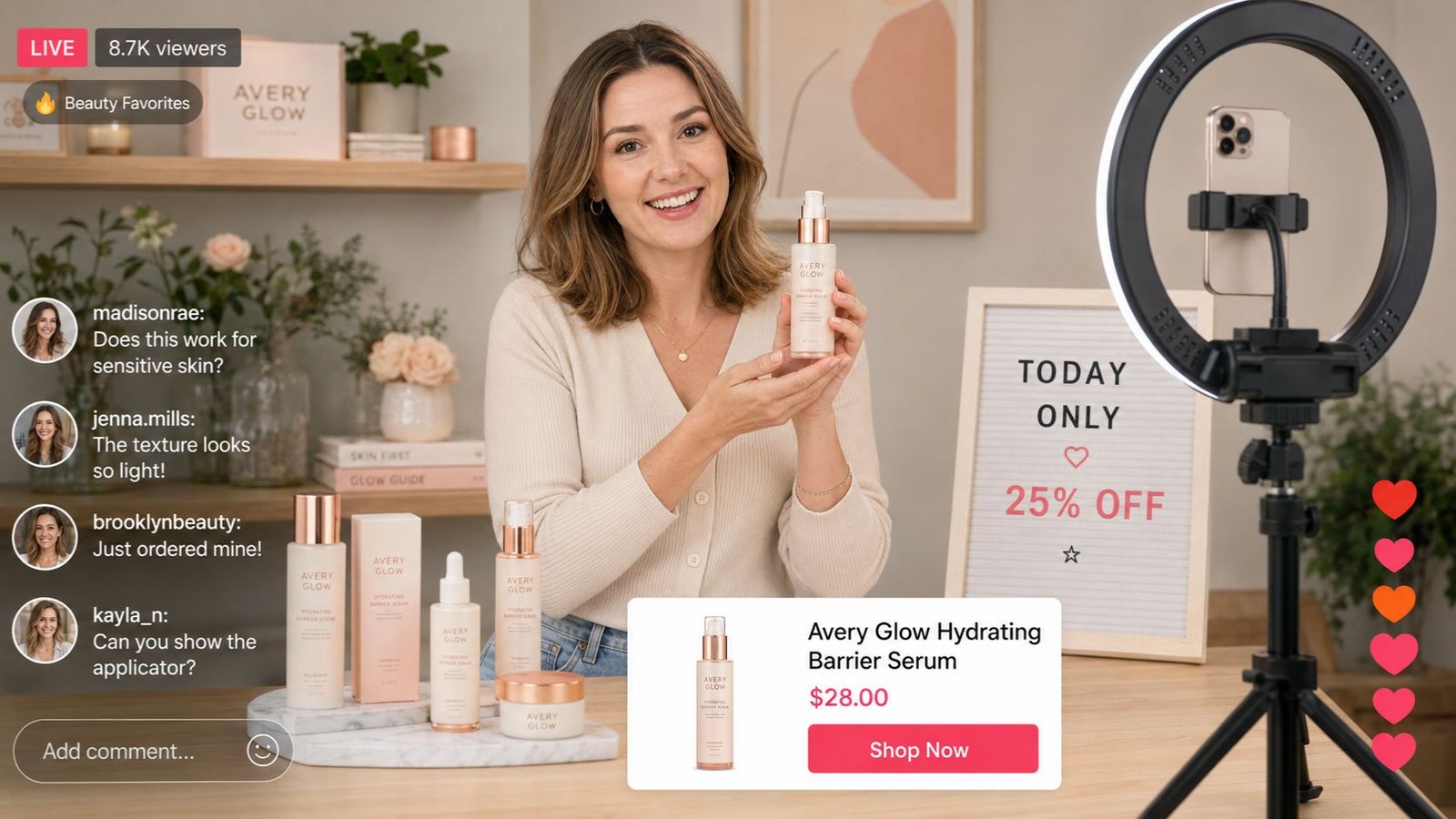


Most product launches start with a paid ads budget, a landing page, and the hope that traffic converts. TikTok Shop flips that model entirely. Instead of pulling users off-platform to complete a purchase, it places the checkout inside the content experience itself, which changes the conversion math in a meaningful way.
The path to $100,000 per month on TikTok Shop is not about going viral once. It is about building a repeatable system: the right product for the right audience, a distribution engine powered by affiliate creators, and a content strategy aligned with how the algorithm actually works. This guide walks through each layer of that system in practical terms.
Why TikTok Shop is the best channel to launch a product
The single biggest structural advantage of TikTok Shop is native checkout. When a viewer watches a product demo and taps to buy, the entire transaction happens without leaving the app. That reduction in friction directly improves conversion rate compared to formats that require users to click through to an external website, remember the brand, and return later to purchase.
TikTok’s algorithm also operates differently from most platforms. Content is not distributed based primarily on follower count. Instead, the platform tests new content with a small initial audience, evaluates engagement signals from that batch, and then decides whether to push the video to progressively larger pools. This means a well-made product video from a brand with zero followers can still reach thousands of potential buyers if early engagement is strong.
The built-in affiliate marketplace adds another layer of advantage. Brands can recruit creators directly through the platform and pay commissions only on confirmed sales, which makes it possible to scale distribution without committing to large upfront content budgets. Categories like beauty and personal care have proven especially strong in this environment, partly because the products are inherently visual and the results are easy to demonstrate in a short-form format.
Choosing the right product: ICP, price point and packaging
Product selection is where most brands either accelerate or stall. A product designed for “everyone” typically converts worse than one built for a clearly defined audience. Narrowing the ICP (ideal customer profile) to a specific segment, such as teens looking for a skincare routine, makes every creative decision easier: the hook, the visual style, the language, and the packaging aesthetic all snap into focus around one person’s needs.
Price point is equally strategic. Impulse purchases happen when the perceived value exceeds the friction of deciding. Keeping the entry-level product under $40 shortens the conversion cycle significantly on a platform where the average browsing session is built around fast, passive scrolling. At that price, the viewer does not need to research competitors or sleep on the decision.
Camera-friendliness is a practical filter that often gets overlooked. The product needs to demonstrate visible results within seconds of screen time. A skincare product that shows a before-and-after, a supplement that dissolves visibly in water, or a tool that produces an immediate effect all translate naturally to short-form content. Packaging and aesthetic should also align with the subculture the ICP belongs to, because the visual identity of the product becomes part of the content itself when creators hold it on camera.
Before scaling any product, run a structured validation test: three creative directions, a small group of creator partners, and two weeks of real performance data. That data tells you whether the product-market fit is strong enough to justify broader distribution investment.
Affiliate distribution: onboarding creators for scale
The affiliate marketplace inside TikTok Shop allows brands to list products, set commission rates, and let creators apply to promote them. When this system is set up correctly and maintained actively, affiliate creators can drive the large majority of sales volume, because the distribution scales with the creator network rather than with the brand’s own content output.
Commission structure should be attractive enough to motivate creators who have real audiences in your ICP. A flat rate that feels low gives creators no incentive to prioritize your product over other offers in their feed. Start with a competitive rate, monitor which creator profiles generate actual conversions, and adjust outreach toward that profile. Creator outreach should be specific: identify creators whose existing content already resonates with your target customer, not just creators with large follower counts.
Provide a clear creative brief with every affiliate relationship. The brief does not need to be restrictive, but it should define the product’s core hook, the key result to demonstrate, and any claims to avoid. Quality control matters: a piece of content that misrepresents the product or violates platform disclosure requirements creates risk for the brand. Require authentic usage and transparent labeling for all sponsored or affiliate posts.
- Define the commission rate before outreach begins so the offer is clear from the first message.
- Prioritize audience fit over creator size when selecting partners.
- Track performance by creator to identify which profiles and content styles drive the highest conversion rate.
- Iterate the creative brief based on what is actually working, not based on assumptions.
Content strategy to drive virality and conversion
Understanding the algorithm cascade is the foundation of any TikTok content strategy. Every new video enters a test phase where it is served to a small initial batch of viewers, roughly a few hundred accounts, and the platform evaluates how that group interacts with it. Strong watch time, shares, and saves push the content into the next distribution tier. Weak signals stop the video there. This means that the first three seconds of any piece of content are disproportionately important.
The most effective content format for product conversion is demonstrative and fast. Open with a problem statement the viewer recognizes, cut to the product in use, show a visible result, and present a clear purchase cue. That structure works across demo videos, testimonials, and before-and-after formats. Trend-adapted hooks can increase early engagement by borrowing from audio or visual patterns already performing well on the platform, but the core demonstrative logic should remain intact.
A practical weekly rhythm might look like this: test three different hooks against the same core product story, let performance data run for five to seven days, identify the hook with the best completion rate and engagement, and route that winning format back to affiliate creators as a recommended creative direction. This creates a feedback loop between organic performance data and affiliate content quality.
- Hook formats that tend to perform well: problem-first opening, surprising result reveal, relatable situation the ICP recognizes, direct demonstration with no setup.
- Repurpose top-performing affiliate content as input for paid amplification once organic signals are validated.
- Keep videos short and outcome-focused. Viewers are not watching to be educated; they are deciding whether to buy in under 15 seconds.
Monetization and retention: subscriptions, pricing and optimization
The impulse buy gets a customer in the door. The subscription keeps them. For replenishable products like skincare, supplements, or consumables, offering a subscription option at checkout converts a one-time transaction into recurring revenue. The economics shift significantly when a percentage of buyers lock into monthly deliveries, because the cost to acquire them is paid once but the revenue continues.
Pricing architecture for retention should offer a meaningful incentive for subscription sign-up without eroding margins to the point of unprofitability. A modest discount on the subscription tier, a bundle that increases perceived value, or a first-order offer that lowers the barrier to trial can all work. The key is testing combinations rather than assuming one pricing model fits all customer segments or product categories.
Shop optimization is an ongoing process, not a launch-day task. Product listings should use clear, search-relevant language; images should reflect the content aesthetic so that the transition from video to product page feels consistent; and shop reviews should be actively managed. Monitor the metrics that matter: conversion rate by listing, average order value, return rate, and affiliate performance by creator. Use that data to run campaign optimization cycles rather than leaving the original setup untouched.
A simple first-30-days optimization checklist after launch:
- Audit product listing titles and descriptions for clarity and keyword relevance.
- Review affiliate content quality and pull underperforming creators from active promotion.
- Test at least two pricing or bundle variations.
- Set up or promote the subscription option if the product is replenishable.
- Identify the top two performing creatives and scale distribution through those formats.
Conclusion
A TikTok Shop growth plan that reaches $100,000 per month is built on three interdependent decisions: choosing a product with a focused ICP and an impulse-buy price point below $40, scaling distribution through a well-managed affiliate creator program, and producing content that works with the platform’s algorithm rather than against it. None of these elements operates in isolation. A strong product with weak content reaches no one. Strong content attached to the wrong product converts no one. The system only performs when all three components reinforce each other.
Retention is what turns a growth spike into a sustainable business. Adding subscription options for replenishable products, optimizing pricing for lifetime value, and running continuous campaign optimization keep the economics working as the brand scales. TikTok Shop setup, product listing optimization, and ongoing shop optimization are not one-time tasks; they are ongoing levers that compound over time.
RGC Mkt specializes in the TikTok Shop and social commerce segment, working with product-based businesses, ecommerce brands, and retailers that want to build real traction on the platform. Their services cover the full operational scope that a TikTok Shop growth plan requires: from initial TikTok Shop setup and product listing optimization to creator and influencer outreach, affiliate creator management, TikTok content management, TikTok Ads Management, and campaign planning and optimization. If you are ready to evaluate your TikTok Shop growth strategy and want a team with direct experience in this channel, reach out to the RGC Mkt team to get started.