

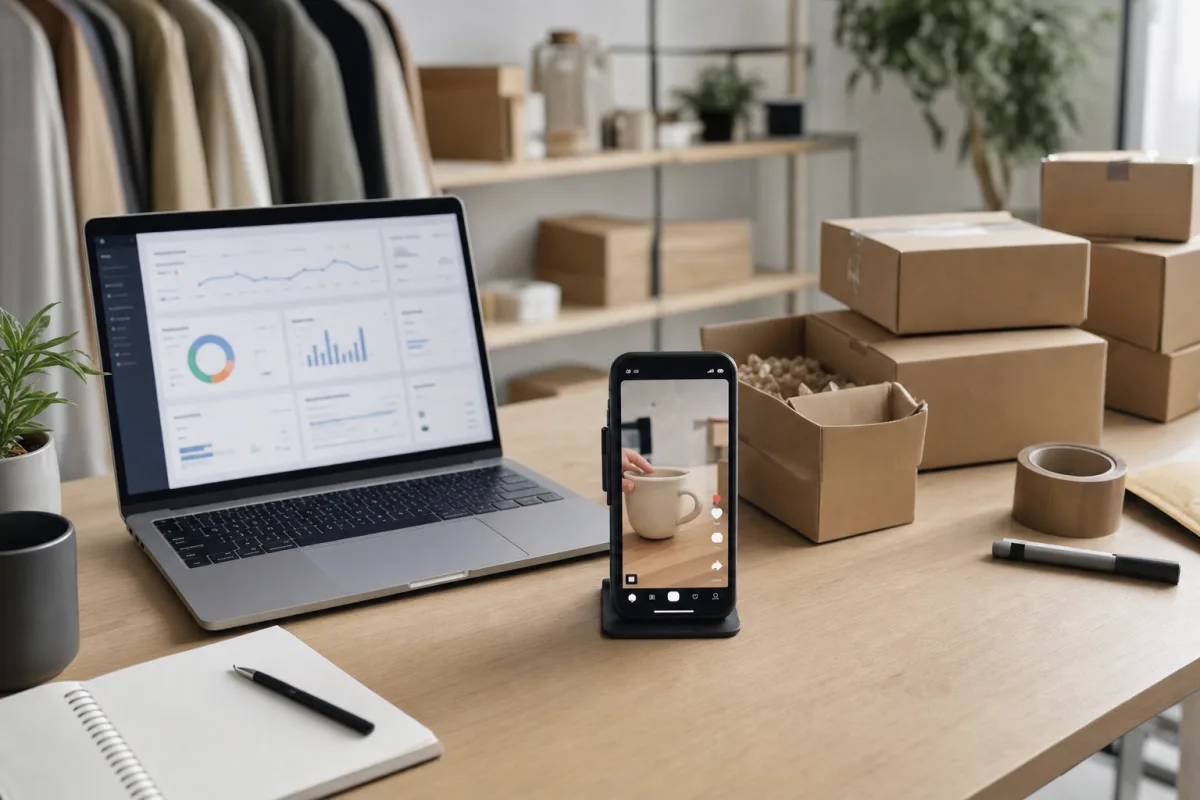
TikTok Shop has fundamentally changed how e-commerce brands discover, validate, and convert online customers. Instead of spending capital driving paid top-of-funnel traffic from a social feed to an external website, sellers can now close the entire transaction directly inside the app, at the exact moment a short-form video or live stream captures buying intent. That native compression of the sales funnel creates a powerful opportunity for dropshippers and product marketers who want to test new product concepts rapidly without committing capital to upfront bulk inventory.
The primary operational challenge is execution speed. Product trends on TikTok can spike, saturate, and fade within weeks or days. The capacity to identify, list, price, and replace items quickly is the foundational metric of success. This is where automation software like AutoDS integrates into the social commerce workflow. By connecting AutoDS directly to your TikTok Shop Seller Center, you can import catalog listings in minutes, audit unit economics and gross margins before launching campaigns, and scale ad spend strictly behind products that demonstrate positive native conversion signals.
What Is Dropshipping on TikTok Shop?
Dropshipping is a retail fulfillment model where a seller lists a supplier’s inventory, collects customer orders through an active storefront, and purchases the item from the supplier, who then ships the package directly to the end buyer. The seller never physically holds, packages, or manages inventory. The net gross margin represents the difference between the retail price collected from the customer and the landed cost paid to the supplier, minus platform transaction fees and media costs.
TikTok Shop layers a high-density discovery engine on top of this traditional model. Products are featured natively through short-form videos, affiliate creator posts, and live shopping streams.
The user journey flows seamlessly through four key stages:
- Discovery: The user engages with a short-form video or live stream featuring a tagged product.
- Intent: Tapping the native tag opens an in-app product detail overlay instantly.
- Action: A single tap completes the saved native checkout without leaving the app.
- Fulfillment: The order details route automatically to the supplier, who dropships the package directly to the customer.
When compared to running a traditional destination store (such as a standalone Shopify site), TikTok Shop provides massive organic viral distribution that standalone storefronts cannot replicate without immediate ad spend. A single well-engineered video hook can expose a product catalog to tens of thousands of targeted prospective buyers organically.
However, the operational trade-off requires strict compliance. TikTok Shop enforces rigid seller metrics, category approvals, handling time requirements, and buyer protection policies. Furthermore, platform transaction fees and payment processing costs apply to every completed order. Calculating your precise landed costs and operational margins before publishing listings is mandatory to protect overall store profitability.
Why Use AutoDS to Test Products Quickly
AutoDS is a cloud-based dropshipping automation platform that interfaces directly with TikTok Shop. Its primary value proposition for product testing is operational velocity: instead of manually sourcing suppliers, copying product descriptions, formatting image galleries, and building listings one by one, sellers can browse a centralized marketplace, select high-demand items, and push them to TikTok Shop Seller Center as draft listings in a few clicks.
The automated onboarding pipeline moves through four structured steps:
- Marketplace Sourcing: Browse AutoDS curated supplier feeds to identify validated, high-demand items.
- One-Click Draft Push: Send complete product data packages directly to your TikTok Shop Seller Center.
- Listing Optimization: Refine titles, bullet points, gallery images, and pricing templates for native conversion.
- Publish & Sync: Launch the product live on TikTok Shop while AutoDS maintains real-time price and inventory tracking.
Beyond streamlining the catalog import workflow, AutoDS provides integrated research and sourcing tools designed to accelerate hypothesis validation:
- Trending Products Feed: Displays real-time catalog items gaining order momentum across global marketplaces, allowing sellers to align inventory with active platform demand.
- Ad Spy Intelligence: Enables operators to review active video creatives and ad angles across social channels before allocating budget to a new SKU.
- Private-Label & Print-on-Demand (POD): Provides access to customized branding and on-demand manufacturing options for sellers seeking category differentiation.
- Automated Order Fulfillment: Syncs customer shipping details directly to suppliers upon checkout, reducing manual order entry errors.
The primary commercial benefit is rapid hypothesis testing without inventory risk. A seller can list several complementary products in a single afternoon, produce simple short-form video creatives for each, and let real performance data determine which SKUs warrant additional marketing investment.
However, automation speeds up the front-end listing workflow; it does not eliminate supply chain vulnerabilities. Supplier reliability, international shipping carrier variability, and compressed margins caused by high shipping fees remain real operational risks that require continuous management.
Step-by-Step: Setting Up AutoDS with Your TikTok Shop
Setting up an automated integration requires careful configuration to ensure data fields, inventory levels, and tracking numbers sync seamlessly between your TikTok Shop Seller Center and the AutoDS platform.
System Integration Sequence
- Install the Integration App: Log into your TikTok Shop Seller Center, navigate to the app marketplace, and locate the official AutoDS integration app.
- Authorize Store Permissions: Follow the on-screen permission prompts to grant AutoDS access to your store’s catalog management, order processing, and fulfillment APIs.
- Establish Your AutoDS Workspace: Create or sign into your primary AutoDS account and select TikTok Shop as your active sales channel.
- Link Seller Credentials: Confirm that your TikTok Shop store region (e.g., US, UK) matches your primary operating currency and tax configuration inside AutoDS.
- Source Catalog Items: Browse the AutoDS marketplace or import external supplier links using the AutoDS web extension.
- Push Import Drafts: Select Import Draft on targeted SKUs to push product details directly into your TikTok Shop Seller Center draft queue.
- Optimize Listing Data: Open the imported draft inside TikTok Shop Seller Center to customize titles, bullet points, pricing, shipping templates, and category mappings prior to publishing.
AutoDS Feature Mapping vs. Manual Execution
| Workflow Stage | Manual Sourcing & Listing | Automated AutoDS Execution | Operational Advantage |
|---|---|---|---|
| Product Sourcing | Manual web searching across individual supplier sites | Centralized marketplace browsing & trending product feeds | Reduces research time from hours to minutes. |
| Catalog Import | Copy-pasting text, downloading & re-uploading images | One-click automated draft push to Seller Center | Eliminates manual data entry errors. |
| Inventory & Price Sync | Manual inventory checks to prevent out-of-stock orders | Automated real-time price & stock monitoring | Prevents cancellation penalties and policy strikes. |
| Fulfillment Processing | Manual purchase order placement with individual suppliers | Automated order placement & tracking number upload | Meets TikTok Shop’s strict dispatch handling windows. |
Editing the imported draft is a mandatory operational step. Default titles, generic descriptions, and raw supplier images pulled from external feeds rarely align with TikTok Shop’s native content culture or listing quality standards. Taking the time to craft benefit-driven titles, clear feature bullets, and clean image sets directly impacts checkout conversion rates once video traffic hits the product page.
How to Find, Price, and Import Winning Products
Product selection for TikTok Shop dropshipping requires balancing quantitative data with creative judgment. High-converting products generally share four core attributes:
- Healthy Retail Margins: A cost structure that supports paid ad spend, platform transaction fees, and shipping costs while retaining net profit.
- High Visual Demonstration Value: A physical product that shows clear transformation, utility, or novelty within a 3-second short-form video hook.
- Immediate Problem-Solving Angle: A clear value proposition that addresses a daily pain point or triggers impulse buying intent.
- Reliable Supplier Shipping Times: A fulfillment origin capable of meeting TikTok Shop’s mandatory dispatch handling windows (typically 3 business days).
Mastering the Margin Math: Landed Cost & Pricing Formula
Sustained profitability begins with calculating your precise landed cost:
Landed Cost=Supplier Item Cost+Shipping Expense+Estimated Import/Packaging Fees
As a general benchmark, testing retail prices at 1.5× to 2.5× your landed cost provides the necessary margin buffer to absorb platform commission fees (typically 5%–8%), payment processing, paid ad spend, and occasional customer returns or refunds.
For example, if a supplier charges $9.00 for a product and shipping adds $7.00, your total landed cost is $16.00. Testing a retail price point of $29.99 leaves a $13.99 gross margin buffer (46.6%) to absorb advertising customer acquisition costs (CAC) and transaction fees while yielding net profit.
Landed Cost & Pricing Scenarios
| Product Category | Supplier Cost | Shipping Fee | Landed Cost | Target Retail Price | Retail Multiplier | Gross Margin Buffer |
|---|---|---|---|---|---|---|
| Personal Care Tool | $4.50 | $5.00 | $9.50 | $24.99 | 2.63× | $15.49 (62%) |
| Home Utility Gadget | $9.00 | $7.00 | $16.00 | $34.99 | 2.19× | $18.99 (54%) |
| Ergonomic Desk Accessory | $14.00 | $10.00 | $24.00 | $49.99 | 2.08× | $25.99 (52%) |
Thin profit margins caused by high shipping costs relative to item value are the leading reason new TikTok Shop sellers fail to achieve profitability. Always verify carrier shipping origin, estimated delivery windows, and tracking reliability before publishing a new listing.
Scaling, Logistics Risks, and Best Practices for TikTok Shop
When a dropshipped product begins converting consistently, the dropshipping model should be viewed as a validation signal, not a permanent operational end-state. Once order volume stabilizes, sellers should transition winning SKUs into more robust fulfillment models to protect account health.
The scaling trajectory moves through three structural phases:
- Phase 1 (AutoDS Dropshipping): Rapid product testing and initial conversion validation with zero upfront inventory investment.
- Phase 2 (Bulk Sourcing & Private Labeling): Negotiating volume manufacturing discounts and custom branded packaging for proven winners.
- Phase 3 (Domestic 3PL Fulfillment): Staging bulk inventory in domestic regional warehouses to achieve 2-to-3-day delivery times.
Managing Operational & Logistics Risks
- Managing Supplier Vulnerabilities: Relying on a single supplier for a winning SKU creates significant business risk. If that supplier experiences stockouts, raises prices, or delays dispatch, your store’s Late Dispatch Rate (LDR) will spike, triggering automated TikTok Shop account penalties or listing suppressions. Identify and onboard backup suppliers early.
- Transitioning to Domestic 3PL Fulfillment: Once a SKU achieves consistent daily volume, negotiate bulk pricing with manufacturers and ship inventory to a domestic 3rd Party Logistics (3PL) warehouse. Domestic fulfillment drastically cuts delivery times from 10–14 days down to 2–4 days, reducing refund requests, improving customer review scores, and boosting TikTok Shop Seller Performance Scores (SPS).
- Leveraging Creator Affiliate Outreach: While self-produced short-form videos validate initial demand at low cost, partnering with micro-creators through TikTok Shop’s affiliate showcase compresses the growth curve. Supplying creators with product samples allows you to generate dozens of unique video angles simultaneously, expanding reach without increasing internal content production overhead.
- Monitoring Core Performance Metrics: Track four key operational metrics daily:
- Late Dispatch Rate (LDR): Must remain below platform thresholds (typically <2–3%) to avoid account strikes.
- Order Defect Rate (ODR): Tracks buyer cancellations, returns, and negative reviews driven by product quality or shipping delays.
- Customer Acquisition Cost (CAC): Total ad spend divided by total orders to evaluate ad efficiency relative to gross margin.
- Return on Ad Spend (ROAS): Evaluates paid campaign performance across TikTok Ads Manager and boosted Spark Ads.
Conclusion
TikTok Shop dropshipping powered by AutoDS gives e-commerce operators a systematic framework for rapid product discovery and market validation: establish the automated store integration, source trending items, import optimized drafts, configure realistic margin multipliers, and allow real buyer behavior to guide capital allocation. This streamlined workflow eliminates the risk of holding unsold bulk inventory and significantly compresses the timeline between product ideation and market proof.
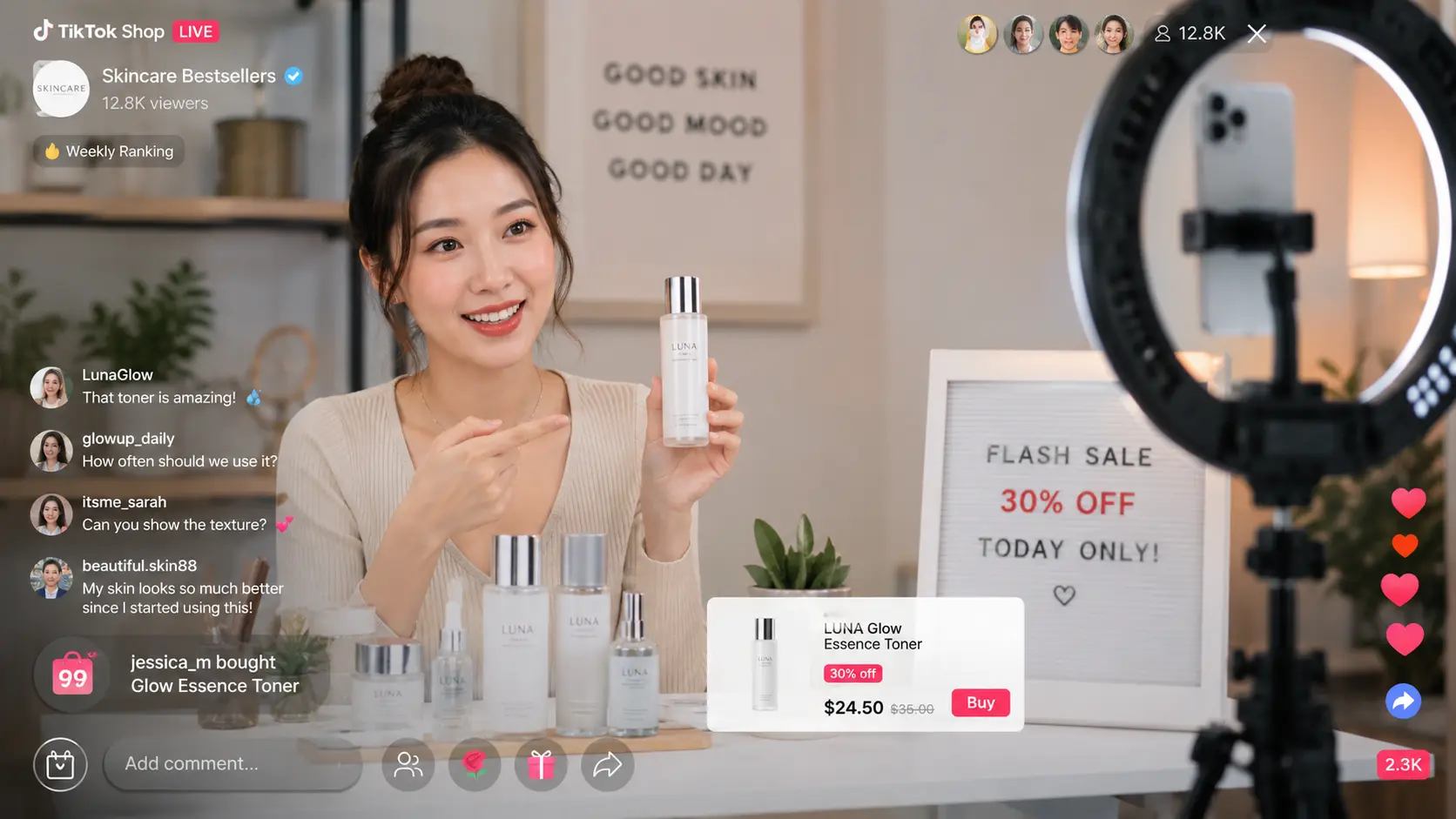
However, executing this strategy at scale requires expertise across multiple operational layers. From initial TikTok Shop account configuration and listing optimization to pricing management, supply chain vetting, paid TikTok Ads management, and creator affiliate outreach, each growth stage adds operational complexity.
RGC Mkt specializes in full-funnel TikTok Shop and social commerce execution for growing brands. Covering services across marketplace management, catalog and pricing optimization, TikTok Ads management, creator/influencer outreach, and multi-channel growth strategy, RGC Mkt provides the strategic guidance and technical infrastructure needed to transition from initial dropship testing to a sustainable, high-margin e-commerce brand. Reach out to the RGC Mkt team today to evaluate your current setup and launch your next growth phase.