


Scaling a TikTok Shop affiliate operation sounds straightforward until platform moderation algorithms ban your primary accounts overnight and the replacement accounts you purchased turn out to be fraudulent. For many affiliate operators, that sudden disruption marks the immediate end of their business. For others, it becomes the pivotal turning point that forces them to replace opportunistic shortcuts with an enterprise-grade, risk-resilient operating system.
This guide documents a real-world social commerce growth arc: a small affiliate team that scaled from a few hundred dollars per week to roughly $50,000 in net profit ($200,000+ Gross Merchandise Value) over three months, survived a sweeping platform ban wave, recovered through a single organically grown handle, and systematically rebuilt their operation with superior creative workflows, account hygiene, and risk management practices.
From Early Momentum to Platform Disruption: The Anatomy of a Ban Wave
The operation began building initial sales traction in late summer, generating modest but positive conversion signals. By early autumn, weekly revenue reached approximately $4,000. Within 14 days, that figure doubled. As winning content hooks began to scale, single-week profits hit $8,000, allowing the month to close with roughly $20,000 in total net profit. Over a three-to-four-month scaling window, cumulative net profit reached approximately $50,000, with total platform GMV exceeding $200,000.
Then, automated platform moderation hit. Mid-season enforcement algorithms executed a sweeping ban wave across the network, immediately terminating multiple high-volume accounts—including the primary handles driving over 80% of total daily revenue.
The operational lifecycle moved through four distinct phases:
- Rapid Scaling Phase: Achieving $50,000 in net profit and $200,000+ in GMV through high-volume UGC content.
- Automated Ban Wave: Automated security sweeps terminate core revenue-generating accounts simultaneously.
- Purchased Account Failure: Attempting quick recovery via third-party bought accounts leads to fraud and secondary bans.
- Systemic Rebuild: Leveraging one organically grown survivor handle to anchor a multi-account, compliant infrastructure.
The immediate operational disruption was severe: video posting ceased, commission payouts were frozen, and the management team was left scrambling for rapid replacement strategies.
The Purchased Account Trap
Seeking a quick recovery, the team purchased pre-farmed, aged accounts from third-party account brokers. This decision created a secondary financial crisis. Multiple purchased accounts were either fraudulent from the outset—where credentials failed upon delivery—or were automatically flagged and terminated within 7 to 14 days of initial activation. Revenue dropped sharply while working capital eroded.
What ultimately saved the enterprise was a single organically grown handle that either survived the automated sweep or was successfully restored through an evidence-backed official appeal. That single handle served as the core foundation for rebuilding, eventually generating the vast majority of subsequent monthly revenue. This trajectory highlights a recurring pattern in social commerce: rapid initial momentum, sudden enforcement disruption, and long-term recovery driven not by shortcuts, but by legitimate assets built correctly from day one.
Account Architecture: Organic Growth vs. Purchased Account Risks
The primary structural lesson from this scaling arc is that organically cultivated accounts vastly outperform purchased accounts in baseline trust, algorithmic reach, and enforcement resilience. Accounts built gradually with consistent posting behavior, authentic usage patterns, verified identity credentials, and clean device profiles are significantly less likely to trigger automated security flags. When platform-wide moderation waves occur, these accounts stand a much higher probability of surviving or securing a successful appeal based on their legitimate history.
Purchased accounts present the exact opposite risk profile. They typically feature inconsistent IP login histories, questionable device fingerprints, unverified identity chains, and synthetic engagement patterns. In this documented case study, accounts acquired from third-party vendors were banned within two weeks, while several vendors committed outright fraud by revoking account access post-payment.
Organic vs. Purchased Account Profile
| Operational Variable | Organically Cultivated Accounts | Purchased Third-Party Accounts |
|---|---|---|
| Identity Verification | Direct seller/creator ID verification with matching payout details. | Unclear ownership chains; unverified or synthetic ID records. |
| Device & IP Profile | Single residential IP; consistent mobile device fingerprint. | Frequent proxy jumps; flagged data center IP histories. |
| Algorithmic Trust Score | High baseline trust; gradual, natural posting volume ramps. | Low trust score; bulk activation triggers immediate security reviews. |
| Ban Wave Survival Rate | High survival rate; strong basis for legal/official appeals. | Extremely low survival rate; automatic appeal rejections. |
| Capital Efficiency | Low monetary cost; built through structured daily effort. | High upfront purchase costs; risk of vendor fraud and loss of capital. |
Pre-Activation Account Hygiene Framework
- Identity & Credential Audit: Verify that the original registration email, phone number, and ID credentials match the active account user exactly.
- Historical Activity Review: Request full creation history, prior IP login records, and historical posting activity before deploying commercial links.
- Low-Volume Warm-Up Phase: Execute small, non-promotional video posts for 7 to 14 days to establish baseline account activity before tagging commercial products.
- Staggered Multi-Account Activation: Space out the activation of new accounts across different days and devices to avoid triggering bulk-activity detection.
- Gradual Posting Velocity: Increase posting volume incrementally (e.g., moving from 1 post/day to 3 posts/day) rather than launching with high content volume immediately.
Treat every creator handle as a valuable digital asset that must be cultivated methodically, rather than a disposable commodity to be replaced.
Content Engineering: UGC Formats, Cadence, and Hook Iteration
The primary content format driving conversions across this growth arc was on-camera User-Generated Content (UGC), specifically authentic face-to-camera video demos where a real person presents, unboxes, or reacts to a physical product. This format performs exceptionally well on TikTok Shop because it mirrors native organic content on the For You Page (FYP). Genuine human authenticity builds immediate trust, and trust dramatically shortens the path to checkout.
While AI-generated avatars and synthetic voiceovers are worth testing as secondary experimental assets, they lack the human connection necessary to convert cold traffic consistently. Synthetic content should never be relied upon as a full replacement for authentic creator-led video production.
Optimizing Posting Cadence
Posting cadence serves as a direct operational lever for algorithmic distribution. Escalating content frequency from 2 videos per cycle to 4+ videos per cycle accelerated both audience discovery and creative data collection. Higher posting volume yields more data points regarding viewer drop-off times, click-through rates, and conversion intent, enabling faster creative optimization.
The Systematic Creative Iteration Workflow
Rather than attempting to invent completely new visual concepts every week, top-performing teams utilize a systematic creative iteration loop centered on winning hooks:
- Identify Winning Baselines: Analyze weekly performance data to isolate the 1 or 2 video concepts demonstrating the highest Click-Through Rate (CTR) and Conversion Rate (CVR).
- Engineer Hook Variations: Script 3 to 4 unique opening hooks (0–3 seconds) for the winning concept—varying the visual trigger, verbal question, or text overlay.
- Execute Parallel Distribution: Publish all hook variations across active accounts within the same promotional cycle.
- Evaluate Micro-Metrics: Measure performance at the specific hook level (view-through rate past 3 seconds) and conversion level, rather than tracking total view counts alone.
- Prune & Double Down: Pause underperforming hook variations and allocate additional production resources behind the top-performing angle.
- Cycle Progression: Repeat the iteration process weekly using the newly established winning creative baseline.
Strictly avoid deceptive product claims or exaggerated efficacy statements in any creative asset. Misleading content not only triggers automated account moderation strikes but also drives high product return rates that destroy net profit margins.
Operational Resilience: Multi-Account Architecture and Risk Mitigation
Beyond creative execution, long-term business stability requires robust operational infrastructure. A frequent bottleneck in affiliate scaling is supplier incompatibility: many suppliers cannot support rapid scaling due to geographic fulfillment restrictions, inventory constraints, or platform policy requirements. Discovering supplier limitations after a campaign goes viral leads directly to shipping delays, buyer complaints, and severe account health strikes.
Vet suppliers thoroughly before launching product campaigns. Confirm that they maintain adequate domestic inventory, fulfill orders within mandatory platform dispatch windows (typically under 3 business days), and maintain a documented track record of low defect rates. Always maintain comprehensive transaction records, invoices, and communication logs. If a buyer dispute or platform reimbursement claim arises, clear documentation determines whether you recover capital or absorb a complete loss.
Eliminating Single Points of Failure
Relying on one or two handles means a single platform ban wave can eliminate 100% of your cash flow overnight. A resilient, risk-mitigated setup includes:
- Minimum 3 Active Validated Accounts: Maintain at least three fully verified accounts actively posting content simultaneously to diversify revenue generation.
- Independent Credentialing: Ensure every account operates with its own distinct login credentials, verified identity details, and clean hardware/IP profiles.
- Staggered Content Scheduling: Avoid posting identical video assets at the exact same time across multiple accounts, which can trigger automated duplicate-content flags.
- Documented Appeals Protocol: Maintain a pre-assembled repository of legal identity documents, supplier invoices, and authorization letters ready for immediate submission upon receiving a policy warning.
As daily sales scale, financial and legal hygiene becomes mandatory. Income tax obligations, corporate registration requirements, and consumer protection compliance vary by jurisdiction. Consult a qualified accounting and legal professional before revenue scales to ensure your corporate infrastructure remains fully compliant.
Performance Tracking and Strategic Transition to Private Labeling
Measuring the correct operational metrics reveals whether an operation is building long-term enterprise value or merely riding a temporary viral trend. The primary metrics requiring daily tracking include:
- Net Weekly Profit: Total earned commissions minus all media spend, production costs, and software expenses (the ultimate metric of operational health).
- Gross Merchandise Value (GMV): Total top-line sales volume driven through tagged product links.
- Click-to-Purchase Conversion Rate (CVR): Percentage of product detail page visitors who complete checkout.
- Cost Per Acquisition (CAC): Total ad spend divided by total orders when running boosted Spark Ads.
- Return on Ad Spend (ROAS): Direct revenue generated relative to paid advertising spend.
High top-line GMV paired with thin net margins signals severe operational risk, whereas stable net profit at moderate GMV reflects a healthy, durable enterprise.
Evaluating Brand Readiness
Once an affiliate operation demonstrates multiple consecutive months of stable net profit and operates a diversified account infrastructure, transitioning into a private-label or brand model becomes a viable growth step. Affiliate scaling builds deep operational knowledge, creative testing data, and category insights that directly de-risk a private-label product launch.
Private-Label Launch Readiness Checklist
- Multi-Month Financial Stability: Demonstrated consistent net profitability over at least 8 to 12 consecutive weeks without relying on a single account.
- Diversified Account Infrastructure: At least 3 fully validated accounts operating smoothly with strong health scores.
- Validated Product Category: Deep data history showing high conversion intent and customer demand within a specific product category.
- Vetted Manufacturing Partners: Direct relationships with verified manufacturers capable of white-labeling products with custom packaging and fast domestic fulfillment.
- Dedicated Testing Capital: Allocated testing budget for custom content production and paid media amplification without risking core operating cash.
- Corporate & Tax Readiness: Proper business entity structures, trademarks, and tax registrations established prior to accepting initial branded orders.
Launching a private-label brand prematurely—before operational and cash flow stability are confirmed—adds unnecessary capital risk. Utilize ongoing affiliate revenue and conversion data to de-risk product development before committing significant capital to bulk inventory.
Conclusion
The trajectory documented in this case study reflects the reality of scaling a TikTok Shop affiliate business: rapid early wins, sudden enforcement setbacks, and ultimate recovery built on legitimate operational foundations. The core takeaways remain consistent: organically cultivated accounts vastly outperform purchased accounts in long-term resilience, systematic creative iteration compounds conversion rates, and operational redundancy across accounts, suppliers, and processes protects the business against sudden platform shifts. Top-line GMV tells only part of the story; consistent net weekly profit is the metric that validates true operational health.

For operators and brands navigating the social commerce ecosystem, managing account hygiene, content production, supplier vetting, TikTok Ads, and compliance frameworks simultaneously can prove overwhelming to execute entirely in-house—especially when policy enforcement events occur.
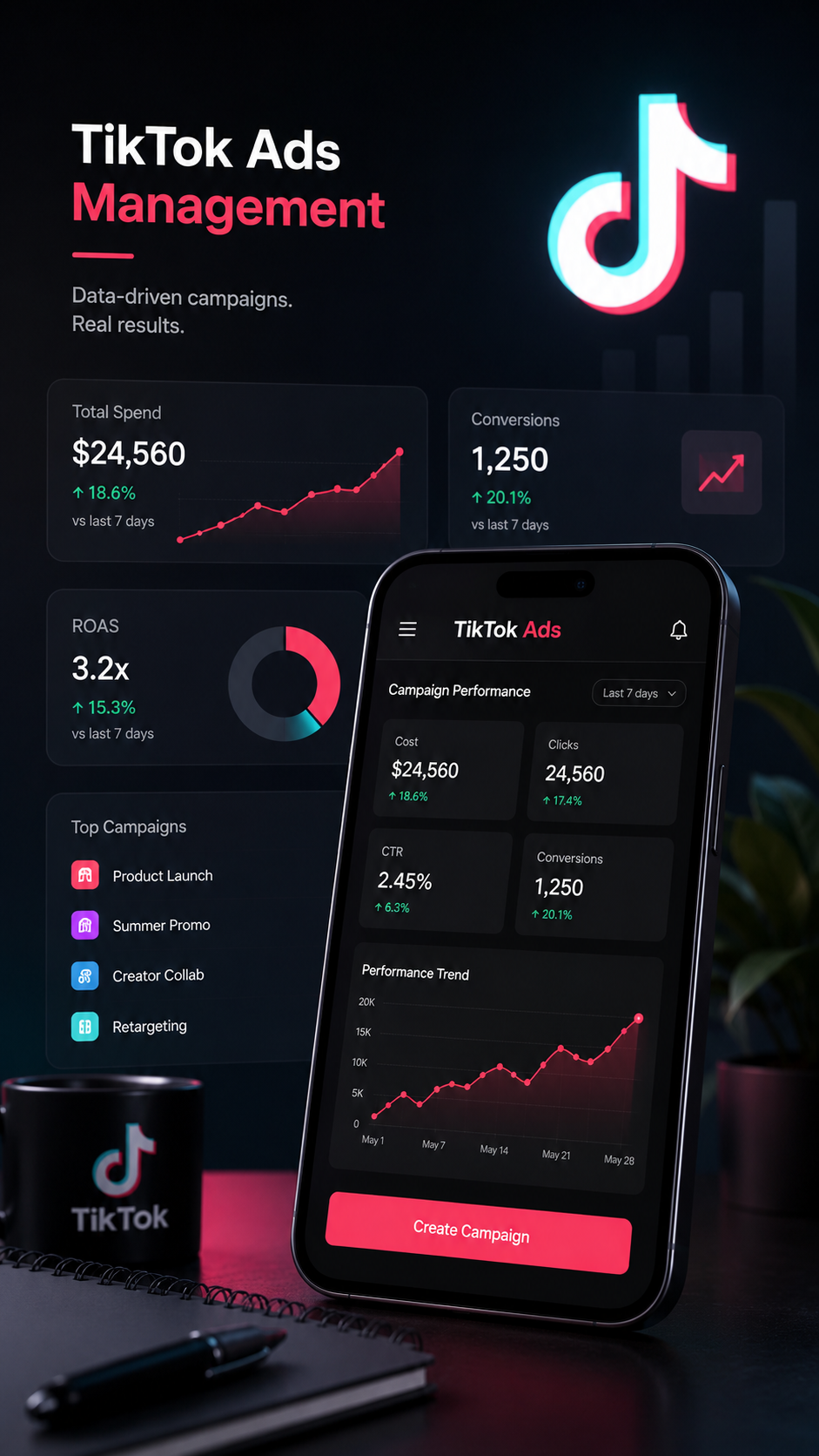
RGC Mkt specializes in full-funnel TikTok Shop management and social commerce growth strategy for brands and high-volume operators. From initial TikTok Shop setup, identity verification, and listing optimization to TikTok Ads management (including Spark Ads execution), creator outreach, and multi-account risk management, RGC Mkt provides the technical infrastructure and strategic execution needed to scale predictably. Reach out to the RGC Mkt team today to evaluate your current operational setup and launch your next growth phase.