


TikTok Shop arrived in the United Kingdom earlier than in most other Western markets, yet its initial adoption curve did not follow the explosive, near-instantaneous trajectory observed in Asian markets. The underlying reasons for this slower ramp-up extend far beyond platform mechanics. They are deeply rooted in how UK consumers think, evaluate digital trust, manage household budgets, and decide whether to purchase products natively inside a social media application. Understanding and bridging that cultural gap is the fundamental first step for any brand seeking to build a profitable, multi-quarter social commerce engine.
This comprehensive operational guide analyzes the unique market conditions that initially slowed TikTok Shop adoption in the UK, details the early measurement and perception challenges that made Return on Investment (ROI) difficult to demonstrate to corporate stakeholders, and explains how advertiser media-buying practices had to pivot from traditional performance channels toward creative-first social selling. Finally, it outlines the critical lessons learned from the platform’s regional rollout history and presents a structured, enterprise-ready playbook for merchants launching or optimizing their UK TikTok Shop setup today.
1. Why the UK Market Was Slower to Embrace Social Commerce: Skepticism and Price Sensitivity
UK consumers approach novel e-commerce platforms with a high baseline of friction and caution. While buyers in other global markets may adopt new shopping channels rapidly and resolve operational friction later, British consumers typically demand clear trust signals, established consumer protections, and reliable shipping guarantees before committing payment details—especially on an app historically perceived as an entertainment feed. This structural skepticism meant that during the initial rollout of TikTok Shop, early product page conversion rates reflected consumer hesitation rather than immediate impulse buying.
The traditional buyer journey moves through deliberate steps:
- Discovery & Consideration: The consumer encounters a product or need via traditional media, search, or social feeds.
- Intent & External Search: The buyer leaves the platform to conduct independent price checks, review aggregations, and marketplace searches.
- Conversion Friction: Final purchase occurs on a direct-to-consumer (DTC) storefront or major online marketplace where buyer protection feels guaranteed.
By contrast, the native UK TikTok Shop model compresses this funnel into a single, high-density experience:
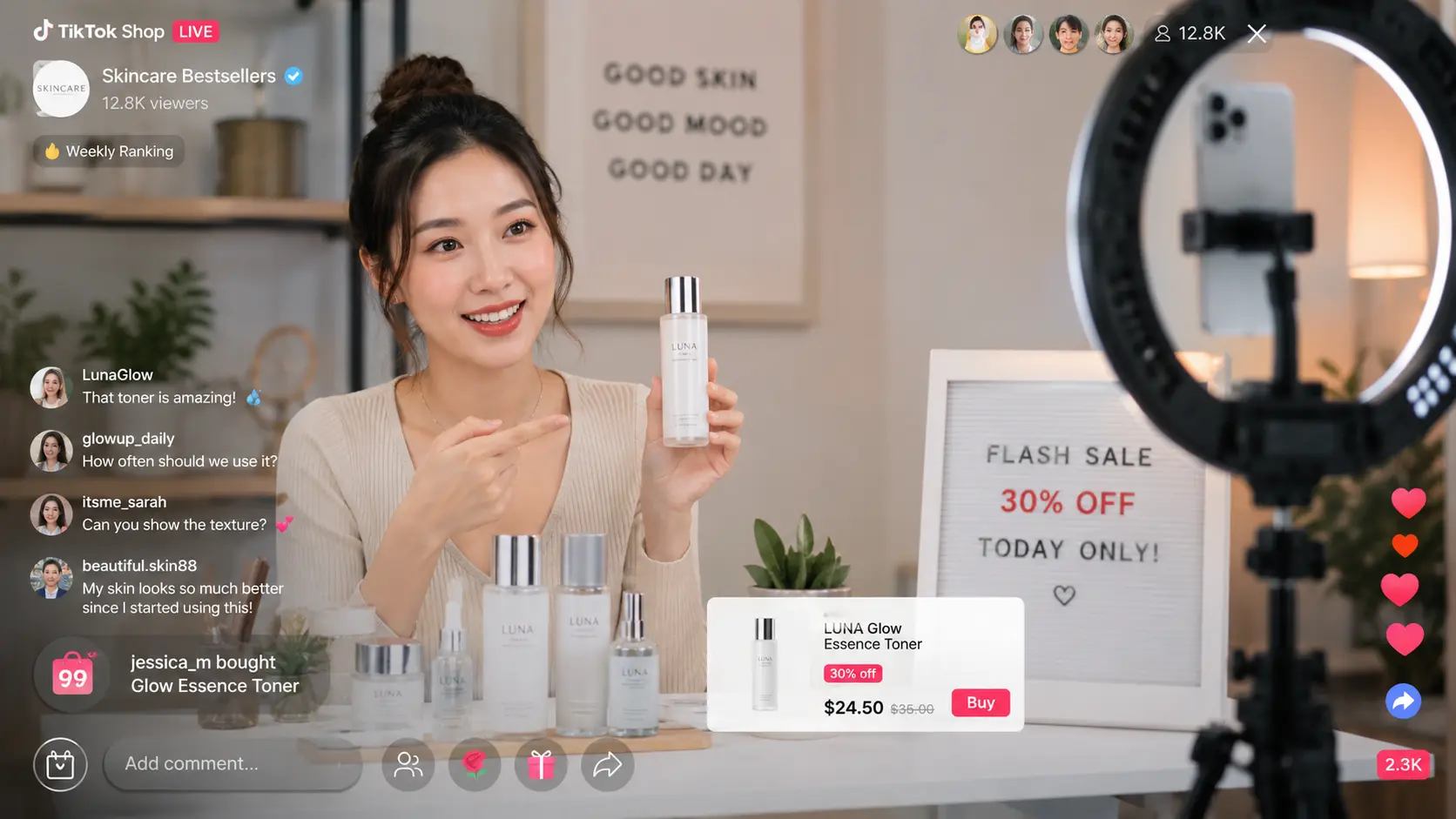
- Native Video Hook: The user encounters an authentic, unscripted short-form video or live stream demo in their feed.
- In-App Value Anchor: Tapping the native product tag reveals a discounted price overlay, flash sale badge, or bundle offer.
- Frictionless Checkout: The transaction completes inside the app via stored payment profiles, bypassing external browser redirects entirely.
Price sensitivity significantly compounds this adoption friction. UK shoppers are highly trained deal-finders who routinely cross-reference product pricing across major marketplaces, direct-to-consumer storefronts, and price comparison tools. As a result, standard full-retail pricing strategies rarely perform well on TikTok Shop UK. A hero product that converts comfortably on a brand’s primary website often stalls inside TikTok Shop simply because the price point fails to match the high-perceived-value expectations of the platform’s audience.
Strategic Adjustments for the UK Consumer
- Channel-Specific Price Anchor Testing: Rather than listing standard MSRPs, deploy entry-level introductory pricing, exclusive TikTok bundles, or multi-buy discounts to overcome initial consumer hesitation.
- Elevated Native Trust Signals: Ensure product detail pages feature prominent shipping speed tags, clear return window policies, and authentic user reviews to counteract platform skepticism.
- Targeted Promotional Offer Structures: Use continuous 48-hour promotional windows or native coupon overlays to create channel-specific value perception.
For brand executives planning a UK market entry, the strategic takeaway is definitive: the United Kingdom will not reward a copy-paste strategy imported from traditional media channels or Asian social commerce markets. Product catalog pricing, promotional architecture, and trust signals must be calibrated specifically for an audience that is simultaneously skeptical of new channels and intensely deal-driven.
2. Overcoming Early Perception and Attribution Blind Spots
For an extended period following its launch, TikTok suffered from a corporate perception gap among senior marketers, who viewed it primarily as a platform for viral dance challenges and short-form comedy rather than a legitimate e-commerce revenue channel. Even when creative content generated massive organic view counts, internal brand stakeholders remained hesitant to allocate core commercial performance budgets to the app.
Attribution tracking gaps severely compounded this investment hesitation. Early TikTok advertising and organic seller features suffered from significant measurement blind spots within standard last-click web analytics tools. An organic video or Spark Ad could generate millions of targeted impressions, yet the non-linear path from that initial ad view to a completed in-app transaction remained largely invisible on traditional direct-to-consumer attribution dashboards. Marketers found themselves caught between strong top-of-funnel engagement metrics and an inability to map those impressions directly to bottom-line revenue.
Legacy analytics models routinely misattribute modern social commerce sales through three distinct blind spots:
- The Last-Click Fallacy: A user views a native TikTok Shop video, does not click immediately, but searches for the brand on Google hours later. Legacy software credits search ads, ignoring the social discovery trigger.
- In-App Data Siloing: Cross-platform cookie restrictions prevent traditional pixel tracking from connecting in-app native video views to off-platform website checkouts.
- Multi-Touch Ignoring: Last-touch models evaluate only the final touchpoint before checkout, failing to account for the multiple organic creator videos that built buying intent over time.
This tracking opacity led many brands to pause or deprioritize TikTok Shop campaigns entirely. The operational logic was simple: if a media team cannot demonstrate clear, deterministic conversion paths, budget remains anchored in established legacy ad channels where last-click attribution models are easily documented. However, this cautious approach caused many brands to forfeit early ground-floor distribution advantages during a critical period of account growth.
Overcoming this challenge requires establishing a multi-touch measurement framework before launching campaigns. Modern brand operators utilize platform-native attribution reporting alongside assisted conversion tracking, post-purchase survey modeling, and branded search volume monitoring to measure top-of-funnel impact. The brands that developed comprehensive attribution models during the channel’s early stages built institutional knowledge that now translates into a distinct competitive advantage.
3. The Structural Shift: From Media-Targeting Precision to Creative-First Commerce
When traditional digital performance teams initially transitioned into TikTok Shop advertising, many brought media-buying frameworks refined on legacy platforms like Meta or Google. Those traditional platforms reward media buyers for executing technical audience targeting tactics: building complex lookalike audiences, stacking interest parameters, and managing bids within structured campaign hierarchies.
TikTok operates on an entirely different algorithmic logic. The For You Page feed is driven primarily by content engagement signals and dynamic creative performance rather than rigid audience targeting parameters. This reality required a fundamental shift in how campaigns are planned, produced, and optimized.
Comparing traditional ad buying with the TikTok commerce engine reveals a fundamental strategic divide:
- Traditional Ad Buying (Audience-Centric): Relies on heavy audience targeting, interest stacking, and static visual assets. Scale is achieved by manipulating bid strategies and audience parameters, leading to rapid ad fatigue and declining ROAS over time.
- TikTok Commerce Engine (Creative-Centric): Operates on broad audience targeting paired with high-volume, native short-form video hooks. The algorithm finds the customer based on content engagement, allowing scalable GMV driven purely by creative production velocity.
As a result, media buying efficiency became subordinate to short-form video production capabilities. Short-form video assets for TikTok Shop cannot simply be repurposed from TV commercials or static social media graphics. To convert, content must feel native to the feed: fast-paced, visually engaging, unscripted, and featuring a strong visual or verbal hook within the first two seconds. Performance marketing teams that failed to adapt their creative workflows found that even heavily funded campaigns underperformed because the underlying ad assets felt out of place.
The Operational Evolution of Agency Workflows
- Creator-Led Content Pipelines: Shifting production away from in-house studios toward decentralized creator affiliate networks who naturally understand platform editing styles and visual trends.
- Rapid Hook Iteration: Scripting and testing 3 to 5 visual hook variations for every winning creative concept to combat ad fatigue and extend asset lifespans.
- Mass Ad Authorization via Spark Ads: Licensing organic creator videos via authorization codes and running paid spend behind assets that demonstrate strong organic conversion rates.
Success on TikTok Shop UK depends less on granular media buying tweaks and far more on creative volume, hook testing, and authentic creator alignment. Brands that built structured creator outreach pipelines gained an immediate distribution advantage as the channel matured.
4. Rollout Pauses and Regional Platform Evolution: Strategic Key Takeaways
TikTok Shop launched in the UK as part of the platform’s early international expansion, making it one of the first test markets outside of Asia to receive native in-app shopping features. That early availability meant merchants had to navigate an evolving platform environment characterized by frequent feature updates, fluctuating seller support infrastructure, and periodic pauses in platform-wide promotional activity as regional mechanics were refined.
These operational shifts created friction for early-adopter brands that had allocated capital to TikTok Shop infrastructure. Agencies and brand teams that set up Seller Center accounts, integrated catalog feeds, and initiated early campaign testing frequently found themselves waiting for platform support frameworks to stabilize. For organizations lacking long-term agility, this intermittent momentum prompted a retreat toward more predictable, established channels.
However, resilient brand operators utilized platform pauses strategically. Rather than halting operations, top-performing teams used these holding periods to refine product catalog listings, optimize inventory packaging, map supplier logistics, and build reserve pipelines of creator content. When full platform functionality and promotional support resumed, these prepared brands deployed campaigns immediately, capturing available market share while competitors scrambled to react.
Modern Affiliate Monetization & Partnership Models
| Partnership Model | Creator Criteria | Compensation Structure | Primary Business Objective |
|---|---|---|---|
| Open Affiliate Collaboration | Broad pool of micro-creators | Pure commission split (10%–20%) | High-volume organic content coverage and baseline testing. |
| Targeted Creator Deals | Proven high-converting creators | Higher commission split + sample priority | Driving consistent monthly GMV on hero catalog SKUs. |
| Hybrid Content Retainers | Top-tier creators / Category experts | Base monthly fee + performance bonus | Securing dedicated video volume and creative licensing rights. |
| Spark Ad Licensing | High-performing organic creator videos | Usage rights fee + scaled ad spend | Boosting validated organic assets via paid ad accounts. |
The broader strategic lesson centers on building operational resilience into your e-commerce model. Social commerce channels, particularly during expansion phases, will experience regulatory updates, platform feature iterations, and policy updates. Brands that engineer agile content pipelines, maintain strict unit economics, and avoid over-relying on a single account architecture are best positioned to navigate platform evolution successfully.
5. The Operational Merchant Playbook: Pricing, Catalog Setup, and Fulfillment
Launching and scaling a successful TikTok Shop operation in the United Kingdom requires rigorous preparation across setup, listing optimization, creative pipelines, and logistics execution. Each step directly impacts how platform algorithms index product listings and how prospective buyers respond to your offers.
The full-funnel merchant rollout moves through six sequential operational phases:
- Seller Setup: Registering Seller Center credentials, linking banking infrastructure, and establishing tax compliance.
- Listing Optimization: Drafting benefit-driven titles, uploading high-contrast gallery imagery, and tagging exact product categories.
- Margin & Price Testing: Configuring flash sale anchors, multi-buy bundles, and native coupon overlays to protect net unit economics.
- Creator Outreach: Recruiting micro- and mid-tier creator affiliates via Open and Targeted Collaborations inside the Affiliate Center.
- Spark Ads Scale: Allocating paid ad spend behind validated, organic creator videos using mass authorization codes.
- Logistics & FBT Execution: Integrating domestic 3PL fulfillment or Fulfilled by TikTok (FBT) infrastructure to guarantee fast dispatch and protect Seller Performance Scores (SPS).
Step 1: Initial TikTok Shop Seller Setup
Begin by registering your corporate seller account correctly inside TikTok Shop Seller Center. Complete identity verification, link business banking credentials, configure tax documentation, and set up native shipping templates. Confirm that payment processing pathways and return management workflows are fully operational before driving public video traffic to your store.
Step 2: Product Listing Optimization (PLO)
Draft clear, benefit-driven product titles that combine primary search keywords with specific utility details. Ensure primary gallery slots feature clean, high-contrast imagery on simple backgrounds, followed by short visual demonstration clips showing the product in active use. Accurate category tagging and complete attribute fields directly improve product discoverability inside the app’s native search engine.
Step 3: Margin-Safe Pricing and Offer Architecture
Design an offer structure engineered specifically to overcome UK price sensitivity. Conduct A/B tests on introductory discount tiers, multi-buy bundles, or exclusive gift-with-purchase offers across a controlled SKU selection to determine your target demographic’s exact price elasticity before publishing your full catalog.
Sustained profitability relies on calculating your precise net profit margin per unit:
Net Profit Margin=Retail Price−(Landed Cost+Shipping Fee+TikTok Shop Commission+Affiliate Split+Ad CAC)
Step 4: Systematic Creator Affiliate Outreach
Establish an active affiliate program inside TikTok Shop Affiliate Center, deploying both Open Collaborations for broad creator coverage and Targeted Collaborations for proven category influencers. Supply creators with clear brief templates detailing approved product claims, core benefit points, and required disclosures, while allowing them the creative flexibility to produce authentic short-form videos.
Step 5: Paid Media Amplification via Spark Ads
Run paid amplification through TikTok Ads Manager, placing budget strictly behind organic creator assets that have already demonstrated strong conversion rates and view-through metrics. Utilize Spark Ads authorization codes to scale winning creator videos directly without altering the authentic organic feel of the asset.
Step 6: Logistics, Fulfillment, and Seller Performance Metrics
In the UK market, shipping velocity and fulfillment accuracy directly govern listing visibility. Long handling times or shipping delays trigger customer complaints that negatively impact your Seller Performance Score (SPS), leading to algorithmic listing suppressions.
To protect account health, partner with reliable domestic 3PL fulfillment providers or utilize Fulfilled by TikTok (FBT)infrastructure to guarantee fast dispatch times, automated tracking updates, and reliable customer service.
Conclusion
TikTok Shop adoption in the United Kingdom followed a distinct trajectory shaped by understandable market dynamics: a discerning consumer base that demands clear trust signals and competitive pricing, combined with early attribution tracking challenges that made ROI difficult to measure via traditional last-click models. Brands that recognized these regional nuances adjusted their strategies early, replacing generic playbooks with channel-specific offer design and creative-first media strategies.
As the platform matured, effective merchant strategies evolved. Measurement frameworks improved, native attribution tools stabilized, and forward-thinking brands built agile creator outreach systems that convert social attention into predictable revenue. The institutional knowledge gained by early adopters now represents a major competitive advantage across catalog management, creative testing, and marketplace execution.
For product-based brands and e-commerce leaders ready to capitalize on the growth of social commerce in the UK market, RGC Mkt provides complete full-funnel management. From initial TikTok Shop setup, catalog configuration, and Product Listing Optimization (PLO) to creator affiliate outreach, TikTok Ads management (including Spark Ads execution), and long-term social commerce strategy, RGC Mkt delivers the technical infrastructure and operational guidance required to scale predictably. Reach out to the RGC Mkt team today to evaluate your current setup and launch your next growth phase.