

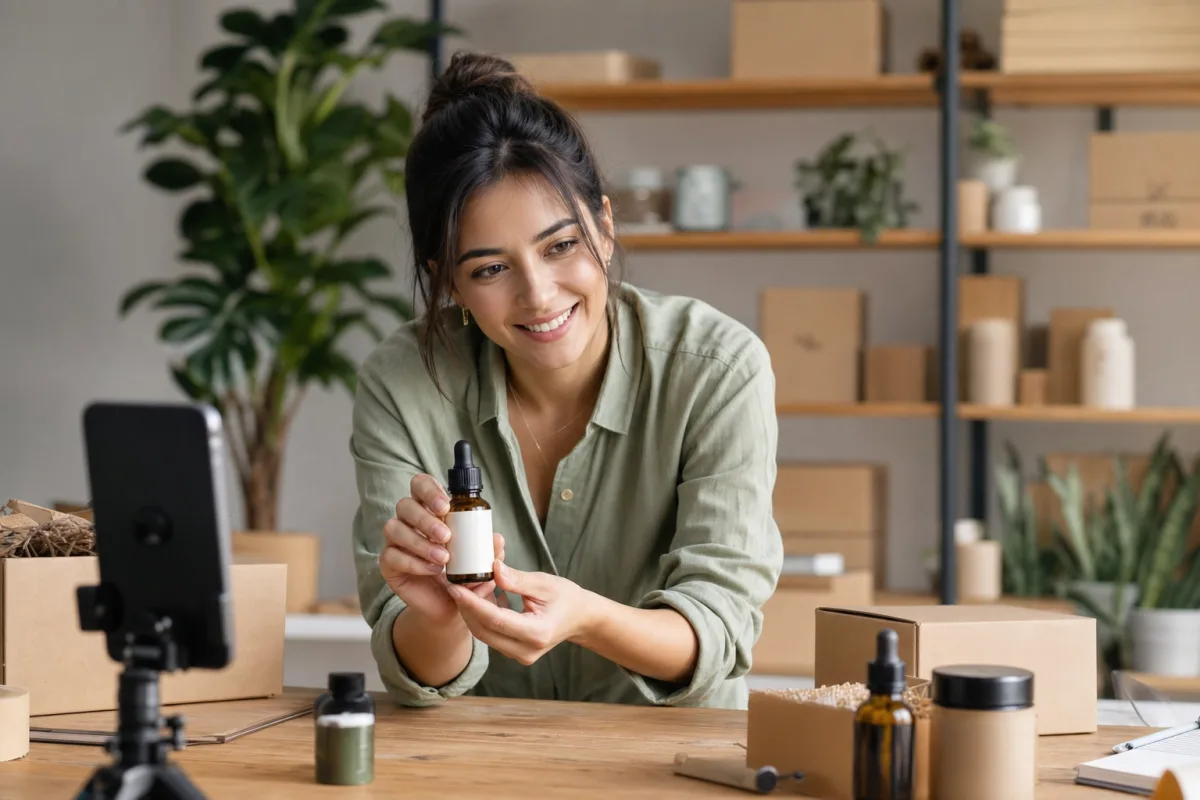
Many small businesses missed the early growth opportunities on platforms such as Instagram, when organic reach was easier to achieve and a relatively small audience could generate meaningful sales.
TikTok for small business offers a similar opportunity today. The platform can introduce products to thousands of potential customers, even when a business has a new account, a limited following and no large advertising budget.
That does not mean every video will go viral or that views will automatically become sales. Results depend on consistent content, a clear offer, strong products and an easy path from discovery to purchase.
This guide explains how small businesses can use TikTok strategically, from setting up a business-friendly profile and understanding the algorithm to creating videos, working with creators and converting attention into ecommerce sales through a website or TikTok Shop.
Why TikTok for Small Business Is a Valuable Growth Channel
TikTok gives small businesses access to something that has become increasingly difficult to find on other social media platforms: meaningful organic distribution.
On traditional social networks, content is often shown primarily to existing followers. TikTok works differently. Its For You feed recommends videos based largely on viewer interests, behavior and engagement signals.
This means a business does not need thousands of followers before its content can reach potential customers. A new account can still generate strong visibility when a video captures attention and connects with the right audience.
TikTok also favors a style of content that is accessible to small businesses. Users generally do not expect every video to look like a polished commercial. They often respond better to videos that feel direct, useful and human.
A smartphone, natural lighting and a clear idea can be enough to produce effective content.
Small businesses can use TikTok to publish:
- Product demonstrations;
- Packing and shipping videos;
- Before-and-after comparisons;
- Customer questions and answers;
- Behind-the-scenes content;
- Product testing;
- Tutorials;
- Founder stories;
- Customer reviews;
- Videos created by customers or creators.
This gives smaller brands an opportunity to compete through creativity, relevance and consistency instead of production budget alone.
Set Realistic Expectations Before You Begin
TikTok can generate reach without paid advertising, but organic reach should not be confused with guaranteed revenue.
A video may receive thousands of views without producing purchases if the product is poorly positioned, the offer is unclear or the customer cannot easily complete the next step.
Successful TikTok marketing usually combines four elements:
- Content that earns attention;
- A product that matches the audience;
- A clear call to action;
- A simple purchasing process.
The businesses that benefit most from TikTok are generally not the ones waiting for a single viral video. They are the ones that publish consistently, study audience responses and improve their approach over time.
Treat TikTok as an ongoing testing channel. Each video provides information about what your audience wants to watch, what questions they have and which product benefits generate the most interest.
How to Set Up a Business-Friendly TikTok Profile
A strong profile helps turn video views into profile visits, website traffic and sales.
When someone discovers your business through a video, your profile is often the next place they go. It should quickly explain who you are, what you sell and where they can purchase.
Choose a Recognizable Username
Use a username that matches your brand name as closely as possible.
Consistency across TikTok, Instagram, YouTube and your ecommerce website makes the business easier to recognize and find.
Avoid unnecessary numbers, symbols or complicated variations unless they are already part of your brand identity.
Use a Clear Profile Image
Your profile image should be easy to recognize, even when displayed at a small size.
Most businesses should use:
- A simplified logo;
- A recognizable product image;
- A clear founder image when the founder is central to the brand.
Use the same visual identity across your social media channels whenever possible.
Write a Focused Bio
Your bio should explain what you sell and why someone should care.
Instead of writing a broad statement such as:
High-quality products for everyone.
Use a specific benefit:
Durable kitchen tools designed for easier everyday cooking.
A good bio can include:
- The product category;
- The main benefit;
- A differentiator;
- A short call to action.
Keep the message simple enough to understand within a few seconds.
Add the Right Link
Direct users to the destination that best matches your current content and sales strategy.
This may be:
- Your ecommerce homepage;
- A specific product page;
- A promotional landing page;
- Your TikTok Shop storefront;
- A curated page containing your featured products.
Avoid sending visitors to a generic homepage when your videos are promoting one specific product. The fewer steps required to find the product, the greater the chance of conversion.
Review Your Profile Regularly
Profile optimization is not a one-time task.
Update your bio, featured videos and link when you:
- Launch a new product;
- Start a promotion;
- Change your main offer;
- Create a TikTok Shop;
- Begin promoting a seasonal collection.
Your profile should always reflect what your business is currently trying to sell.
How the TikTok Algorithm and Feeds Work
TikTok mainly organizes content through two feeds.
Following Feed
The Following feed displays content from accounts the user already follows.
This feed becomes more important as your business develops a loyal audience.
For You Feed
The For You feed is the primary discovery engine on TikTok.
It recommends videos based on signals such as:
- Watch time;
- Video completion rate;
- Replays;
- Likes;
- Comments;
- Shares;
- Saves;
- Search behavior;
- Topics and keywords;
- Sounds and audio;
- Previous interactions.
Follower count can help, but it is not the only factor determining distribution.
When a video is published, TikTok may initially show it to a limited group of viewers. If those viewers watch, engage or replay the content, the platform may distribute it to a broader audience.
This is why the opening seconds of a video are so important. If viewers leave immediately, TikTok receives a weak signal. If they stay until the end, the video has a better chance of reaching more people.
TikTok SEO: Help Customers Find Your Videos
TikTok is not only an entertainment platform. Many users now use it to search for products, tutorials, recommendations and business solutions.
Small businesses should treat TikTok as a visual search engine.
Choose a clear keyword or topic for each video and include it naturally in:
- The spoken audio;
- On-screen text;
- The caption;
- The video title or cover;
- Relevant hashtags.
For example, a skincare brand could build a video around the phrase:
How to use a vitamin C serum for sensitive skin.
The video should say the phrase, show it on screen and reinforce the topic in the caption.
Avoid adding a long list of unrelated hashtags. A smaller group of relevant terms usually provides clearer context.
A local or niche business can also include specific terms such as:
- Handmade jewelry for weddings;
- Kitchen tools for small apartments;
- Organic dog treats;
- Plus-size activewear;
- Furniture restoration in Chicago.
The more clearly TikTok understands the subject, the easier it becomes to connect the video with interested viewers.
Content Formats That Work for Small Businesses
The strongest TikTok strategies use multiple formats instead of repeating the same type of promotional video.
Product Demonstrations
Show the product being used in a real situation.
Focus on:
- How it works;
- What problem it solves;
- How quickly it produces a result;
- What makes it different.
A visual demonstration is usually stronger than a list of product specifications.
Before-and-After Videos
Before-and-after content creates a natural reason to keep watching.
This format works especially well for:
- Cleaning products;
- Beauty products;
- Home organization;
- Tools;
- Clothing;
- Restoration services;
- Fitness equipment;
- Food preparation.
Show the final result early to create curiosity, then explain how it was achieved.
Packing Orders
Packing videos provide social proof and behind-the-scenes access.
They can show:
- Customer orders;
- Packaging quality;
- Product combinations;
- Shipping preparation;
- Thank-you notes;
- High-demand products.
These videos can make a small business feel active, trustworthy and personal.
Frequently Asked Questions
Turn common customer questions into individual videos.
Examples include:
- Does this product come in other sizes?
- How long does shipping take?
- Can this item be used outdoors?
- What is the difference between these two models?
- Is the product easy to clean?
- Do you ship internationally?
This type of content addresses objections while also creating useful searchable videos.
Founder and Brand Stories
Customers often want to understand the people behind a small business.
Tell stories about:
- Why the business was created;
- How the first product was developed;
- Early mistakes;
- Customer feedback;
- Production challenges;
- Business milestones.
The goal is not to make every video emotional. It is to make the brand easier to understand and remember.
Comparison Videos
Compare products, models, sizes or use cases.
Examples:
- Basic model vs. premium model;
- Small size vs. large size;
- Product A vs. Product B;
- Three options for different budgets;
- Which version is right for you?
Comparisons help customers make decisions and often attract viewers who are already considering a purchase.
Customer Reviews and User-Generated Content
Show real customers using the product whenever you have permission.
User-generated content can feel more credible than traditional advertising because it demonstrates how the product fits into everyday life.
It can come from:
- Customers;
- Employees;
- Brand ambassadors;
- Affiliates;
- Micro-creators.
How to Create Stronger Hooks
The first two or three seconds of a TikTok video often determine whether someone continues watching.
Avoid starting with a long introduction, logo animation or general greeting.
Begin with the most interesting part.
Examples of effective hooks include:
- “Here is why your kitchen knives keep getting dull.”
- “We tested this product for 30 days.”
- “Do not buy this until you see the difference.”
- “Three mistakes people make when choosing this product.”
- “This customer almost ordered the wrong size.”
- “Watch what happens when we use it on this surface.”
- “We packed our largest order of the week.”
- “Which version would you choose?”
The hook should match the actual content. Misleading openings may produce initial attention, but they can damage trust and reduce completion rates when the video does not deliver what was promised.
Use Trends Without Losing Your Brand Identity
Trending sounds, formats and challenges can increase discoverability, but not every trend will make sense for every business.
Before using a trend, ask:
- Can it connect naturally to the product?
- Will the target customer understand it?
- Does it support the brand’s tone?
- Can it communicate a product benefit?
- Is the trend still gaining momentum?
A trend should support the message rather than replace it.
For example, a business might use a trending format to show:
- Different customer types;
- Product expectations vs. reality;
- A common industry problem;
- The process behind an order;
- The difference between two product versions.
Businesses should avoid forcing products into trends that have no connection to their audience or offer.
Build a Consistent Content System
Consistency matters more than trying to make every video perfect.
A practical weekly content structure could include:
- One product demonstration;
- One frequently asked question;
- One behind-the-scenes video;
- One comparison or educational video;
- One creator, customer or review-based video.
Small businesses can record several videos in one session and schedule them throughout the week.
Create a simple content list containing:
- Video topic;
- Main keyword;
- Hook;
- Product featured;
- Call to action;
- Recording status;
- Publishing date;
- Performance results.
This prevents the business from depending on last-minute ideas and makes it easier to identify which formats generate the strongest results.
Turning TikTok Reach into Ecommerce Sales
Reach is valuable only when viewers have a clear next step.
Every product-focused TikTok strategy should create a simple journey:
- The video earns attention;
- The viewer understands the product;
- The call to action explains what to do;
- The customer reaches the right product page;
- The store makes purchasing easy.
Use Clear Calls to Action
Tell viewers exactly what action to take.
Examples include:
- Shop the product through our TikTok Shop;
- Visit the link in our bio;
- View the full collection on our website;
- Comment your question below;
- Follow us for more product comparisons;
- Tap the product link to choose your size.
Not every video needs an aggressive sales message. Educational and entertainment content can use softer calls to action, while product demonstrations can be more direct.
Match the Destination to the Video
A video about one product should generally lead directly to that product.
Avoid creating friction by sending the customer through multiple pages or making them search for the item manually.
The landing page or product listing should include:
- Clear product images;
- A descriptive title;
- Key benefits;
- Pricing;
- Shipping information;
- Customer reviews;
- Product variations;
- A clear purchase button.
TikTok can create interest, but the product page must complete the sale.
How TikTok Shop Works for Ecommerce Brands
TikTok Shop allows eligible businesses to sell products directly within the platform.
Instead of asking users to leave TikTok and visit an external website, businesses can connect products to videos, livestreams and storefronts.
This can shorten the distance between product discovery and purchase.
Optimize Product Listings
A TikTok Shop listing should be treated as a sales page, not just a product record.
Optimize:
- Product title;
- Main image;
- Additional images;
- Product description;
- Benefits;
- Variations;
- Pricing;
- Shipping details;
- Inventory;
- Category;
- Product attributes.
Titles should clearly describe what the product is. Avoid titles that contain only internal product codes or brand language customers may not understand.
Descriptions should focus on benefits, use cases, important specifications and answers to common questions.
Connect Products to Videos
When possible, attach the relevant product directly to the video.
A viewer who becomes interested during a demonstration should be able to reach the listing without searching through the full storefront.
Use different content angles for the same product, including:
- Demonstrations;
- Tutorials;
- Comparisons;
- Customer reactions;
- Problem-and-solution videos;
- Packaging videos;
- Creator reviews.
One strong product can support dozens of different videos.
Use the TikTok Shop Affiliate Program
Affiliate creators can promote products and earn a commission when their content generates a sale.
For small businesses, this creates an opportunity to expand distribution without paying a large upfront influencer fee.
A strong affiliate offer should include:
- Competitive commission;
- Clear product information;
- Quality images and videos;
- Product samples when appropriate;
- Fast communication;
- Reliable inventory;
- Strong shipping performance.
Creators are more likely to promote products that are easy to understand, visually interesting and supported by a clear offer.
Work With Micro-Creators
Large follower counts do not always produce the best sales results.
Micro-creators may have smaller audiences, but their content can feel more personal and relevant. They are often effective when they serve a specific niche that closely matches the product.
Look for creators based on:
- Audience relevance;
- Content quality;
- Engagement;
- Communication style;
- Product fit;
- Previous sales content;
- Consistency.
The goal is not simply to reach the largest number of people. It is to reach people who are likely to want the product.
Use TikTok LIVE for Product Demonstrations
TikTok LIVE gives businesses and creators more time to explain products, answer questions and address objections.
A live selling session can include:
- Product demonstrations;
- Comparisons;
- Limited-time promotions;
- Customer questions;
- Product bundles;
- New releases;
- Tutorials;
- Inventory updates.
The live should have a structure rather than depending entirely on spontaneous conversation.
Prepare the featured products, key benefits, common objections, promotional offers and calls to action in advance.
Protect the Customer Experience
TikTok Shop growth depends on more than content.
Businesses must also manage:
- Inventory accuracy;
- Order processing;
- Shipping times;
- Returns;
- Customer messages;
- Product quality;
- Reviews;
- Platform policies.
A successful video can generate a sudden increase in demand. The business must be prepared to fulfill orders without creating delays or negative customer experiences.
Repurpose TikTok Content Across Other Channels
Videos created for TikTok can often be adapted for:
- Instagram Reels;
- YouTube Shorts;
- Facebook Reels;
- Product pages;
- Paid advertising;
- Email marketing;
- Marketplace listings.
However, avoid reposting every video without adjustment.
Review:
- Aspect ratio;
- Captions;
- Platform-specific calls to action;
- Music rights;
- Watermarks;
- Video length.
TikTok can serve as a testing environment. When a video performs well organically, the business can adapt the concept for other platforms or use it as the basis for paid advertising.
When to Use TikTok Ads
Paid advertising works best when it amplifies a message, product or creative concept that has already shown potential.
Before increasing ad spend, identify:
- Videos with strong completion rates;
- Products generating profile visits;
- Content producing comments or questions;
- Videos that already generated sales;
- Hooks that consistently hold attention.
Promoting proven content can reduce creative risk compared with building every advertisement from scratch.
TikTok Ads can support:
- Product launches;
- Retargeting;
- Website traffic;
- TikTok Shop sales;
- Seasonal campaigns;
- Lead generation;
- Creator content amplification.
Paid media should not replace organic content entirely. The two strategies work best together. Organic content helps the brand learn what resonates, while advertising helps expand the reach of the strongest ideas.
Metrics Small Businesses Should Monitor
Do not evaluate performance based only on views.
Track metrics connected to both attention and business outcomes.
Important TikTok metrics include:
- Average watch time;
- Completion rate;
- Replays;
- Shares;
- Saves;
- Comments;
- Profile visits;
- Follower growth;
- Product clicks;
- Website clicks;
- Add-to-cart rate;
- Conversion rate;
- Sales;
- Revenue per video;
- Affiliate sales;
- Return on ad spend.
A video with fewer views may still be more valuable if it generates product clicks or purchases.
Review results regularly and identify patterns. Determine which hooks, products, formats and calls to action produce the strongest response.
Common TikTok Mistakes Small Businesses Should Avoid
Several mistakes can limit growth:
- Posting only promotional videos;
- Starting videos with long introductions;
- Copying trends that do not fit the brand;
- Ignoring comments and customer questions;
- Sending traffic to an unrelated page;
- Using weak product images;
- Publishing inconsistently;
- Focusing only on follower count;
- Expecting immediate sales from every video;
- Failing to prepare inventory for increased demand;
- Working with creators based only on audience size;
- Neglecting shipping, customer service and reviews.
TikTok growth is not only a content challenge. It is also an operational challenge. Marketing, product listings, logistics and customer service must work together.
Conclusion
TikTok for small business remains one of the most accessible ways for product-based brands to build awareness, test content and reach potential customers without depending entirely on a large advertising budget.
The platform rewards businesses that communicate clearly, create useful or entertaining videos and publish consistently. A strong strategy combines an optimized profile, searchable content, effective hooks, product demonstrations, creator partnerships and a direct path to purchase.
For ecommerce brands, TikTok Shop can make this path even shorter by connecting products directly to videos, livestreams, creators and affiliate content.
However, sustainable results require more than a viral moment. Businesses need optimized listings, reliable inventory, clear pricing, fast fulfillment, responsive customer service and a repeatable content process.
RGC Mkt helps ecommerce brands build and improve their presence on TikTok through Initial TikTok Shop Setup, TikTok Ads Management, TikTok Content Management and TikTok Shop Growth Strategy.
Schedule a TikTok Shop consultation with the RGC Mkt team to receive an initial assessment of your products, store structure, content opportunities and potential growth strategy.