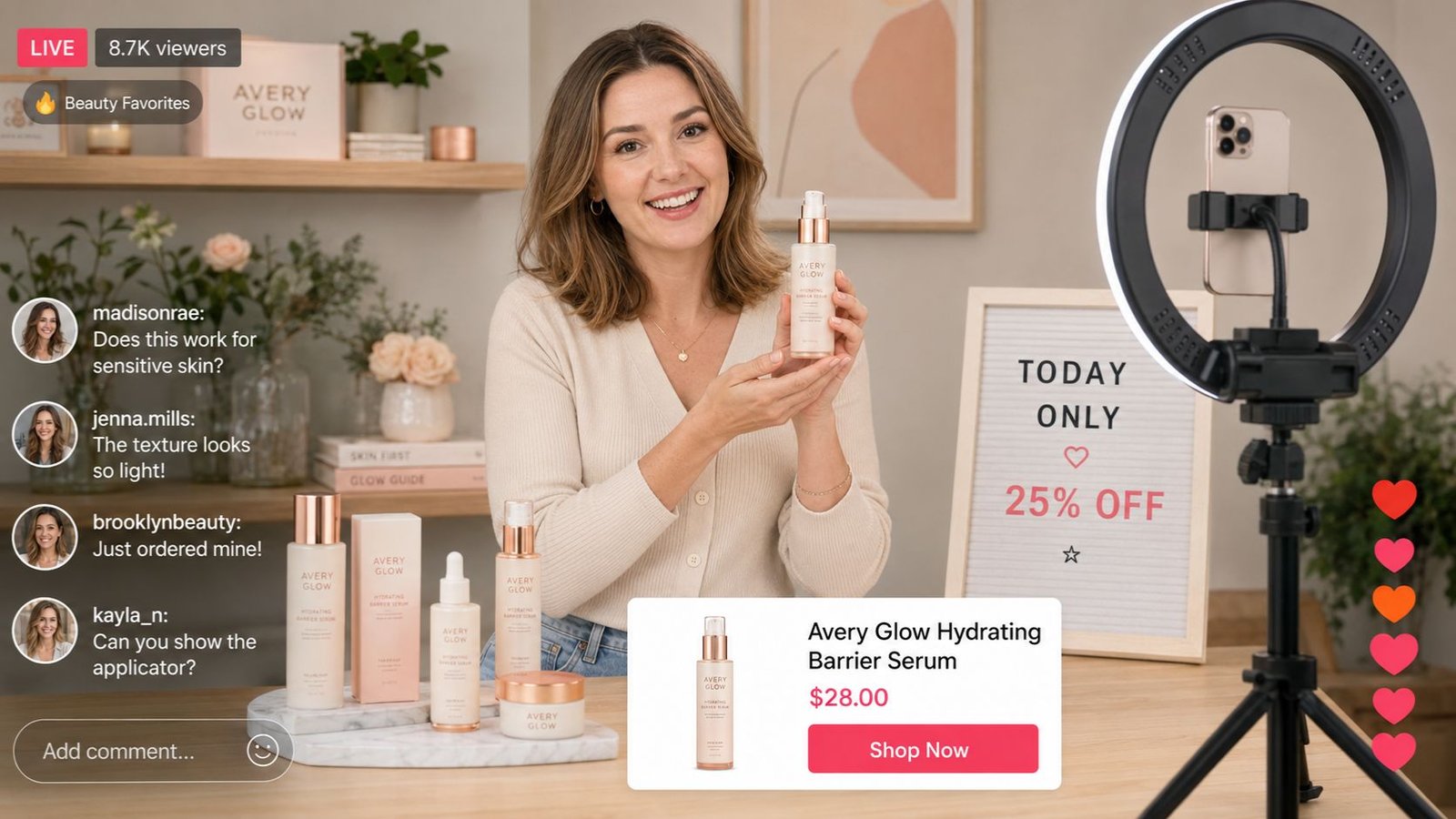


Launching on TikTok Shop without a structured growth model is one of the fastest ways for an e-commerce brand to burn marketing capital. Most brand leaders approach the platform like a traditional direct-response channel—expecting immediate return on ad spend (ROAS) within 48 hours of launching a campaign—only to pull back prematurely when early numbers lag behind optimized Meta or Amazon benchmarks.
The merchants that scale consistently do something fundamentally different: they treat TikTok Shop as a primary discovery engine and execute a systematic, repeatable growth loop across short-form content production, paid media amplification, creator affiliate networks, and listing conversion optimization.
The business impact of this approach is substantial. By applying a documented, four-part growth formula, an anonymized Direct-to-Consumer (DTC) hair and scalp health brand launched on TikTok Shop with zero channel revenue and scaled past $4 million in verified sales within eight months.
This operational guide breaks down the strategic mechanics behind that growth trajectory, outlining how to structure your team, validate unit economics, execute creative testing loops, and scale media spend predictably.
Strategic Shift: Search Marketplaces vs. Discovery Social Commerce
Evaluating TikTok Shop using traditional search marketplace frameworks creates a fundamental misalignment in strategy and performance expectations. On platforms like Amazon or Google Shopping, buyers arrive with explicit purchase intent, actively searching for specific product keywords, comparing star ratings, and evaluating price points. On TikTok Shop, purchase intent is generated passively through short-form video entertainment feeds.
| Strategic Metric | Direct-Response / Search Channels (e.g., Amazon, Meta) | Discovery Social Commerce (TikTok Shop) |
|---|---|---|
| Consumer Intent Level | High-intent search or direct retargeting demand | Low-intent scroll (Impulse & visual discovery) |
| Performance Horizon | Rapid feedback loops (24–72 hours) | Compound ramp-up phase (30–60 days to algorithm density) |
| Content Lifespan | Static ad sets or long-term keyword indexing | High-velocity short-form video cycles (New hooks weekly) |
| Social Proof Acceleration | Accumulated over months via text reviews | Compressed into 48–72 hours via viral creator engagement |
| Target Scale Driver | Keyword bidding & direct lookalike targeting | Micro-creator affiliate volume & Spark Ad amplification |
On search marketplaces, a merchant can launch an optimized product listing with static studio photography and maintain sales velocity for months. On TikTok Shop, a product listing without continuous short-form video tagging becomes algorithmically invisible almost immediately. The platform rewards storefronts that maintain steady content output, engagement density, and order fulfillment velocity.
Furthermore, TikTok Shop requires a cold-start ramp-up period similar to organic SEO or opening a physical retail storefront. During the initial 30 days, foot traffic is volatile and conversion tracking is maturing. Brands that abandon the channel during month one evaluate the platform before the algorithm has collected enough conversion data to optimize audience targeting.
Technical Foundation & Operational Ownership
The single greatest predictor of channel failure on TikTok Shop is executing the launch as an under-resourced, side-project pilot. Merchants that assign minimal testing budgets, uncurated product samples, and vague team accountability generate inconclusive data and wasted capital.
Technical Pre-Launch Checklist
Before allocating acquisition budgets to TikTok Ads Manager, your technical infrastructure must pass five baseline verification checks:
- Catalog & Variant Alignment: Complete Product Detail Page (PDP) optimization with mobile-friendly gallery assets, benefit-driven titles, and clear variant listings.
- Real-Time WMS Sync: Connect your warehouse management system (WMS) via direct API integration to synchronize inventory levels and prevent overselling cancellations.
- Server-Side Pixel Integration: Configure the server-side TikTok Pixel across your web store to enable accurate event tracking across
Purchase,AddToCart, andViewContentactions. - Fulfillment SLA Verification: Audit warehouse order processing to ensure physical carrier transit scans occur within two business days of order creation, protecting account health scores.
- Price Floor Limits: Set strict floor limits in Seller Center to prevent platform promotions, seller coupons, and affiliate rates from stacking and eroding unit margins.
Operational Ownership: The Dual-Pillar Framework
To maintain operational efficiency, split channel responsibilities into two distinct operational pillars rather than combining them under a single generalist manager:
- The Storefront Operations Owner: Manages catalog updates, Seller Center compliance, 3PL inventory buffering, shipping SLA tracking, customer service disputes, and promotional setup.
- The Creative & Creator Scaling Owner: Manages automated creator affiliate recruitment, sample dispatch workflows, brief distribution, short-form video production, and Spark Ad campaign execution.
Unit Economics: Pre-Scale Margin Validation
Not every product portfolio converts equally on short-form video feeds. TikTok Shop rewards products that demonstrate immediate value visually, solve a clear problem within three seconds, and carry low-friction impulse pricing (typically $25 to $60).
Complex products requiring lengthy educational explanations can scale successfully—as demonstrated by the scalp health case study—but demand higher creative investments in user-generated content (UGC) and creator briefing.
Order-Level Unit Economic Breakdown
Net Contribution Margin=Average Order Value (AOV)−(COGS+Fulfillment+Platform Fees+Creator Payout+Paid CAC+Return Allowance)
Before scaling spend, construct a fully loaded order-level P&L model. A healthy financial baseline for scaling on TikTok Shop includes:
- Landed COGS Target: ≤20% of retail selling price.
- Fulfillment & Parcel Freight: ≤15% of average order value.
- TikTok Referral & Platform Fees: ∼8% fixed platform fees.
- Creator Affiliate Payouts: 15% to 25% performance-tiered commissions.
- Paid Media CAC Reserve: 20% to 25% allocated for Spark Ad amplification.
- Target Net Operating Margin Floor: 20%+ retained contribution margin.
If unit contribution margins drop below 15% after accounting for landed COGS, shipping, and platform referral fees, aggressive ad scaling will erode profitability. Re-engineer the offer into high-AOV product bundles or entry-level starter kits before expanding paid media spend.
The 4-Part Growth Engine: Content, Ads, Creators, and PDP Optimization
Sustained growth on TikTok Shop requires executing a continuous optimization loop across four interdependent levers. Relying on a single lever in isolation yields short-lived spikes rather than compounding channel scale.
Lever 1: The Creative Testing Loop
Creative output is your primary targeting mechanism on short-form feeds. Launch campaigns with multiple visual hook angles, testing eight to ten distinct short-form video variations weekly:
- The 3-Second Problem Hook: Opening directly on a visual problem (e.g., thinning hair, dry scalp) before introducing the product solution.
- The Direct Demonstration: Phone-shot footage highlighting real-time product application, texture, and immediate visual transformation.
- The Unscripted Testimonial: Authentic creator commentary walking through personal product results without reading a brand script.
Isolate the top 15% converting video variations based on click-through rates (CTR ≥1.5%) and checkout conversion rates (CVR ≥3.0%). Brief your creator affiliate network to replicate those winning visual hooks across new video assets.
Lever 2: Paid Media Amplification via Spark Ads
Paid media should amplify proven organic creative rather than lead creative testing. Leverage TikTok Spark Ads to boost organic creator posts directly through the creator’s profile using authorization codes.
- Identify Organic Winners: Monitor affiliate dashboards daily to identify creator videos generating high organic engagement and checkout conversion.
- Secure Authorization Codes: Obtain 60-to-90-day Spark Ad authorization codes from top-performing creators via Seller Center.
- Scale Stepwise Budgets: Increase paid ad budgets behind validated organic posts in 2× to 3× increments while maintaining target ROAS thresholds.
Lever 3: Automated Creator Affiliate Recruitment
Attempting to build a creator network through manual direct messaging yields low output. To maintain algorithm momentum, transition to an automated creator outreach framework targeting 150 to 300 micro-creators monthly (5,000 to 50,000 followers).
Micro-creators produce authentic, relatable content that converts well in personal care and CPG categories. Offer a hybrid compensation model combining a modest upfront content creation fee with performance-tiered affiliate commissions (15% to 25%) to secure guaranteed posting timelines and ad usage rights.
Lever 4: Product Detail Page (PDP) Conversion Engineering
Scaling paid traffic to an unoptimized product detail page leads to high Customer Acquisition Costs (CAC). Treat product listings as conversion assets:
- Mobile Gallery Optimization: Feature high-resolution graphics demonstrating key product benefits within native mobile feed aspect ratios.
- Benefit-First Listing Titles: Highlight the primary problem solved and main visual hook within the first 40 characters of the product title.
- Pinned Creator Reviews: Pin top-converting creator video reviews directly to the listing page to provide social proof at checkout.
The 90-Day Operational Scaling Roadmap
Scaling from launch to sustainable profitability requires a structured operational sequence. Follow this 90-day execution roadmap to guide team workflows, testing phases, and capital allocation.
| Operational Phase | Key Functional Focus | Target Metric & Milestone KPIs |
|---|---|---|
| Days 1 – 30: Foundation & Validation | Setup Seller Center, WMS inventory sync, launch initial 10 creative hooks, ship 50 creator samples. | Anchor CTR ≥1.5%, Sample Posting Rate ≥25%, Fulfillment SLA ≥98%. |
| Days 31 – 60: Creative & Creator Expansion | Scale automated creator outreach to 200/month, secure Spark Ad usage codes, deploy initial paid ads. | PDP CVR ≥2.5%, Paid Spark Ad ROAS ≥1.8×, 100+ active affiliate posts. |
| Days 61 – 90: Scaling & Margin Optimization | Increase paid budgets 20–30% weekly on winning ad sets, launch multi-SKU bundles, host Live streams. | Blended ROAS ≥2.5×, Net Operating Margin ≥20%, Channel Inflection Point achieved. |
Days 1 to 30: The Foundation & Creative Testing Phase
- Complete technical Seller Center setup, catalog synchronization, and server-side TikTok Pixel verification.
- Isolate physical inventory buffers at your warehouse dedicated exclusively to TikTok Shop order processing.
- Dispatch initial product samples to 50 curated micro-creators using an Open Affiliate Plan (15–20% commission).
- Produce and publish ten in-house short-form videos testing different problem hooks, application demos, and testimonials.
Days 31 to 60: The Creator & Spark Ad Acceleration Phase
- Scale automated creator recruitment pipelines to contact 150 to 200 targeted micro-creators monthly.
- Identify top 15% performing organic videos and secure Spark Ad authorization codes from creator partners.
- Launch paid Spark Ad campaigns within TikTok Ads Manager, placing targeted media spend behind proven organic videos.
- Audit PDP conversion metrics, testing benefit-driven title variations, gallery graphics, and pinned creator reviews.
Days 61 to 90: The Margin Optimization & Channel Expansion Phase
- Increase paid media budgets in controlled weekly increments (20% to 30%) on ad sets maintaining target ROAS checkpoints.
- Restructure single-item product listings into high-AOV starter kits or multi-SKU bundles to absorb fixed shipping fees.
- Launch scheduled Live Shopping sessions supported by targeted LIVE Shopping Ads during peak traffic hours.
- Integrate off-site performance analytics to track downstream web store halo lift across Shopify sales channels.
Master Growth Strategy Checklist
Execute this checklist to establish, manage, and scale your TikTok Shop growth engine:
Technical & Storefront Foundation
- Complete Seller Center business verification, catalog configuration, and tax setup.
- Integrate warehouse management software via API to enable real-time inventory synchronization.
- Verify server-side TikTok Pixel tracking across
Purchase,AddToCart, andViewContentweb events. - Lock in non-negotiable price floor limits in Seller Center to prevent automated coupon stacking.
Creative & Creator Operations
- Deploy automated outreach pipelines to contact 150–300 micro-creators monthly.
- Implement a hybrid creator compensation model offering modest retainers plus performance-tiered affiliate rates.
- Secure Spark Ad usage authorization codes for all high-converting creator video assets.
- Establish a weekly short-form video production schedule testing eight to ten distinct problem hooks and application demos.
Paid Media & Listing Engineering
- Audit Product Detail Pages to ensure mobile gallery graphics, benefit titles, and pinned creator reviews are optimized for conversion.
- Implement a stepwise paid ad scaling framework, fueling organic Spark Ads only after confirming organic conversion signals.
- Maintain strict ROAS checkpoints for paid ad spend, automatically throttling campaigns that fall below performance targets.
Financial Modeling & Analytics
- Construct an order-level unit economics P&L model ensuring a minimum 20% retained contribution margin floor.
- Monitor daily performance analytics across Sample-to-Video Publication Rate, Anchor CTR, PDP CVR, and Channel Contribution Margin.
- Execute address-matching audits between TikTok Shop order data and primary DTC databases to measure cross-channel repeat purchase behavior.
Enterprise Social Commerce Strategy with RGC Mkt
The $4 million scaling journey of the hair and scalp health brand demonstrates that TikTok Shop is a powerful revenue engine when managed with operational discipline. Converting social media engagement into sustainable enterprise value requires coordinating automated creator recruitment, creative testing loops, strict margin modeling, and paid media amplification.
At RGC Mkt, we work directly with product-based e-commerce brands to build, manage, and scale profitable TikTok Shop operations. Our dedicated team handles every phase of channel management:
- Initial TikTok Shop Setup & Catalog Optimization: Complete Seller Center onboarding, catalog synchronization, compliance management, and conversion-focused listing optimization.
- Full-Stack Financial Modeling & Pricing Strategy: Order-level unit economic modeling, margin floor protection, fee stack auditing, and bundle engineering.
- Automated Creator Operations & Affiliate Scaling: Automated creator recruitment pipelines, hybrid deal negotiations, sample logistics automation, and performance-tiered affiliate management.
- Paid Media Execution & Attribution: Data-driven management of TikTok Ads Manager, specializing in Spark Ads, Video Shopping Ads, retargeting funnels, and cross-channel attribution.
Whether you are launching a new product line on TikTok Shop or seeking to scale an existing storefront into a primary revenue driver, connect with the RGC Mkt strategic team to request a custom channel performance audit and operational growth roadmap.