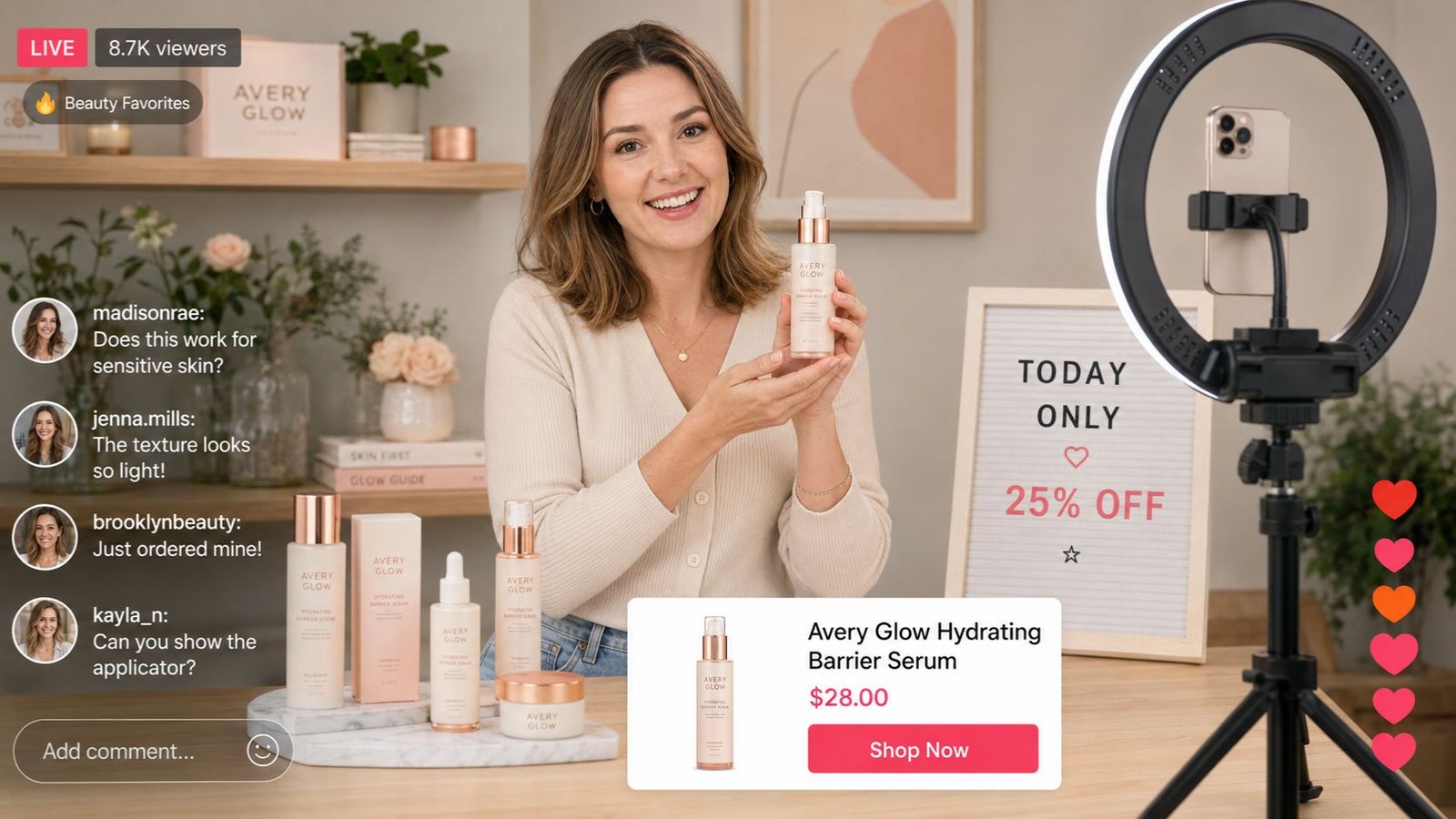

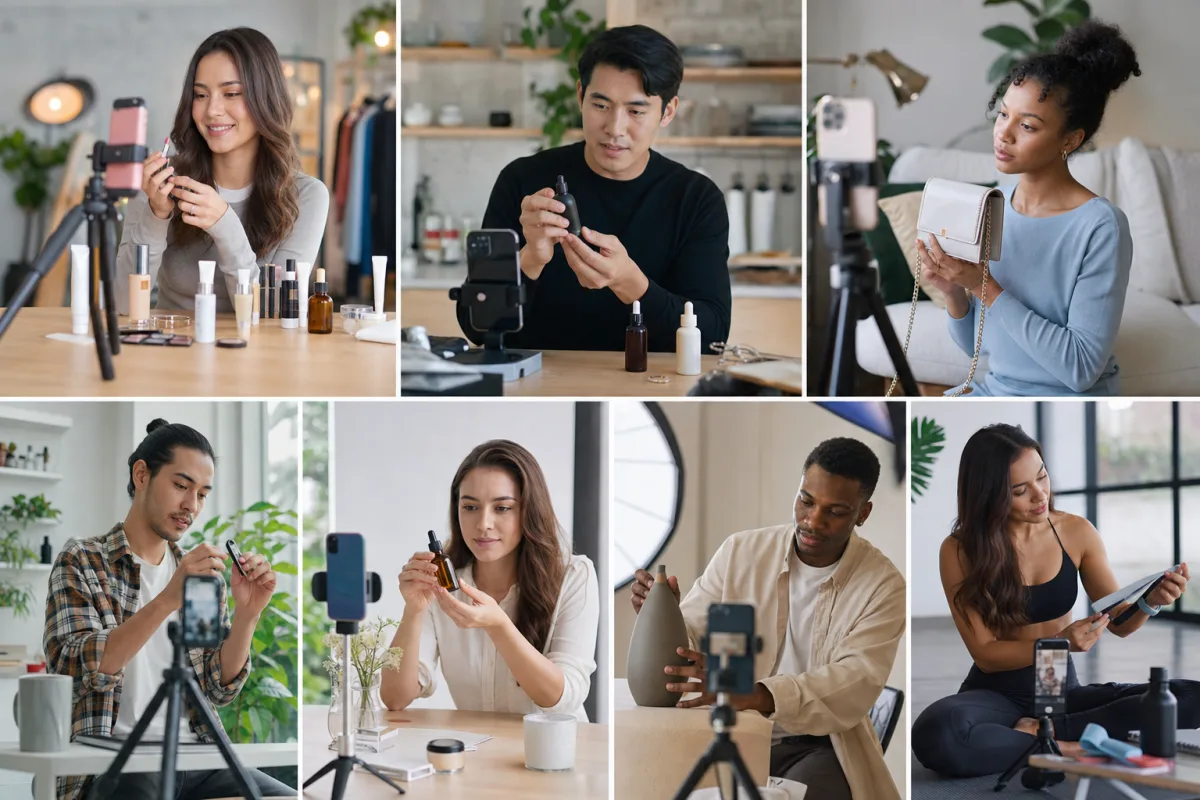
Most ecommerce brands approach content on social platforms the same way they approach paid ads: they control the message, control the creative, and push it out. That model worked when follower counts determined reach. It no longer does. The brands seeing the strongest growth on TikTok Shop right now are the ones that have stepped back from brand-led posting and handed the distribution to creators instead.
The strategy behind this shift has a name: super UGC combined with viral looping. It is not about finding one perfect influencer or producing polished brand videos. It is about building a synchronized wave of authentic creator content that keeps your product in front of new audiences continuously. This guide breaks down how it works, why the platform mechanics support it, and what steps you need to take to build this system for your own brand.
What is Super UGC and Viral Looping?
User-generated content is not new. Brands have been collecting customer photos and reviews for years. What makes super UGC different is scale, timing, and where the content lives. Instead of collecting UGC to repost on a brand account, super UGC means recruiting a large number of creators to post about the same product on their own personal accounts, around the same time, creating a coordinated wave of content across the platform.
Viral looping describes what happens when that wave creates a feedback cycle. A viewer sees a product video, clicks through to TikTok Shop, makes a purchase, and may even become a creator themselves. Meanwhile, the volume of simultaneous posts means that the product keeps reappearing across different users’ feeds through different voices and perspectives. Omnipresence is the goal: the product feels like something everyone is discovering at the same moment.
This is categorically different from traditional influencer marketing, where a single post from a high-follower account creates a short spike and then disappears. It is also different from posting UGC on a brand channel, which largely reaches people who already follow the brand rather than acquiring new customers. Super UGC bypasses both limitations by distributing content through many independent creator accounts simultaneously, turning discovery into a repeatable loop rather than a one-time event.
Why TikTok’s Interest-Based Algorithm Changes the Game
The reason super UGC works on TikTok specifically comes down to how the platform distributes content. Unlike social networks built on social graphs, where reach depends on how many people follow you, TikTok’s algorithm prioritizes interest signals. The platform evaluates whether content matches what a user has engaged with before, and if the match is strong, it will push that content broadly regardless of the creator’s follower count.
In practice, this means a creator with a few hundred followers can generate hundreds of thousands of views on a single product video if the content resonates. The barrier that has historically protected macro-influencers, their existing audience size, becomes largely irrelevant. A new creator posting an authentic product review has a genuine shot at reaching the same audience as someone with millions of followers, sometimes with better conversion rates because the content reads as organic rather than sponsored.
For brands, this democratization of discoverability is the foundational reason to invest in microcreators rather than betting large budgets on a handful of high-cost partnerships. When you multiply that reach potential across hundreds or thousands of creators posting in a coordinated window, the cumulative discovery effect compounds. The platform’s own mechanics do a significant part of the distribution work.
How to Build and Activate a Creator Wave on TikTok Shop
Building a creator wave starts with recruitment at scale, not with finding the perfect creator. The goal in the early stage is volume and diversity: creators who have genuine affinity for the product category, an authentic posting style, and the motivation to promote. TikTok Shop’s built-in affiliate and commission program is the most direct recruitment tool available. Brands can list products with a set commission rate, and creators can opt in to promote them without any direct brand outreach required.
Beyond the native affiliate program, proactive outreach through creator marketplaces and social listening can identify creators already posting in adjacent categories. Commission-based structures are preferable at the start because they tie creator incentive directly to conversion rather than to impressions or follower counts. Product seeding, sending free product in exchange for honest content, can supplement this for early-stage testing with creators who have not yet earned through commissions.
Onboarding is where most brands underinvest. A simple creator brief makes the difference between a wave of converting content and a wave of videos that look great but do not drive clicks. The brief does not need to be long. It should include the core problem the product solves, two or three product features worth highlighting, a suggested video length, and guidance on including a clear path to purchase through TikTok Shop. The tone should stay conversational: you are giving creators a scaffold, not a script. Authentic creator voice is the asset. Preserve it.
- Set up commission tracking inside TikTok Shop before launching outreach
- Run a pilot cohort of 40 to 60 creators before scaling to hundreds
- Provide a one-page brief with the product hook, key features, and shop link
- Review pilot performance by creator-attributed sales, not just view counts
- Scale the cohort based on top-performing creator profiles and content patterns
Scaling the wave does not require managing every creator individually. Once you have identified the creative patterns that convert from the pilot, the brief becomes more refined, the onboarding process becomes more automated, and the recruitment can expand across multiple channels simultaneously.
Creative and Testing Best Practices for Super UGC
The formats that consistently perform in super UGC campaigns share a common structure: they open with a problem statement or hook that matches an existing viewer interest, demonstrate the product quickly, and include a visible path to purchase. Short product demonstrations in the 15 to 30 second range, honest before-and-after comparisons, and casual try-ons tend to outperform longer or more produced formats. The reason is authenticity: viewers on TikTok have a calibrated sense for content that feels like an ad, and they scroll past it.
One of the underused advantages of running super UGC at scale is what it generates for paid media. When hundreds of creators are posting variations of the same product, you accumulate a large library of real-world creative content at no additional production cost. The top-performing organic videos from creators become the source material for paid ad creative. Instead of investing in expensive studio shoots, brands can identify which hooks, formats, and product angles are already converting organically and push those into paid campaigns with higher confidence.
To guide creators without scripting them, build a simple creative scaffold:
- Open with a one-sentence problem or relatable observation
- Reveal the product and its key benefit within the first five seconds
- Show the product in use, not just in hand
- Include one short moment of social proof or personal reaction
- End with a natural prompt to check it out via TikTok Shop
Giving creators this structure while leaving the specific words, tone, and delivery entirely to them keeps the content feeling native to the platform. That balance between guidance and creative freedom is what separates high-converting super UGC from content that looks uniform and scripted.
Measuring ROI, Scaling and Common Pitfalls
The measurement framework for super UGC needs to go beyond view counts and engagement rates. The primary metrics that matter are creator-attributed sales tracked through affiliate links or commission reports, conversion rate on the TikTok Shop product page during active creator waves, customer acquisition cost compared to paid-only benchmarks, and any observable uplift in paid ad performance when creator content is running alongside paid campaigns. Tracking these together gives a complete picture of the strategy’s impact rather than isolating organic and paid in separate silos.
Scaling should follow a pilot-iterate-expand sequence. A 30-day pilot with a defined creator cohort, a set commission structure, and a simple brief gives you enough data to identify which creator profiles drive sales, which content formats convert, and which product angles resonate. Use that data to refine the brief, automate commission payouts through TikTok Shop’s native tools, and expand the creator pool based on validated patterns rather than assumptions.
Several pitfalls slow down or derail brands that start this strategy well. Over-reliance on a single creator type, whether that is beauty creators for a skincare product or fitness creators for a supplement, limits the discovery surface. Diversity in creator categories, not just creator size, broadens reach. Another common mistake is failing to educate creators on conversion-focused formats: posting volume alone does not create a viral loop if the content does not prompt viewers to act. Finally, investing heavily in unproven creators before the pilot validates performance burns budget that could be used to scale what is already working.
Conclusion
Super UGC and viral looping represent a fundamental shift in how product discovery works on social commerce platforms. The mechanics are straightforward: recruit a large network of creators, give them a clear but flexible brief, activate them in a coordinated wave, and let the interest-based algorithm distribute their content to audiences that are already primed to convert. The result is sustained omnipresence across TikTok feeds, a continuous source of low-cost creative testing material, and a measurable improvement in both organic discovery and paid ad ROI. Microcreators outperform macro-influencer bets not because of reach alone, but because authentic content posted on personal accounts converts with less friction than polished brand posts or obviously paid placements.
For product-based ecommerce brands, the compounding value of this approach goes beyond a single campaign cycle. A well-structured creator partnership program generates a persistent pipeline of short-form video content, builds social proof at scale, and reduces dependence on any single distribution channel. The brands that treat super UGC as an ongoing system rather than a one-time tactic are the ones that build durable growth on TikTok Shop.
RGC Mkt works with ecommerce brands specifically in the TikTok Shop and social commerce space, covering everything from shop setup and optimization to creator outreach, content management, and campaign planning. If you are evaluating whether this strategy fits your product and want a clear-eyed look at where to start, reach out to the team for a strategy conversation.