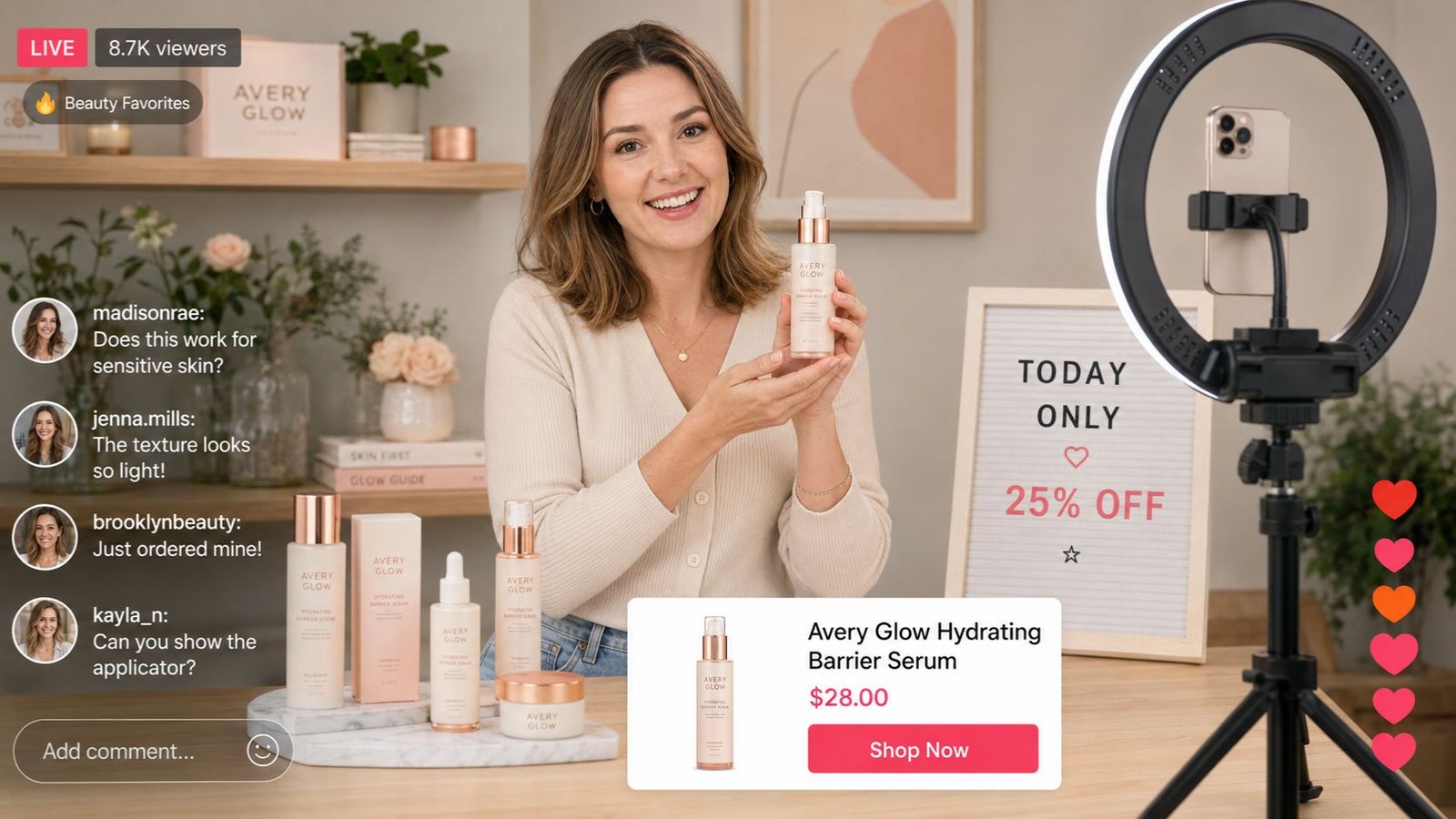


Most TikTok Shop sellers who struggle to gain traction share a common mistake: they invest heavily in video production, ad budget, and display aesthetics before confirming whether their product has real demand on the platform. The creative layer matters, but it is built on top of the product decision. Get that decision wrong, and no amount of spend recovers it.
Discovering winning products for TikTok Shop requires a structured approach that layers free platform signals with independent data validation. This guide walks through three practical methods, from scanning the Best Sellers page to training the algorithm and running a final GMV check, and closes with a launch checklist designed to reduce inventory risk before your first order arrives.
Why product selection is the key driver for TikTok Shop success
TikTok’s discovery model is fundamentally different from search-based marketplaces. Shoppers are not actively looking for a product when they find it. They encounter it through short-form video, often from a creator they follow. That means demand on TikTok is largely creator-driven, and product-market fit must be evaluated against how well a product performs in that context: visually demonstrable, quick to explain, and capable of generating authentic reactions.
The platform’s speed amplifies both opportunity and risk. A product can reach widespread visibility in roughly 72 hours once the algorithm begins distributing its content. That compression means teams that identify a trend early can capture significant volume before competition intensifies. But it also means a product tied to a single viral moment can plateau just as fast.
This is the single-creator dependency risk: if the product’s sales are driven primarily by one account, that momentum is fragile. The goal of a rigorous product discovery process is to find items with broad, distributed demand across multiple creators and video formats, not a spike caused by one anomalous post.
How to use the TikTok Shop Best Sellers page to find opportunities
The TikTok Shop Best Sellers page is a native, no-cost starting point for product research. It surfaces items that are currently generating real transaction volume across the platform and can be filtered by category, making it easier to focus on verticals you already understand or intend to enter.
When scanning the page, look for three specific signals. First, check how many distinct sellers are listing the same product. Multiple sellers competing on the same item confirms that demand is not tied to one supplier and that the market is actively being tested. Second, examine review velocity: a recently listed product accumulating hundreds of reviews within weeks signals that units are actually moving, not just being viewed. Third, combine both signals: a new listing with high review velocity and multiple sellers is a strong early indicator worth tracking further.
Focusing on categories you know also helps surface overlooked opportunities. When you understand the typical price range, return behavior, and buyer expectations of a category, anomalies stand out faster. A product priced unusually high for its category that is still generating strong review velocity, for example, can indicate a gap that competitors have not yet filled.
One important limitation: the Best Sellers page shows relative platform-level traction, not full revenue breakdowns. It tells you what is selling, but not how much, who is driving it, or how long the trend has been building. That context comes in the validation step.
Training the TikTok algorithm: a free way to surface shoppable product ideas
Your For You feed is a product research tool when trained intentionally. By consistently engaging with shoppable content in a specific category, you instruct the algorithm to prioritize more of that content in your recommendations, effectively building a curated stream of commercial product ideas and tested video formats.
Start by searching and interacting with category-specific hashtags related to shopping intent. Engage with the shoppable videos you find: watch them fully, interact with the product links, and continue past the first layer of recommendations. The key is persistence. A single session does not meaningfully shift the feed. Plan for several days of consistent engagement before the algorithm delivers a reliable signal.
The pattern to watch for is repetition across creators. When the same product appears across multiple unrelated accounts in the same week, using similar hooks and video structures, that is a meaningful signal. It suggests the product is generating organic creator interest and that a video format has already been tested and is working. You are not just seeing a product; you are seeing a content playbook alongside it.
The limitation here is the same as with the Best Sellers page: algorithmic signals show momentum, not revenue. A product flooding your feed could be driven by paid creator activity, a single viral outlier, or a trend already near its peak. That is why the next step exists.
Validating product ideas with market-intelligence analytics and GMV signals
Free discovery methods narrow the shortlist. A market-intelligence analytics tool closes the gap by attaching actual performance data to each candidate. These platforms analyze large volumes of daily video activity and report GMV (Gross Merchandise Value), units sold, weekly GMV growth, and composite viral-spread scores for products and creators across TikTok Shop.
GMV is the primary filter. Monthly GMV shows whether a product is generating meaningful volume. Weekly GMV growth is a trend indicator: consistent week-over-week increases confirm the product is still in an upward trajectory, not tapering after a peak. An anonymized example from this type of research: one product recorded more than $900,000 in TikTok Shop sales in a single 30-day window, a figure only visible through analytics, not through native platform browsing.
Creator diversification is the second critical check. Review how many distinct creators are promoting the product. A product with strong GMV but sales concentrated in one or two accounts carries significant risk. A product with the same GMV spread across dozens of creators is structurally healthier and easier to replicate with your own outreach. Prefer distributed demand.
Finally, use the tool’s top-performing video data to inform your content roadmap. Reviewing the highest-performing videos for a validated product reveals which formats, lengths, and hooks are already working. This reduces creative guesswork during launch. Commission estimates from the analytics layer also help you pre-calculate margins before inventory is ordered, which feeds directly into the go-to-market plan.
From data to launch: margin planning, creator strategy and go-to-market checklist
Validated data is only useful if it converts into an execution plan. Margin planning should happen before any inventory commitment. Start with your landed cost, then factor in the creator commission range informed by your analytics research, plus estimated ad or boosting spend. The result gives you a realistic net margin estimate and a ceiling for how much commission you can offer creators without losing profitability.
Creator commission ranges vary by category and product price point, so use analytics data as your calibration reference rather than guessing from industry averages. Setting commissions too low reduces creator participation; setting them too high compresses margins. Analytics-informed ranges help you find a viable middle ground and structure outreach conversations with confidence.
For content, replicate what the data already validated. Use the top-performing video formats, hooks, and approximate lengths as a template for the creator briefs you send at launch. This does not mean scripting creators rigidly; it means giving them a proven structure to adapt in their own voice. The goal is to compress the creative testing phase by starting from a format with demonstrated performance.
Use this checklist to sequence execution:
- Confirm GMV, weekly GMV growth, and creator diversification for each shortlisted product
- Calculate margin after estimated commission and ad spend before ordering inventory
- Start with a limited inventory quantity to reduce risk on the first test cycle
- Recruit 3 to 5 creators with a track record in the relevant category
- Brief creators using top-performing video formats identified in analytics
- Run the initial test for one to two weeks and measure unit sales and customer acquisition cost
- Iterate: scale creators and inventory only after unit economics confirm viability
Conclusion
Finding winning products for TikTok Shop is not a guessing process when approached systematically. The Best Sellers page reveals what is already gaining traction at the platform level. Algorithmic feed training surfaces products with organic creator momentum and tested content formats. And a market-intelligence analytics tool converts those signals into quantified GMV, creator diversification data, and commission benchmarks that inform every downstream decision, from inventory sizing to creator outreach and product listing optimization.
These three methods work best as a sequence, not as standalone tactics. Free discovery narrows the field; paid validation confirms which products are worth the operational investment of TikTok Shop setup, creator partnerships, and campaign planning. Teams that skip the validation step often over-invest in products with single-creator dependency or trends already past their growth phase.
RGC Mkt works with product-based ecommerce brands in the TikTok Shop and social commerce space, helping teams operationalize exactly this kind of approach, from Initial TikTok Shop Setup and Product Listing Optimization to Creator and Influencer Outreach built around data-validated product priorities. If you are preparing to launch or scale on TikTok Shop and want to apply these methods with experienced support, reach out to the team to get started.