

More than 40% of Gen Z now starts a product search on TikTok rather than a traditional search engine. That shift has turned the platform into one of the most direct paths between a trending product and a first sale, especially in high-emotion categories like pet care.
The opportunity is real, but it rewards sellers who move with a system. Jumping in without validating demand, understanding the competitive landscape or securing a reliable supply chain leads to wasted ad spend and poor margins. This guide walks through the five sequential steps that take a pet product idea from discovery to scalable sales on TikTok.
Trend validation: identify rising pet product opportunities
Before investing in inventory or content, confirm that real demand exists and that it is growing. Start with a trend tool and sort results by recent growth over a six-month window. Look for pet accessories or consumables showing sustained upward movement, not just a single spike. A product posting growth above 300% in recent months is worth a closer look, as long as the signal is consistent across time.
Cross-check that first signal with at least one additional source. Search the product name online to understand the use case, read through user-generated content to see how people talk about it and check whether social posts are appearing organically in pet-focused communities. When multiple sources point in the same direction, product-market fit is easier to confirm before spending a dollar.
Two traps to avoid early on: seasonal spikes that do not repeat year-round, and categories where the ad landscape is already saturated with established brands. Trending does not always mean accessible. The best opportunities combine a clear use case, growing search intent and a competitive field that still has room for a well-positioned new listing.
Competitor research: pricing, listings and positioning
Once a product passes trend validation, map the competitive field. Search for the product and record the price range across existing listings. A wide spread, for example $6 to $25 for the same category, signals that buyers have not settled on a standard and that positioning choices will directly affect margin and volume.
Evaluate listing quality beyond price. Look at photo clarity, copy structure, review count and delivery promises. Weak listings with low-quality images or vague benefit statements represent whitespace. A cleaner, better-explained listing at a mid-range price point can outperform a cheaper alternative simply by reducing buyer hesitation.
Use this research to set a target retail price that leaves room for ad spend and still delivers at least a 20% profit margin. A useful mental model is to work backward: start with the price you can realistically charge based on competitor data, then subtract estimated ad costs, platform fees and shipping to see what unit cost you can afford. If the math works, move to sourcing. If it does not, the product either needs a different supplier or a different positioning angle before it is worth pursuing.
Smart sourcing and sample testing for quality and margin
With a target retail price in hand, evaluate supplier options by looking at unit cost, photo quality on the supplier listing, available shipping methods and estimated lead times. For the example price range noted above, supplier unit costs in the $1 to $6 range are realistic, which leaves margin to build when targeting a retail price around $13. Always verify shipping options carefully because a slower method that costs less can generate complaints that hurt both reviews and repeat purchase rates.
Order at least one physical sample before listing. This step does two things at once: it lets you assess build quality, packaging and realistic delivery time firsthand, and it gives you a real product to film. Samples are the raw material for ad creatives and product page photos. A listing built on actual product footage performs better and sets more accurate buyer expectations than one using supplier images.
Run the full margin equation before finalizing: unit cost + inbound shipping + estimated ad spend + platform fees = minimum viable retail price for 20%+ margin. If faster shipping adds a dollar or two per unit but reduces return rates, that trade-off is usually worth it. Confirm packaging dimensions as well, since size changes can push parcels into a higher shipping tier and quietly compress your margin.
Creating thumb-stopping short-form content for TikTok
Short-form content on TikTok is where the product either earns attention or disappears. For initial ad testing, aim for videos of 10 seconds or less. This length forces clarity and improves completion rates, which is one of the signals the algorithm uses to decide how broadly to distribute a video.
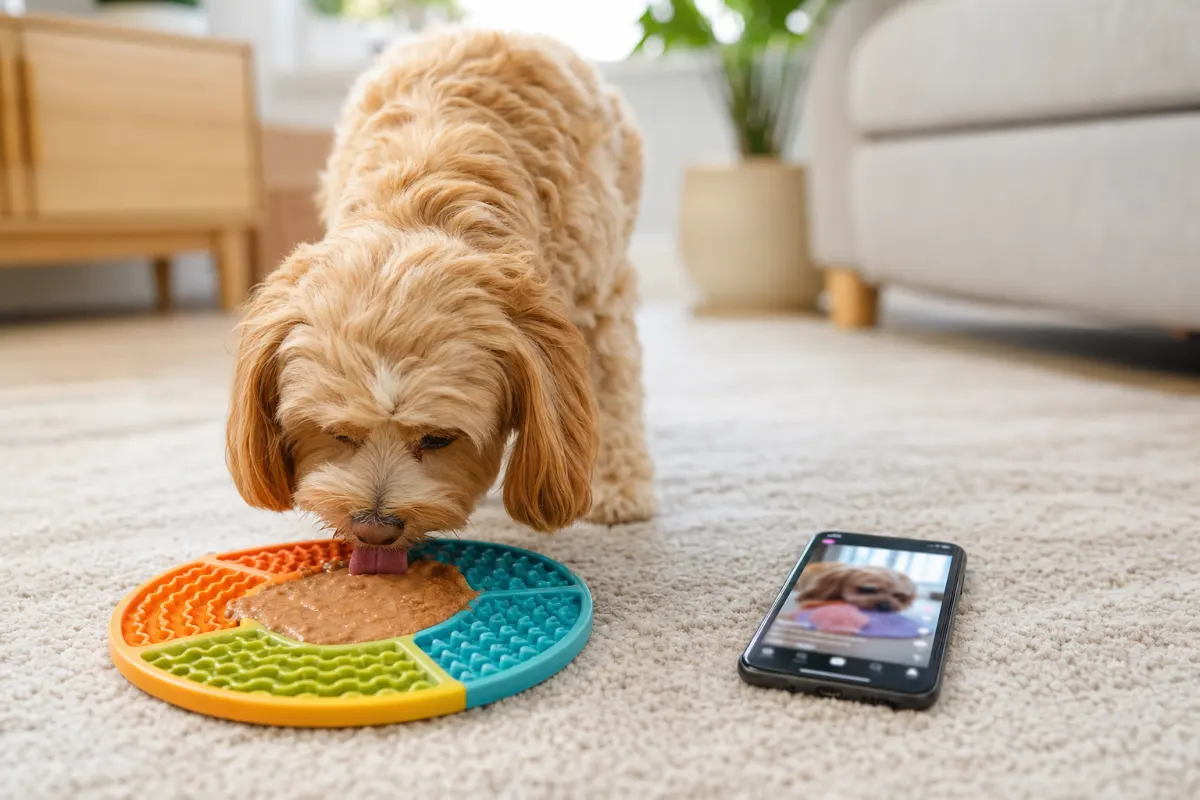
Structure each clip with a clear beginning, middle and end. A practical creative framework for pet products: open with a visual hook that shows the pet engaged with the product (no voiceover, no sales language), follow with a quick moment that demonstrates the benefit to the owner, then close with a simple on-screen prompt. This story arc makes the video feel native to the feed rather than like an ad interrupting the scroll.
Shoot vertically, add captions for viewers watching without sound and test multiple creative concepts rather than betting everything on one video. TikTok content performance is genuinely unpredictable: the video you expect to win sometimes underperforms, while a simple, unpolished clip can become a top performer. Produce several variations using different hooks and let the platform tell you which one resonates. Consider influencer outreach for additional creative angles and authentic reach beyond your own account.
Launching ads, testing and scaling on TikTok
Start your TikTok Ads campaigns by reviewing which organic posts, if any, have already picked up engagement. A video that performed well organically is often a strong candidate to run as a paid creative because it has already proven it can hold attention. If no organic data exists yet, run the best three to five creatives produced during content testing.
Set modest daily budgets across all creatives and let each run for three to seven days. The goal at this stage is not to generate volume; it is to gather statistical signals. Track CPA (cost per acquisition), ROAS, click-through rate and conversion rate at the creative level. After the test window, cut the underperformers and shift budget toward the top one or two ads.
Scaling a winner means increasing budget gradually while watching for creative fatigue. When performance starts to decline, refresh the creative with a new hook or a different story angle rather than simply raising the budget further. In parallel, optimize the product listing and checkout flow on your Shopify store. Post-click friction, such as slow pages, confusing navigation or incomplete product descriptions, can cost conversions that your ad spend already paid for. Campaign optimization is an ongoing process, not a one-time setup.
Conclusion
Selling pet products on TikTok successfully comes down to executing five steps in the right order: validate the trend before spending, research competitors to find your price and positioning, source a sample to confirm quality and protect your margin, create short story-driven videos built for the feed, then test multiple creatives with modest ad budgets and scale what works. Skipping or rushing any of these steps introduces risk that compounds quickly once ads are live.
Each stage, from TikTok Shop setup and product listing optimization to TikTok Ads management and campaign planning, requires attention to detail and a willingness to iterate. The sellers who move fastest are usually those who treat the process as a system rather than a series of one-off decisions.
RGC Mkt specializes in TikTok Shop and Social Commerce, supporting brands at every stage of this process: Initial TikTok Shop Setup, Product Listing Optimization, TikTok Ads Management and Campaign Optimization. If you have a pet product you want to validate and bring to market, reach out to the team to evaluate your product and map out a growth plan.