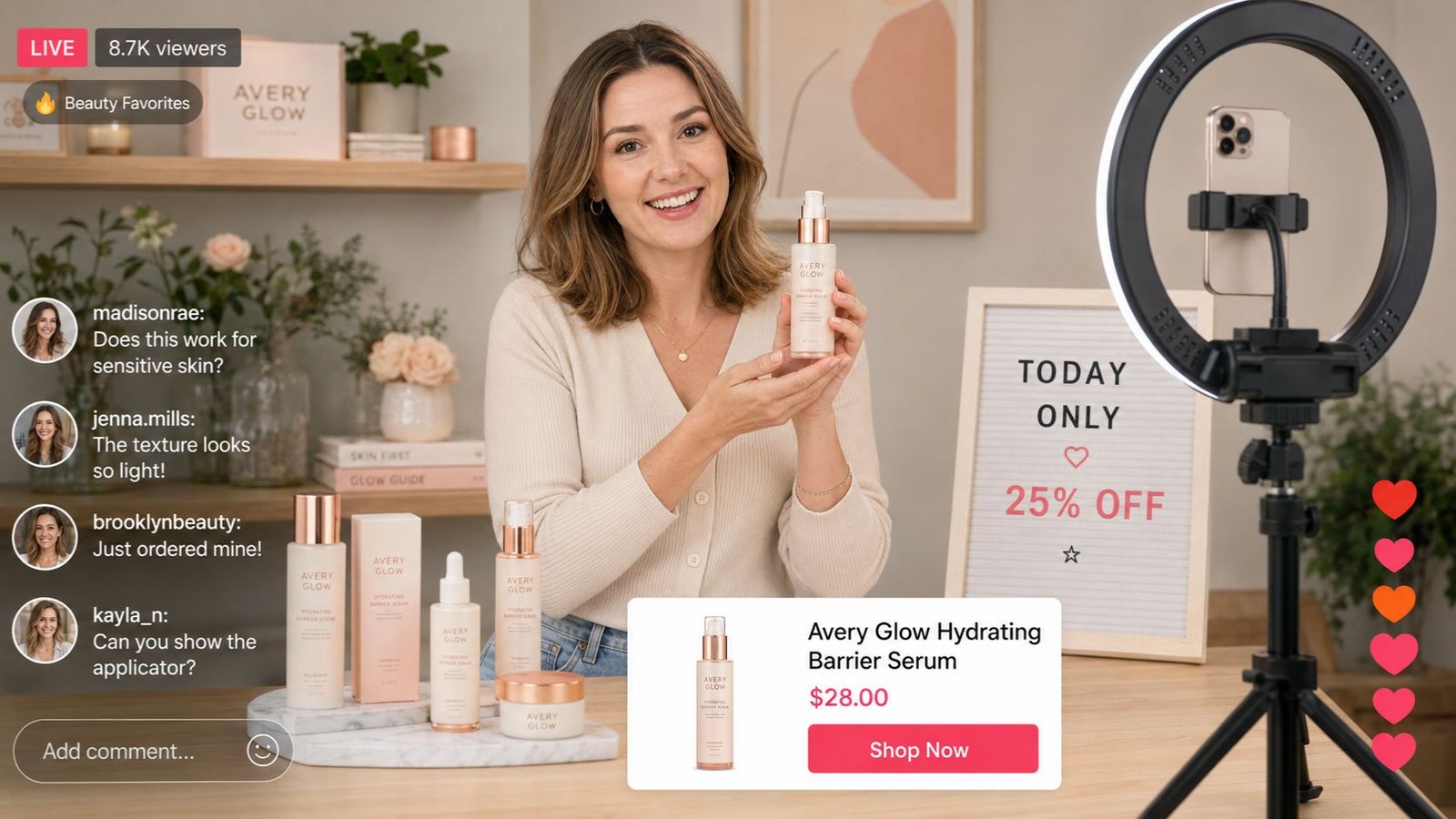


Most product research starts with guesswork: browse a marketplace, look at bestseller lists, maybe run a Google Trends search. That approach is slow, reactive and often brings you to a trend that has already peaked. TikTok flips that process entirely, surfacing product momentum in real time before it shows up anywhere else.
The challenge is that not every viral clip translates into a profitable product. Views are not sales, and high engagement does not always mean strong margins. What separates operators who profit from TikTok trends from those who chase them is a structured method: find the signal on TikTok, verify the demand with data tools like Helium 10, then run a low-risk Shopify test before committing to inventory or paid spend.
This guide walks through each stage of that process, from spotting early trend signals to knowing when a product is worth scaling with TikTok ads.
Why TikTok is a product research goldmine
TikTok’s algorithm distributes content based on engagement signals, not follower count. That means a product video from an unknown account can reach millions of users within days if it resonates. For product researchers, this creates a real-time window into what people find compelling enough to watch, save and comment on right now.
The categories that tend to perform best are gadgets, beauty tools, kitchen accessories and novelty items. These products are visually demonstrable, easy to explain in a short clip and trigger immediate curiosity. When a product consistently generates that kind of response across different creators and formats, the platform is effectively running a mass market test on your behalf.
The important distinction is between a short-lived fad and a sustained trend. A single viral video means very little on its own. When the same product appears across multiple unrelated creators, in different video styles, over several weeks, that repetition is a meaningful trend signal. It suggests genuine purchase intent, not just algorithm luck.
That said, viral interest still needs quantitative validation before you act on it. TikTok tells you that people are curious. It does not tell you whether they will buy at a price point that works for your margins.
How to identify viral products on TikTok
The most direct starting point is hashtag research. Searching hashtags like “TikTok made me buy it,” “viral product” or niche-specific variations surfaces content that is already generating buying conversations. From there, the goal is to look for patterns, not one-off hits.
Repetition is the key signal. When the same product keeps appearing across different creators, in different color variants, demonstrated in different ways, that consistency indicates momentum. A kitchen gadget showing up in five unrelated videos within a week carries far more weight than a single video with two million views.
Comment sections are where purchase intent becomes visible. Comments asking “Where can I buy this?” or “I need this ASAP” are direct indicators that viewers are not just entertained but ready to act. Track these patterns across multiple videos for the same product and note how frequently buying-intent comments appear relative to general reactions.
To separate trends from fads, monitor a product over time. If it disappears after a week, it was likely a novelty spike. Trends that sustain for roughly three to six weeks have demonstrated enough staying power to justify a validation step. Keep a simple log of recurring products, noting first appearance, creator count and comment quality, so you build a comparable dataset rather than relying on memory.
How to use TikTok Creative Center to analyze top ads
TikTok Creative Center is a free tool that gives access to top-performing ads across regions, categories, objectives and timeframes. It is one of the most underused resources for product research because most people think of it as a creative reference rather than a product signal tool.
To get useful data, apply filters strategically. Select a relevant region, narrow by product category (such as home, beauty or electronics), choose a conversion objective and filter by a recent date range. This surfaces ads that are actively spending and performing, which means the products behind them have already passed a basic market test with real ad budgets.
The metrics to prioritize are click-through rate, the two-second view rate, the six-second view rate and conversion rate. A high two-second view rate means the hook is working. A strong six-second view rate means the content holds attention long enough to communicate value. High CTR paired with strong CVR confirms that people are not only clicking but also completing purchases. Look for these combinations, not isolated metrics.
The goal is to identify repeatable patterns. When multiple ads for similar products use the same creative structure, hook style or demonstration format, that pattern reveals what converts in that category. You are not copying ads; you are extracting the logic behind what works so you can apply it when you test your own product angle.
Validate demand with Helium 10 and complementary tools
TikTok shows you that people are excited about a product. Helium 10 tells you whether they are actively searching for it. That distinction matters because excitement does not always convert into search-driven demand, and search-driven demand is what sustains sales beyond a trend cycle.
Use Helium 10 to check the monthly search volume for the product’s core keywords. A product with strong TikTok visibility but minimal search volume may be entirely discovery-driven, meaning it depends on continuous ad or content spend to generate purchases. A product with both TikTok momentum and growing search volume has a more durable demand profile.
Beyond search volume, cross-reference with marketplace listings to understand estimated sales ranges and price distribution. This tells you whether the category is already saturated and what price points customers expect. From there, run a basic margin calculation: product cost, shipping, platform fees and estimated ad spend against your target selling price. If the numbers do not work at a realistic conversion rate, the product is not viable regardless of how viral it looks.
Move quickly but with discipline. Trends have short windows, so you want to complete validation within days, not weeks. The goal is not a perfect analysis but a good-enough signal: is there real search demand, is the margin viable, and can you source a small batch fast enough to test before the trend peaks?
Quick Shopify tests and scaling with TikTok ads
Once a product passes the validation stage, the priority is speed to market with minimum risk. A focused Shopify product page, a clear checkout flow and proper tracking setup are all you need to start. The page does not need to be elaborate. It needs to load fast, communicate the product’s value clearly and make purchasing frictionless.
For inventory risk management, consider preorders, a small initial batch or a fulfillment partner who can handle low-volume orders. The objective at this stage is not profitability at scale; it is conversion data. You want to know whether real buyers, reached through a real ad, will complete a purchase at your target price.
Run initial TikTok ads with a limited budget and at least two creative variations. Test different hooks, different product angles or different calls to action. Keep the test window short, typically seven to fourteen days, with a defined budget cap. The metrics that matter most are CTR and CVR. A high CTR with low CVR usually points to a landing page or pricing problem. A low CTR suggests the creative or hook is not landing.
Scaling is only the right move when the data supports it. Signals worth acting on include consistent CVR across multiple ad variations, a customer acquisition cost that leaves room for margin after fees, and a supplier who can replenish inventory fast enough to meet demand. At that point, expanding creative variations, testing broader audiences and exploring creator partnerships become logical next steps rather than speculative bets.
Conclusion
The process covered in this guide shifts product selection from intuition to a structured, data-backed approach. TikTok surfaces what people are reacting to right now. Creative Center reveals what advertisers are already investing in and converting from. Helium 10 confirms whether that interest translates into search demand and viable margins. And a quick Shopify test turns all of that research into real conversion data before you scale.
Each stage serves a specific purpose and none of them works in isolation. Skipping validation and going straight from a viral video to a large inventory order is how trend-chasing goes wrong. Following the full sequence, from discovery to testing to scaling, is how social commerce operators build repeatable, lower-risk product launches.
RGC Mkt specializes in exactly this kind of work across TikTok Shop and social commerce, from TikTok Shop setup and product listing optimization to TikTok Ads management and creator partnerships. If you want support at any stage of the process, whether you are just getting started or ready to scale a validated product, reach out to the team and get the conversation going.