

TikTok ad credits and spend-based bonuses look like an easy win. Spend more, get credits back, lower your costs. The logic seems straightforward until you realize that the math only works in one direction: when your campaigns are already converting. When they aren’t, those offers don’t rescue performance. They accelerate the problem.
Most ecommerce stores that struggle with TikTok Ads don’t have a platform problem. They have a timing and strategy problem. They apply offers too early, before the campaign has proven it can convert at a sustainable cost per acquisition. The result is higher spend on a broken funnel, with a small credit return that doesn’t come close to covering the losses.
This guide breaks down how TikTok’s promotional offers actually work, what signals tell you a campaign is ready for them, how to structure your budget to scale safely, and why creative quality is the one thing no offer can replace.
Why TikTok ad credits are leverage, not free money
Ad credits and spend-based bonuses are incentives TikTok offers to reward advertisers who increase their spend. The intent is straightforward: the more you invest in the platform, the more you can unlock in return. That sounds like a good deal, and it can be. But the word that matters most here is leverage.
Leverage amplifies what’s already there. If your campaign is generating consistent sales at a healthy cost per acquisition, ad credits reduce your effective CPA even further. That’s real value. But if the underlying campaign isn’t converting, credits simply amplify your losses. You spend more to unlock the offer, the campaign keeps underperforming, and the small credit return doesn’t offset the gap.
The most common mindset mistake is treating credits as if they were free budget dropped into a working system. They aren’t. They’re a reward for spending, not a fix for campaigns that haven’t proven themselves. A store that ramps spend on a non-converting ad set to hit a spend threshold will almost always end up worse off, not better, regardless of the credit received.
The shift in thinking is simple but important: credits are a tool to extract more value from something that’s already working. Start there, and the rest of the strategy becomes much easier to manage.
How TikTok’s spend-based credits and promotional offers work
Most TikTok promotional offers are structured around spend thresholds. You commit to reaching a certain spend level within a defined window, and once you hit that threshold, TikTok returns a portion of that spend as ad credits. The mechanics vary by offer, but the underlying logic is consistent: spend more, get some back.
These offers are designed for active advertisers who are already running campaigns with traction. They’re built to reward scaling, not to give brands a reason to start spending on campaigns that haven’t shown results. Understanding that distinction changes how you should evaluate any offer that comes your way.
The qualitative math is straightforward. If your campaign already converts at a strong CPA, adding credits on top of that spend reduces your effective cost per acquisition and makes an already profitable campaign more efficient. If your CPA is too high, even a meaningful credit return won’t bring the campaign into profitable territory. The credit shrinks the loss but doesn’t reverse the economics.
This is why campaign validation always has to come before offer activation. The offer changes your numbers slightly. Only a validated campaign with real conversion signals changes the outcome.
When to use offers: validated signals to look for
Before you commit increased spend to hit an offer threshold, your campaign needs to demonstrate that it’s actually working. There are specific signals to look for before making that decision.
- Consistent sales over multiple days: not a single spike, but a repeatable pattern that shows the product is converting across different audience segments and time windows.
- Strong add-to-cart activity: high add-to-cart rates indicate purchase intent. If people are adding to cart but not completing the purchase, that’s a funnel issue to fix before scaling. If both add-to-cart and purchase rates are healthy, that’s a strong signal.
- Stable learning phase results: campaigns that have exited the learning phase with consistent delivery and predictable costs are in a much better position to scale than campaigns still generating volatile results.
- Creative engagement and resonance: if your content is generating strong watch time, shares, or comments beyond passive scrolls, the algorithm is finding the right audience and the creative is doing its job.
Timing matters as much as the signals themselves. Adding budget to a campaign during an unstable or early learning phase introduces noise into the algorithm’s optimization. The campaign hasn’t had enough data to find its most efficient delivery pattern, and increasing spend too fast disrupts that process.
The right approach is to pace spend toward daily budget targets that align with the offer requirements, rather than making a large last-minute push to hit a threshold. Steady, controlled increases give the algorithm room to scale without losing the performance consistency you validated in the first place.
How to structure campaigns around an offer to scale safely
Once you have validated conversion signals, the goal is to scale in a way that preserves performance, not just in a way that hits the threshold. Campaign structure and budget pacing are the two variables that determine whether scaling works or breaks what you’ve built.
Keep the setup simple. Scaling into an offer with a complex campaign structure that includes multiple untested ad sets introduces too many variables at once. Focus on your top two or three proven creatives. Give the algorithm clear, consistent signals. Avoid testing new concepts while simultaneously trying to hit a spend threshold.
Allocate budget in steady daily increments. If your metrics remain stable after a budget increase of 20 to 30 percent, that’s a sign the campaign can absorb more spend without losing efficiency. Large single-day budget spikes to catch up to an offer threshold are one of the fastest ways to destabilize a campaign that was performing well.
Monitor performance closely and be willing to pause. If an ad set starts showing declining results after a budget increase, pulling back is the right move, even if it means falling short of a spend threshold. Hitting the offer isn’t worth accelerating losses on a creative or audience that’s no longer responding. The offer is the incentive. Performance is the priority.
Creative rules: the single biggest lever for profitable TikTok ads
No offer mechanics, no campaign structure tweak, and no budget strategy will fix weak creative. On TikTok, the creative is the targeting. It’s what stops the scroll, communicates the value, and drives the click. Promotional offers can lower your effective CPA on a winning creative. They can’t create a winner out of content that doesn’t connect.
Winning TikTok ads follow a consistent pattern. The hook lands in the first two to three seconds and gives the viewer a reason to keep watching. The middle section quickly explains the problem the product solves or shows the result in action. The ending delivers a clear next step, whether that’s visiting the shop, learning more, or completing a purchase through TikTok Shop’s in-app experience.
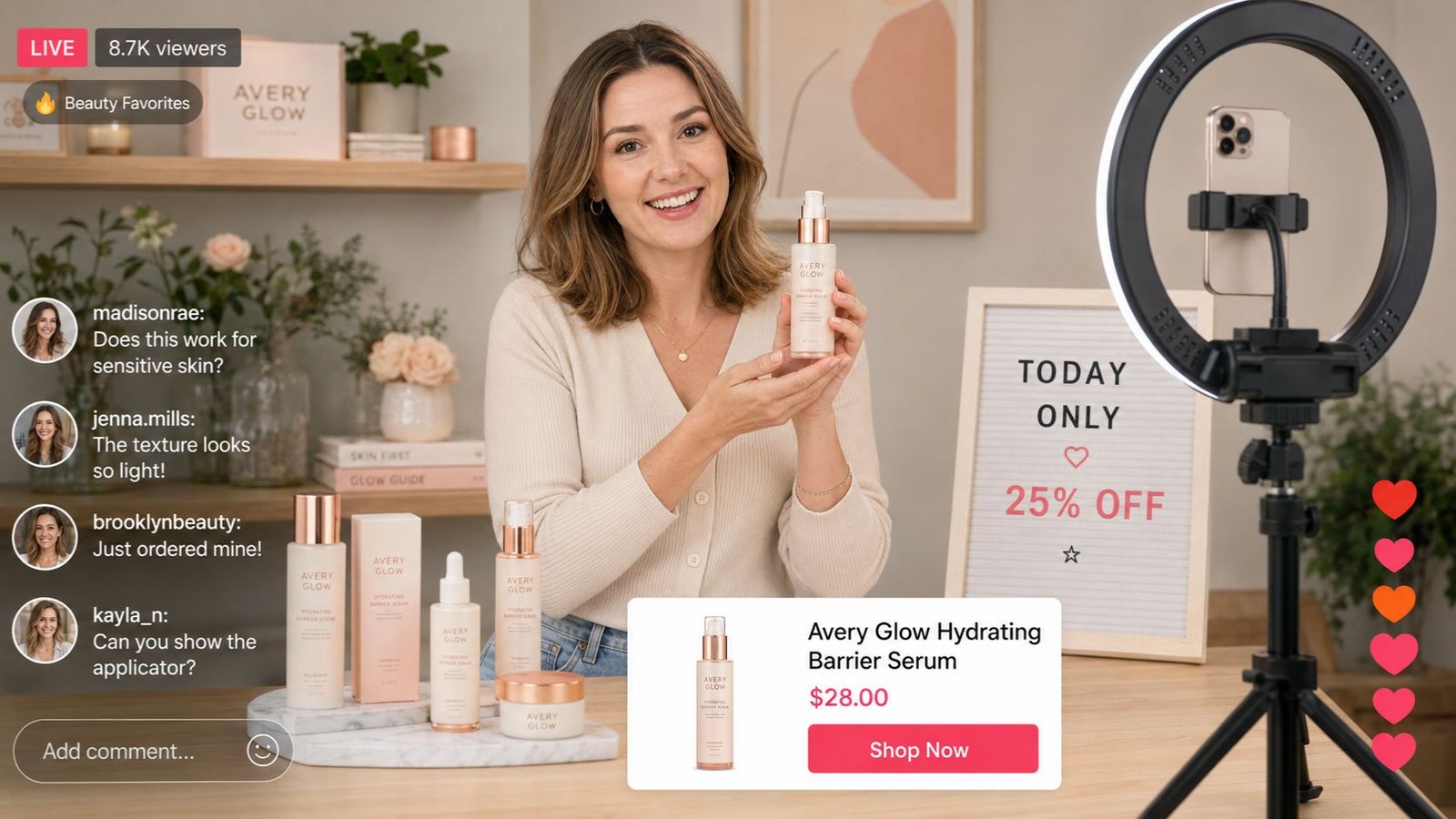
Authenticity outperforms polish on this platform. Ads that look like real content, someone talking directly to the camera, a product being used in a natural setting, or a genuine before-and-after demonstration, tend to outperform highly produced ads that feel like traditional commercials. The format aligns with how TikTok users consume content. Ads that feel native to the feed get watched longer and convert at higher rates.
Use this checklist before allocating serious budget to any creative:
- Hook in the first 2 to 3 seconds: does the opening give someone a reason to stop scrolling?
- Problem and solution are clear: does the viewer understand what the product does and why they need it?
- Product is shown in action: is there a demonstration or real-use context rather than just static imagery?
- Clear next step: does the ad end with a specific, low-friction action the viewer should take?
Creative development should happen before offer activation. Validate your creative against real traffic and real conversion data. Once you have a format that works, then use offers to scale it more efficiently.
Conclusion
The core principle across every section of this article is the same: TikTok ad credits and spend-based offers are tools for extraction, not tools for discovery. They help you get more from what’s already working. They don’t help you find what works. Validate your campaigns first, confirm you have conversion signals, build creative that earns attention, and then use offers to scale with confidence.
This matters even more in the context of TikTok Shop and social commerce. When users can complete a purchase without leaving the app, the distance between interest and action collapses. That’s a significant opportunity, but it also means that every weak ad or poorly structured campaign is closer to a direct loss. Brands building on TikTok Shop need deliberate campaign planning, strong shop optimization, and creative that converts in a native environment. The mechanics of in-app purchasing reward advertisers who get all the fundamentals right, and they punish those who rely on offers to paper over strategic gaps.
If your brand is working on TikTok Ads Management, TikTok Shop Marketplace Management, or campaign optimization and you want a clearer picture of where your current setup stands, the RGC Mkt team works specifically with ecommerce brands in this space. Reach out to have your campaign strategy and TikTok Shop setup reviewed by a team that can help you scale what’s working and fix what isn’t.