

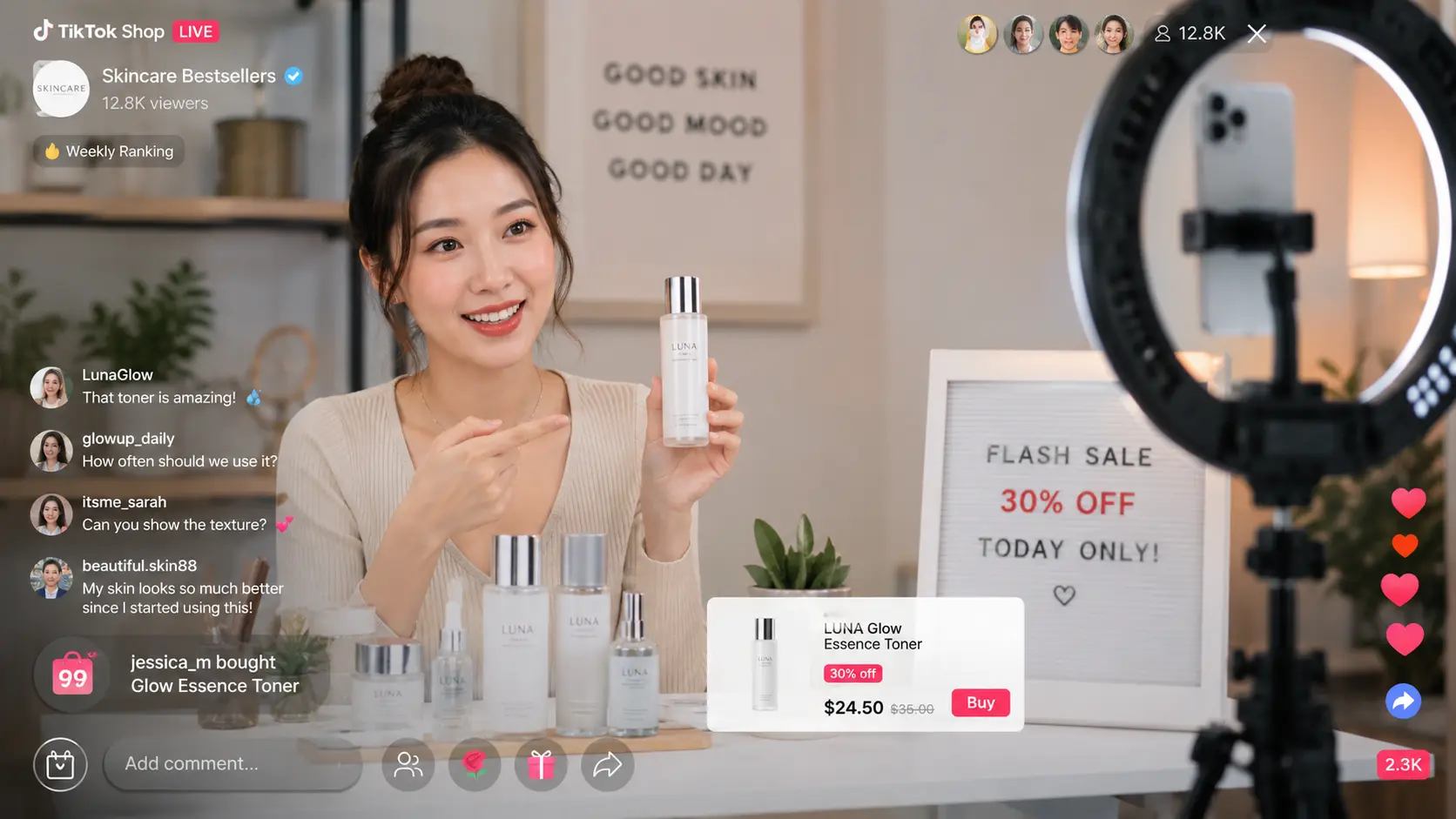
Social commerce has shifted from a trend into a serious sales channel, and TikTok Shop is one of the clearest examples of that shift. Instead of sending potential buyers to an external website, sellers can now close the entire transaction inside the app, at the exact moment a product captures attention. For product-based businesses and ecommerce brands, that changes the equation significantly.
This guide walks through every step of the TikTok Shop setup process: from creating your seller account and completing business verification to configuring your shop and building a growth plan with ads and creators. Whether you are a retailer, manufacturer, private-label seller or reseller, the steps below give you a clear path to getting started.
What is TikTok Shop and how it changes social commerce
TikTok Shop is a native commerce feature built into the TikTok app that allows sellers to list products, link them directly to short-form videos and let customers complete their purchase without ever leaving the platform. When a viewer sees a product in action, they tap a shopping overlay, review the listing and check out instantly through in-app checkout. That seamless flow is the core advantage.
Compare that to a traditional affiliate link approach, where a viewer must stop watching, open a browser, navigate to an external page and restart the buying intent from scratch. Each of those steps creates friction and increases drop-off. TikTok Shop eliminates most of that friction, which makes impulse purchases far more likely. Product discovery happens at the moment of peak interest, and checkout is right there.
The channel is best suited for product-based businesses with a visual story: fashion and accessories, beauty, home goods, gadgets, wellness products and similar categories where a short demonstration can create immediate desire. That said, audience fit and product-market match remain essential. TikTok Shop amplifies what already resonates; it does not replace the need for a strong product and competitive offer.
Step-by-step: create your TikTok Shop seller account
Before you start the registration flow, gather what you need so the process stays smooth. Have your email address ready, know your business structure (individual, sole proprietor, partnership or corporation), and have your tax identification number on hand, either your Social Security Number (SSN) if you are operating as an individual, or your Employer Identification Number (EIN) if you have a registered business entity.
The registration process follows a clear sequence:
- Go to the TikTok Shop seller registration page and enter your email address.
- Enter the verification code sent to your email and create a secure password.
- Select your business type from the available options (individual, sole proprietor, partnership or corporation).
- Enter your SSN or EIN depending on your business structure.
- Submit your business details, including registered address and beneficial ownership information if applicable.
- Wait for verification, which can take up to 48 hours, though many accounts are reviewed in under an hour.
While verification is processing, you do not need to wait idle. Use the time to prepare your shop name, finalize your product list, gather product images and outline your first listings. That way, once verification clears, you can move directly into setup without delay.
Business verification, EIN/SSN and account limits
Understanding which tax ID to use is one of the most important details in the TikTok Shop setup process. If you are selling as an individual with no registered business entity, you will use your SSN and select the individual or sole proprietor option during registration. If you operate through an LLC, corporation or partnership, use your EIN and select the corresponding business type. Entering the wrong ID type can create account issues that are difficult to resolve later.
During verification, TikTok may request additional documentation to confirm beneficial ownership and registered business address. This is standard for marketplace compliance and is not a reason for concern. Have your business formation documents accessible so you can respond quickly if additional information is requested.
One critical limitation to keep in mind: TikTok Shop allows only one seller account per SSN and one per EIN. If you manage multiple brands or work as an agency handling several clients, each business entity will need its own EIN and its own separate account. Plan your account structure carefully before registering, and if you have questions about the right entity setup, consult a business or tax professional. This guide does not provide legal or tax advice.
Configuring your shop: name, category and product listings
Your shop name is one of the first things buyers and TikTok’s discovery algorithm will associate with your brand. Use only letters, no special characters, numbers or symbols. Choose a name that reflects your actual brand or business name rather than generic descriptors. A name like your brand name is more trustworthy and more memorable than something like “Official Store” or “Best Deals.” Consistency with your other sales channels also builds recognition over time.
Selecting the right primary product category matters for how TikTok surfaces your shop in relevant searches and browse contexts. Choose the category that most accurately matches the majority of your products. If your catalog spans multiple categories, lead with your strongest one. You can expand your product range later, but your primary category shapes your initial discovery footprint.
For your first product listings, follow this checklist to give each item the best chance of converting:
- Write a concise, descriptive title that includes the key product name and its main benefit.
- Add three to four bullet points that highlight practical benefits rather than just features.
- Upload three to four high-quality images that show the product clearly from different angles or in use.
- Set a competitive price and confirm your inventory quantities and SKUs are accurate.
- Include clear shipping expectations so buyers know what to anticipate.
Strong listings are necessary, but they are not sufficient on their own. Product listing optimization works best when paired with video content that demonstrates the product in context. Plan to create at least a few short videos that link directly to your listings before or shortly after launch.
Grow sales: optimization, ads, creators and next steps
Once your shop is live and your first listings are published, the growth phase begins. Short-form video is the primary driver of product discovery on TikTok. Create videos that show your product solving a problem, being used in a realistic setting or delivering a clear visual result. Link your products directly in the video so viewers can tap through to purchase without any extra steps. Post consistently rather than waiting for a single “perfect” video.
TikTok Ads can accelerate what organic content builds. Start with a small campaign targeting a defined audience segment relevant to your product category. Test a few creative variations, track CTR and conversion rate, and reinvest budget toward what performs. Avoid the mistake of scaling spend before you have baseline data. A modest initial test tells you far more than a large untested campaign.
Creator partnerships are another strong lever for TikTok Shop growth. Identify creators whose audience aligns with your product and reach out for collaborations, whether through gifting, affiliate commission or paid partnerships. A creator who genuinely uses and recommends your product can drive significant sales volume. Track each collaboration’s performance separately so you can identify which creator profiles and content styles convert best for your specific product.
Treat your first 30 to 60 days as a testing and learning phase. Monitor marketplace performance metrics including ROAS, average order value and return rate. Use that data to refine your listings, adjust pricing, update creatives and guide your next campaign planning cycle. TikTok Shop rewards sellers who iterate, not those who set listings once and wait.
Conclusion
TikTok Shop represents a meaningful shift in how product-based businesses can reach buyers. In-app checkout reduces the distance between discovery and purchase, and that matters in a content environment where attention moves fast. The setup process, from creating your seller account and completing business verification to configuring your shop name, primary product category and first listings, is more accessible than many sellers expect. The real work begins after launch, with product listing optimization, consistent content, creator partnerships and well-planned TikTok Ads campaigns all working together to build sustainable sales.

Getting the foundation right, accurate tax ID entry, a clear shop name, properly structured listings and a basic growth framework, makes every subsequent step easier and more effective. Skipping those details early tends to create compounding friction later, from verification delays to poor listing performance to misaligned ad targeting.
RGC Mkt works with brands at every stage of TikTok Shop and social commerce, offering services that cover Initial TikTok Shop Setup, product listing optimization and ongoing TikTok Shop Marketplace Management. If you are ready to launch or want to improve the performance of an existing shop, reach out to the team and get the support you need to move forward with confidence.