


Running a TikTok Shop without a structured content engine is one of the fastest ways for an e-commerce brand to burn marketing resources. Many sellers post sporadically, promote products without existing trend signals, and default to studio-style advertisements that feel out of place in short-form video feeds. The result is algorithmic stagnation, low click-through rates (CTR) on product anchor links, and elevated Customer Acquisition Costs (CAC).
Converting social video scrollers into active shoppers requires treating content as a systematic engineering discipline rather than a creative gamble. TikTok Shop operates on an algorithmic recommendation engine that evaluates real-time engagement signals—such as 3-second hook retention, completion rate, anchor link clicks, and native checkout conversions—to determine video distribution.
This operational guide details how to build a high-velocity content production engine: from establishing consistent posting architectures to sourcing high-signal viral SKUs, executing multi-format video testing loops, maintaining authentic product demonstrations, and timing trend piggybacking for maximum channel GMV.
The Algorithmic Mechanics of Posting Cadence and Momentum
TikTok’s recommendation engine treats every account as a continuous data feedback loop. When a new video is published, the algorithm distributes it to a small test audience of users whose past watch history aligns with the video’s content category. If that initial test group demonstrates strong retention and engagement metrics, the video is pushed to progressively larger audience cohorts.
When an account goes quiet for extended periods, this testing cycle stalls. Long gaps between uploads force the algorithm to re-evaluate account relevance from a cold start, reducing the baseline distribution allocated to subsequent uploads.
Intent Search Marketplaces vs. Algorithmic Social Feeds
| Performance Dimension | Intent Search Marketplaces (Amazon, Google) | Algorithmic Social Commerce (TikTok Shop) |
|---|---|---|
| Consumer Intent Level | High-intent search (Active keyword queries) | Low-intent scroll (Passive discovery & impulse hooks) |
| Primary Traffic Lever | Keyword bidding (PPC) & static listing indexing | Short-form UGC, creator sampling & Spark Ads |
| Content Lifespan | Static assets maintained for months/years | High-velocity 48–72 hour viral content decay cycles |
| Posting Frequency Target | Periodic catalog updates & seasonal refreshes | 3 to 7 video uploads per week per SKU focus |
| Primary Conversion Driver | Price point, review count, & spec bullet points | 3-second visual problem hooks & native social proof |
Building a Scalable Content Production System
Achieving posting consistency does not require daily live filming sessions. High-performing e-commerce teams build batch-production systems that separate content planning, filming, and post-production into distinct workflows:
- Structured Scripting & Hook Selection: Write 5 to 10 distinct 3-second hooks for a single focus product before filming begins.
- Batch Filming Sessions: Dedicate a single 2-hour window weekly to film all visual angles, product close-ups, problem-state demonstrations, and application steps.
- Multi-Asset Editing & Voiceovers: Edit raw footage into multiple short-form variations (10–30 seconds), layering different voiceover tracks, native text overlays, and background audio.
- Scheduled Upload Cadence: Utilize scheduling tools to maintain a consistent output of 3 to 7 uploads weekly, ensuring a steady stream of content signals to the feed.
Signal-Based Sourcing: Identifying High-Velocity Viral SKUs
Promoting products that lack existing demand signals on TikTok Shop is an inefficient use of marketing spend. When a brand attempts to push a low-signal product, the content must do the heavy lifting of educating the market and creating demand simultaneously. When promoting a product with validated demand, the content simply connects an eager buyer with an active purchasing channel.
The Trend Signal Verification Stack
To identify products with validated social velocity before investing in inventory or creator sampling, audit four data layers across the platform:
- Creator Mention Density: Monitor whether multiple independent creators are organically featuring the product category without paid brand sponsorships.
- Search & Comment Intent Language: Audit comment sections on category videos for buyer intent phrases such as “Where can I buy this?”, “Is this on TikTok Shop?”, or “Need the link.”
- Marketplace Sales Badges: Track velocity tags in Seller Center and competitor shop storefronts (e.g., “1k+ sold this week”).
- Short-Form Video View Acceleration: Identify SKUs where top-ranking category hashtags demonstrate a sharp upward curve in weekly view volume.
Ideal Social Commerce Product Criteria
The products that achieve rapid scale on TikTok Shop share visual and psychological characteristics that translate effectively into 9:16 mobile feeds:
| Product Category | Core Visual Hook Characteristic | Ideal Price Point Band |
|---|---|---|
| Beauty & Personal Care | Immediate visual before-and-after transformation | $20.00 – $45.00 |
| Home & Kitchen Gadgets | Solves an obvious daily frustration in under 5 seconds | $15.00 – $35.00 |
| Apparel & Accessories | Dynamic movement, styling versatility, or fit demos | $25.00 – $60.00 |
| Supplements & Wellness | Relatable daily routine integration & clear benefit claims | $30.00 – $65.00 |
| Small Consumer Tech | Satisfying tactile use, novel feature, or unboxing hook | $25.00 – $50.00 |
Multi-Format Creative Strategy: The 3-Pillar Production Matrix
Relying on a single video style limits your reach to a specific viewer sub-segment. Different consumers interact with short-form feeds through varied content preferences: some respond to trending audio hooks, others seek detailed voiceover explanations, and others require side-by-side visual demonstrations before buying.
The 3-Pillar Content Matrix
| Content Pillar | Creative Format & Mechanics | Primary Algorithmic & Viewer Role |
|---|---|---|
| Pillar 1: Trending Audio Hooks | 7–15 second clips using trending platform audio matched to rapid visual product cuts. | Expands top-of-funnel reach & captures passive scrollers. |
| Pillar 2: Benefit Voiceovers | 15–30 second direct problem-solution videos with clear voiceover narrative and native text. | Communicates value propositions & educates high-intent buyers. |
| Pillar 3: Unscripted Demos | 20–45 second real-time usage videos, get-ready-with-me (GRWM) routines, or comparison tests. | Builds social proof, overcomes buyer objections, & drives checkout. |
The 3-in-2 Testing Loop
To maximize asset efficiency, execute the 3-in-2 Testing Framework: take a single Hero SKU and produce three distinct video formats within a 14-day testing window:
- Format A (Trending Sound): A 10-second visual clip featuring high-speed product application set to rising platform audio.
- Format B (Voiceover Narrative): A 20-second video opening on a specific frustration, using a voiceover to explain how the SKU solves the problem.
- Format C (Live-Action Demo): A 30-second unscripted usage video showing realistic side-by-side results without polished commercial filters.
Measure performance across all three variations. Route paid Spark Ad budgets toward the creative format that achieves the highest combined Anchor Link CTR (≥1.5%) and Checkout CVR (≥3.5%).
Native Product Demonstrations: Building Trust Without Hard-Selling
TikTok users possess a high sensitivity to content that mirrors traditional television or banner advertising. Videos that open with polished brand logos, studio lighting, or aggressive sales pitches trigger immediate scroll-away behavior, destroying 3-second hook retention scores.
Native product demonstrations integrate the product seamlessly into relatable scenarios, prioritizing problem identification before introducing the solution.
Structuring a High-Converting Native Demo
- The Visual Problem Hook (0–3 Seconds): Show the problem in its raw state (e.g., cluttered drawer, tangled hair, dull skin) without displaying product packaging or logos.
- Native Application (4–12 Seconds): Demonstrate the product in use within a realistic setting. Use phone-shot 9:16 vertical video with natural lighting to maintain an authentic feel.
- The Visual Result (13–20 Seconds): Feature the immediate transformation or benefit achieved through using the product.
- Low-Friction Call-to-Action (21–30 Seconds): Direct the viewer toward the tagged product anchor link using conversational language (e.g., “I linked the exact set on the yellow cart below if you want to try it”).
Language Calibration for High Trust
Modifying script phrasing alters viewer perception and conversion rates. Replace high-pressure sales claims with observation-based language:
- Avoid Overstated Claims: “This life-changing tool completely fixed my routine instantly!”
- Use Authentic Observations: “I noticed my morning routine took about ten minutes less once I started using this.”
- Include Helpful Nuance: “It takes a couple of tries to get the technique down, but once you do, the results speak for themselves.”
Strategic Trend Piggybacking: Timing, Execution, and Pitfalls
Trend piggybacking involves adapting a rising audio track, visual meme format, or editing style to showcase your product. When executed correctly, piggybacking leverages built-in algorithm momentum to push your product to wider audience feeds.
The 72-Hour Trend Velocity Window
Audio trends and viral formats experience rapid decay cycles on short-form platforms. A trend operating at its peak generates massive algorithmic push; the same trend used two weeks later feels outdated and signals a lack of platform native awareness.
- Target Execution Window: Identify rising trends during their early growth phase and publish product-adapted variations within 48 to 72 hours.
- Maintain Relevance: Adapt the trend’s underlying joke or format so it connects directly to your product’s core benefit. Placing a product over a trending audio track without establishing a logical connection confuses viewers and lowers completion rates.
- Avoid Strategy Substitution: Do not rely on trend piggybacking to compensate for poor product selection. A viral audio track cannot overcome a lack of demand for an unvalidated SKU.
Master Content Strategy Checklist
Execute this checklist to establish and optimize your TikTok Shop content production engine:
Content Production Infrastructure
- Establish a minimum posting target of 3 to 7 short-form videos weekly per focus SKU.
- Implement a weekly batch-filming workflow to capture multiple angles, hooks, and application steps in a single session.
- Build a 14-day content calendar balancing trending audio clips, benefit voiceovers, and native product demos.
- Configure Seller Center product anchor links to ensure clean attribution tracking across all uploads.
SKU Selection & Signal Auditing
- Audit TikTok Search and Seller Center data weekly to build a queue of 3 to 5 high-signal products.
- Verify that selected SKUs possess clear visual demonstration angles and fit within optimal impulse price bands ($20 to $60).
- Confirm that independent creators are organically featuring the target product category before deploying paid media.
Creative Execution & Calibration
- Structure every video around a 3-second visual problem hook, avoiding opening brand logos or studio intros.
- Format all video assets in native 9:16 vertical resolution using natural lighting and clean, high-clarity audio.
- Use observation-based script language that builds buyer trust and includes low-friction calls-to-action.
- Execute the 3-in-2 testing framework to isolate top-converting formats before allocating paid Spark Ad budgets.
Enterprise Social Commerce Strategy with RGC Mkt
Building a high-margin TikTok Shop presence requires integrating algorithmic content production, data-driven product selection, creator network management, and paid media amplification. Treating content as an operational system transforms short-form video views into predictable, enterprise-level sales growth.
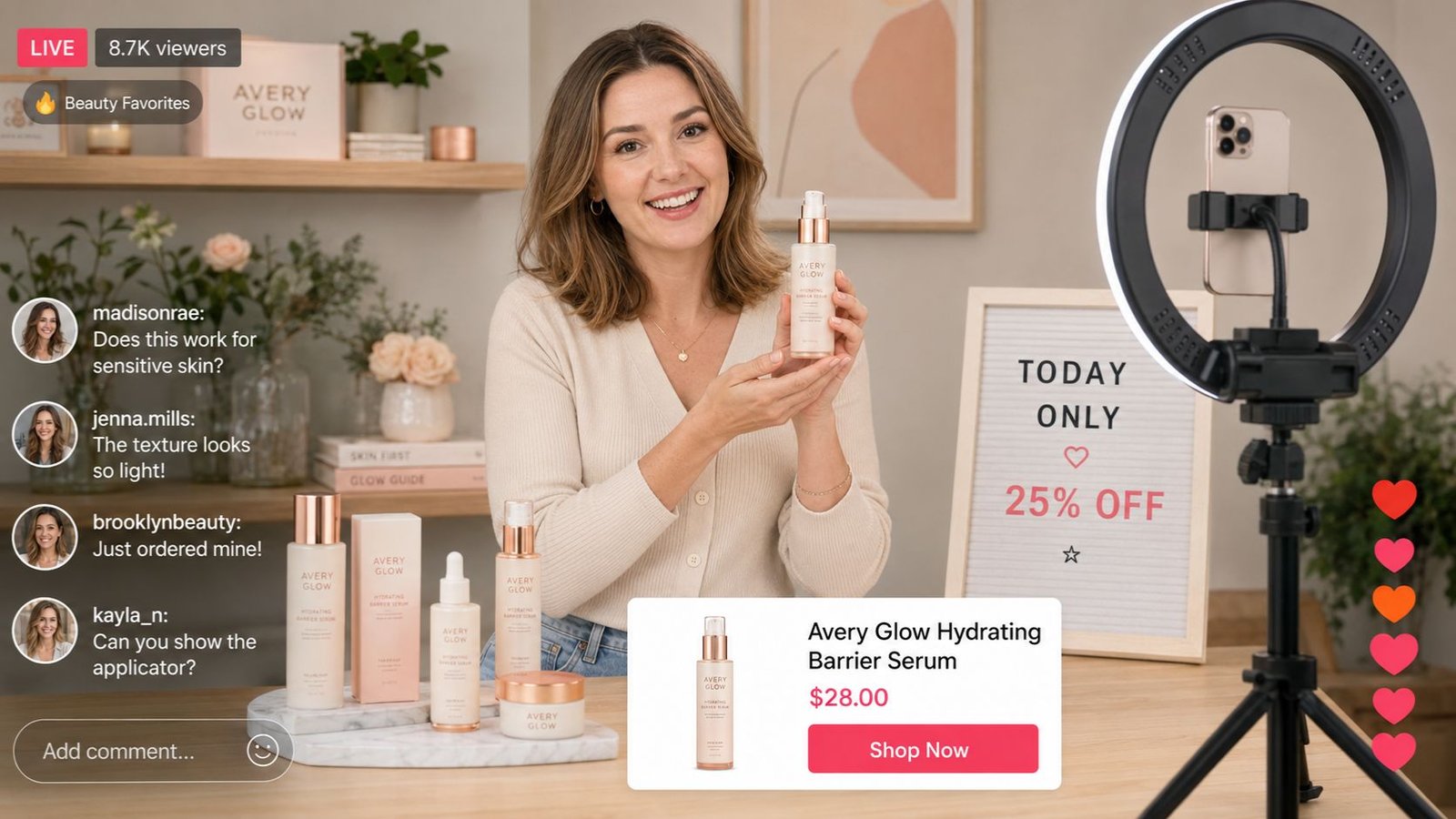
At RGC Mkt, we work directly with product-based e-commerce brands and established digital retailers to build, manage, and scale profitable social commerce storefronts. Our dedicated team manages every phase of channel execution:
- Initial TikTok Shop Setup & Integration: Complete Seller Center onboarding, multi-channel catalog synchronization, compliance management, and mobile-first product detail page optimization.
- Marketplace & Product Listing Optimization: Order-level unit economic modeling, discount floor protection, fee stack auditing, mobile gallery design, and high-AOV bundle engineering.
- TikTok Ads Management: Data-driven execution within TikTok Ads Manager, specializing in Spark Ads, Video Shopping Ads, LIVE Shopping Ads, and retargeting funnels.
- Creator & Influencer Outreach / Affiliate Network Operations: Automated creator recruitment pipelines, hybrid deal negotiations, sample logistics management, and performance-tiered affiliate program management.
- Campaign Planning, Pricing & Growth Optimization: Full-funnel campaign planning, limited-edition launch execution, promotional pricing strategy, and multi-scenario forecasting.
- Full Social Commerce Strategy & Analytics: Cross-channel halo attribution modeling, off-site performance tracking, custom analytics reporting, and long-term multi-channel growth strategy.
Whether you are seeking to audit your current TikTok Shop content strategy or looking to build a multi-channel social commerce engine, connect with the RGC Mkt strategic team to request a custom performance assessment and operational growth roadmap.