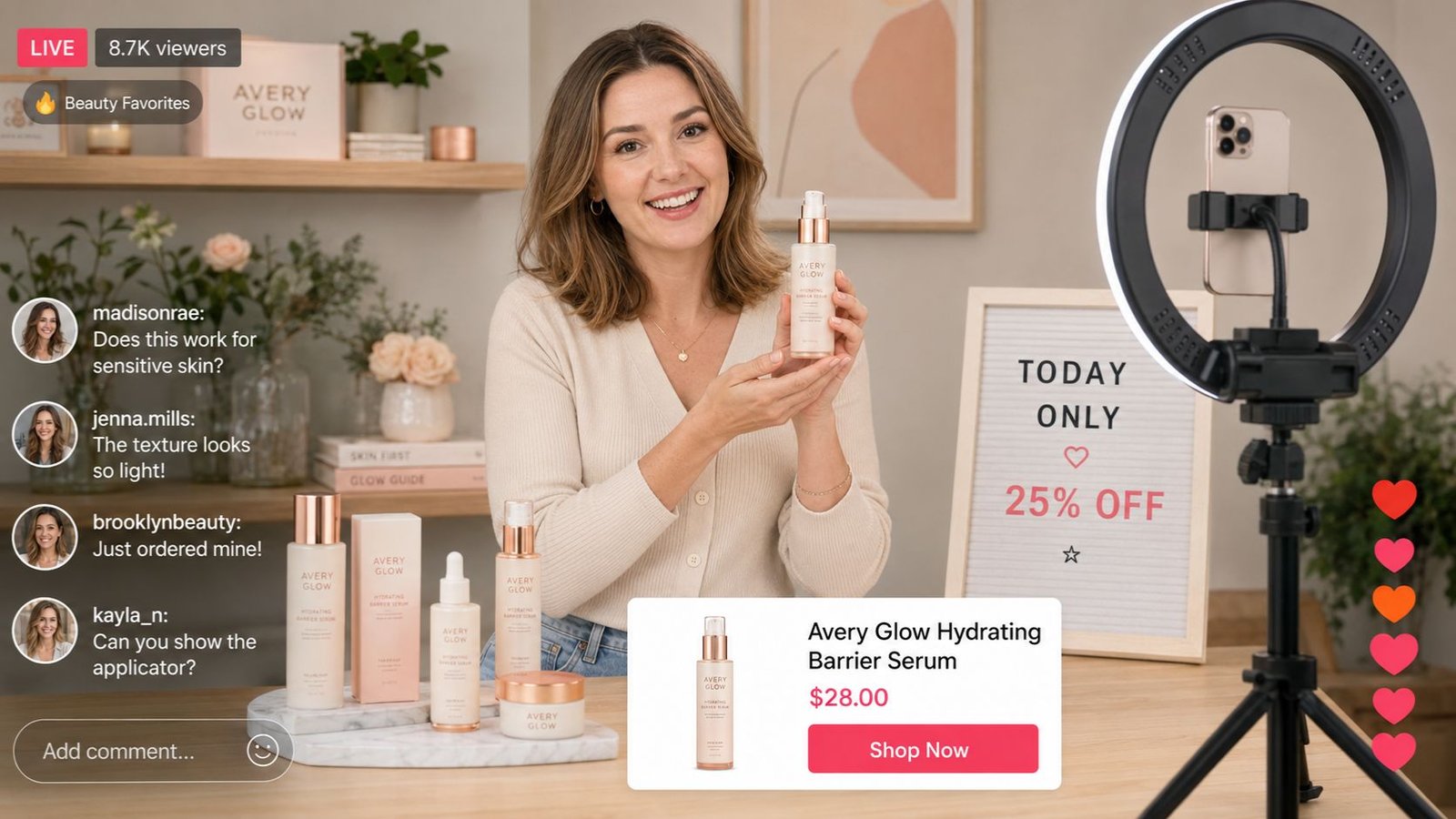


Most sellers who struggle on TikTok Shop share a common pattern: they focus on going viral before getting the fundamentals right. The result is wasted ad spend, affiliate relationships that never convert, and seller rankings that quietly erode until listings become invisible. The platform rewards operational discipline more than creative luck.
This guide covers the practical TikTok Shop tactics that move the needle: how to set up your seller account correctly, which products qualify, how payouts work, how to recruit affiliate creators, and how to scale without burning budget prematurely. Each section addresses a real operational decision you will face as a seller.
Do you need a TikTok account to sell?
This is one of the most common questions from new sellers, and the answer is straightforward: no, you do not need a personal TikTok account to start selling. TikTok Seller Center operates independently from the consumer app. You can register, list products, manage orders, and process payouts entirely within Seller Center without a public profile attached.
The minimum requirements to get started are simple: a product ready to sell, a valid bank account for payouts, and a completed Seller Center registration. Once your documentation is submitted, the standard approval timeline runs between one and three days for most categories.
The exception worth noting involves regulated product categories, such as supplements or health-related items. These may require additional verification documents, which can extend the review period by a few extra days. Submitting accurate and complete documentation from the start is the single most effective way to avoid unnecessary delays. Incomplete or inconsistent paperwork is the most common reason approvals stall.
Product eligibility, verification and international selling
TikTok Shop accepts only physical products. Digital goods, downloadable content, and service-based offerings are not permitted on the platform. If your catalog includes digital products, those will need to be distributed through a different channel. For physical sellers, the key question shifts to whether your specific category requires additional documentation before your listings go live.
Categories like supplements, certain wellness products, and other regulated goods typically require sellers to upload supporting documentation during or after registration. This does not block entry to the platform, but it does mean you should factor that extra review time into your launch planning. Trying to rush this step rarely works in your favor.
Expanding internationally adds another layer of operational setup. Selling in multiple markets on TikTok Shop requires a separate registration for each country you want to enter. There is no single global seller account that covers all regions. Sellers planning cross-border expansion should prepare market-specific documentation, confirm shipping and returns logistics per country, and verify local product compliance requirements before activating listings in a new market.
- Confirm your product category and any required documentation before registering.
- Plan for additional verification time for regulated items.
- Prepare country-specific registration files before entering new markets.
- Configure shipping zones and return policies independently for each market.
Payments, payouts and marketplace mechanics
Understanding how payouts work is essential for cash flow planning. Under standard conditions, payments are released within seven to fourteen days after an order is placed. This window accounts for delivery confirmation and the platform’s dispute period. Sellers with stronger sales history and positive performance metrics may find that their payout timing improves over time, and certain settings within Seller Center allow for some adjustment to the payout cadence.
Fulfillment speed has a direct and measurable impact on your position in the marketplace. TikTok Shop tracks seller metrics closely, and slow shipping is one of the fastest ways to damage your seller ranking. If delivery timelines consistently fall outside platform expectations, your listings lose visibility and your account faces suspension risk. This is especially relevant for sellers using overseas suppliers with long transit times.
Drop shipping is permitted on TikTok Shop, but the operational bar is high. Suppliers with typical long international shipping windows create a structural mismatch with the platform’s fulfillment expectations. If you use a drop shipping model, the practical requirement is a supplier network that can meet tight shipping SLAs, not just one that is logistically convenient. Setting an internal fulfillment target that beats the marketplace minimum is the safest way to protect your seller ranking and maintain consistent listing visibility.
Affiliate models: open collaborations and targeted invites
TikTok Shop’s affiliate system gives sellers two distinct ways to recruit creators, and choosing the right model depends on your stage and niche. The first is the open collab format, where you list your product with a visible commission rate and affiliate creators can browse available opportunities and request to promote your listing. This approach generates inbound interest and works well when the commission rate is competitive enough to attract creators without you having to find them individually.
The second model is the targeted collaboration, where you proactively identify and invite specific creators to promote your product. This is a higher-effort approach but gives you more control over who represents your brand and how your product is positioned. Sellers can review affiliate profiles, accept or deny requests, and filter by niche relevance or audience fit.
Commission rate is the central lever in both models. A rate that is too low will not attract creators with an established audience. A rate that is competitive signals to affiliates that promoting your product is worth their time. While there is no single correct percentage that works across all categories, the right approach is to test different rates and observe which tier attracts creators who actually convert. Providing clear content guidelines and product information during onboarding increases the quality of the content affiliates produce, which directly affects conversion.
- Open collab: list publicly with a competitive commission and review inbound requests.
- Targeted invite: research creators in your niche and send direct collaboration requests.
- Accept or deny affiliates based on audience fit and content track record.
- Include product briefs and content guidance in your affiliate onboarding.
Growth strategies: organic content, ads, and avoiding rookie mistakes
The most reliable sequencing for TikTok Shop growth is organic first, paid second. Before committing any meaningful ad budget, use short-form organic content to test whether your product resonates with the platform’s audience. Organic content is low-cost, fast to produce, and gives you real conversion data before you amplify with spend. If a product generates consistent engagement and sales organically, that is your signal to scale it with paid ads. If it does not convert organically, adding ad spend rarely fixes the underlying problem.
Once you have organic proof of conversion, targeted ad campaigns become an acceleration tool rather than a gamble. Scale the formats and angles that already work. Avoid the temptation to run ads simultaneously across multiple untested products early in your TikTok Shop journey. Spread budget and narrow focus are rarely compatible strategies at the start.
Several mistakes appear repeatedly among sellers who struggle to gain traction. Recognizing them early saves both time and ranking points:
- Slow shipping: using suppliers whose transit times exceed platform expectations is the most direct path to suspension and listing suppression.
- Wrong product categories: listing products under incorrect categories creates compliance issues and reduces discoverability.
- Weak affiliate incentives: setting a low commission rate and then wondering why no affiliates are promoting your listing is a common and avoidable mistake.
- Thin content pipeline: relying on one or two videos to carry all traffic leaves your shop exposed when a format stops performing.
- Skipping operational basics: packing accuracy, tracking uploads, and prompt order confirmation all feed into the seller metrics that determine your marketplace standing.
A practical starting framework: produce five to ten organic videos across different angles, monitor which ones drive actual product page visits and purchases, set a modest ad budget to amplify the top performers, and build a shipping process with strict internal SLAs. That sequence is repeatable and scales without depending on a single viral moment.
Conclusion
The path to consistent TikTok Shop sales runs through operational fundamentals, not luck. Setting up Seller Center correctly, understanding the one-to-three day approval timeline, knowing which products qualify, managing the seven-to-fourteen day payout cycle, and maintaining fast fulfillment are the foundation everything else is built on. Without those systems in place, affiliate outreach and ad spend produce unpredictable results at best.
Affiliate recruitment is most effective when you combine open collab listings with targeted invites, offer a commission rate that motivates creators, and give affiliates the product information they need to produce content that converts. Pair that with an organic-first content strategy, validate before spending on paid amplification, and protect your seller ranking by treating fulfillment speed as a non-negotiable operational standard.
RGC Mkt works with product-based businesses to implement exactly these systems: TikTok Shop setup, marketplace management, affiliate creator outreach, product listing optimization, and campaign planning across organic and paid channels. If you want a strategic review of your current TikTok Shop setup or a clear plan to implement the tactics described here, reach out to the RGC Mkt team and let’s map out the right approach for your product.