


TikTok has moved well beyond entertainment. With TikTok Shop, the platform now lets sellers list products, recruit creators, and close sales without ever sending the customer to an external website. For brands exploring social commerce, that shift in the buyer journey changes everything about how discovery and conversion work.
This guide walks through the full process: what TikTok Shop is and how the ecosystem functions, how to complete your Seller Center setup, how to navigate the platform’s key sections, and how to apply a structured three-pillar launch strategy built around product, affiliate, and content. It also covers the most common beginner mistakes so you can avoid the friction that slows most new sellers down.
What is TikTok Shop and how it works
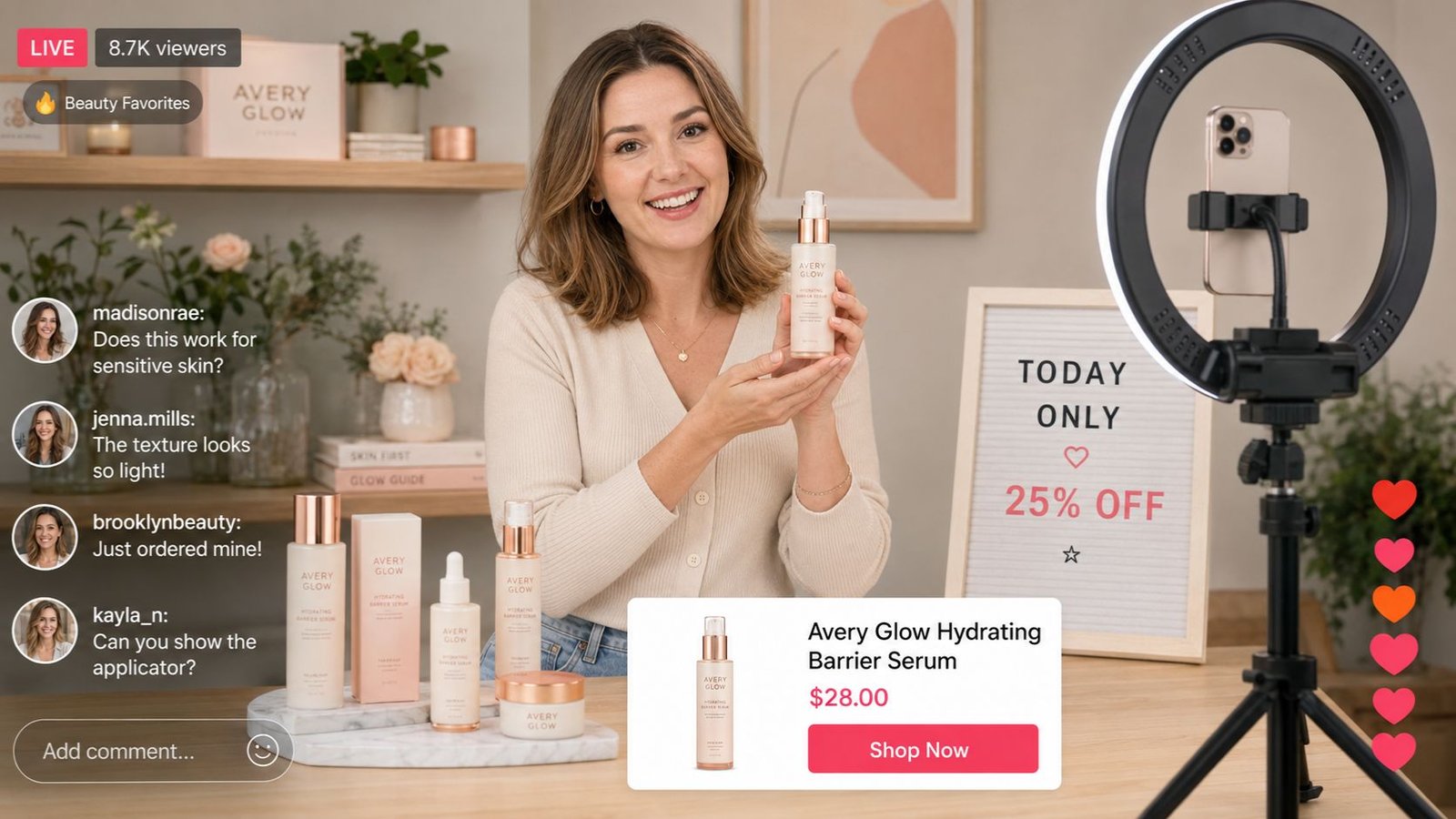
TikTok Shop is TikTok’s built-in commerce solution. It connects sellers, affiliate creators, and consumers inside a single platform experience, meaning a user can discover a product through a short-form video or live stream, tap a product link, and complete a purchase without ever leaving the app. That frictionless in-app checkout is one of the key reasons TikTok Shop can improve conversion rates compared to traditional external redirect flows.
The ecosystem has four main participants. Sellers upload their product catalog to the Seller Center. Creators apply to promote those products through the affiliate program and receive commission-based links. Consumers discover products through organic content, live streams, and the Shop tab. TikTok serves as the platform connecting all three while handling payment processing, with a reported platform fee in the range of 7 to 8 percent per sale, though this figure is subject to change and should be verified directly through the Seller Center for your region.
The standard order flow looks like this: a seller lists a product, a creator shares an affiliate link in their content, a customer purchases in-app, the seller fulfills the order, and payout is released after delivery confirmation. TikTok has also been actively investing in incentives and traffic support to attract new sellers, which creates a meaningful early-mover opportunity for brands willing to build their presence now. Those incentives and traffic levels can evolve over time, so the fundamentals of good product listings and creator relationships matter more than relying on promotional boosts.
Step-by-step TikTok Shop Seller Center setup
Before you start, gather everything you will need. Having documents ready upfront is the single most effective way to avoid verification delays. Here is a pre-launch checklist:
- Business registration certificate (for example, articles of organization or equivalent)
- EIN or tax identification number
- Owner or representative government-issued ID (driver’s license or passport)
- Business address that matches your registration documents
- Product images, descriptions, and pricing ready for your initial catalog
To start, access the TikTok Shop Seller Center for your region through the official TikTok business channels. You will be prompted to select your region and account type, either individual or business. For brands and established sellers, the business account type is typically the right choice, as it unlocks more features and higher limits. Follow the on-screen steps to enter your business details, upload the required documents, and submit for verification.
Document matching is critical. The business name on your registration certificate, the representative name on your ID, and the address on file all need to align. Mismatches are one of the most common causes of verification rejections and delays. When everything matches, the initial setup process typically takes between 15 and 30 minutes, with verification review following afterward. Requirements can vary by country or region, so always follow the prompts specific to your account location rather than relying on generic instructions.
Navigating the Seller Center: key sections and requirements
Once your account is verified, the Seller Center becomes your operational hub. Understanding its main sections early will save time and prevent configuration errors that affect orders, payments, and customer experience. The core areas you will work with include the dashboard, product management, orders, promotions, payments, and account settings.
Configure these settings first, before you publish any listings. Set up your fulfillment method, whether self-fulfilled or through a third-party logistics provider. Define your shipping timelines and return policy clearly, since disputes and negative reviews often trace back to unclear expectations at purchase. Complete your tax settings and connect your payment method so that payouts can be processed without interruption once orders start coming in.
For product listings, each entry should include an optimized title, a clear and benefit-focused description, high-quality images from multiple angles, accurate pricing, SKU details, and inventory counts. Strong product listing optimization at this stage directly supports the affiliate and content pillars that come next. A well-structured listing gives creators better material to work with and gives customers enough information to complete the purchase with confidence.
A practical first-week checklist to keep things moving:
- Publish your top 5 SKUs with complete information
- Set and confirm your fulfillment method
- Enable affiliate tracking for all active listings
- Review your return policy and make sure it is visible
- Confirm payment setup and run a test order if possible
The three-pillar launch strategy: product, affiliate and content
A structured launch on TikTok Shop works best when three elements are developed in parallel rather than sequentially. The three-pillar strategy covers product readiness, affiliate and creator partnerships, and content production. Each pillar reinforces the others, and weakness in one will limit the effectiveness of the remaining two.
Pillar 1: Product. Start with your strongest SKUs, not your full catalog. Choose products with clear value propositions, competitive price points, and high-quality visuals. Make sure inventory is stocked before you activate creator partnerships or run promotions. Launching with out-of-stock products creates a poor first impression with both creators and customers, and it signals to the algorithm that your listings are unreliable.
Pillar 2: Affiliate. Recruit creators who are relevant to your product category and whose audiences align with your target customer. Set a commission structure that gives creators meaningful incentive to promote your products actively. Share affiliate links and provide product samples or detailed information so creators can produce authentic content. Track conversions by creator to identify who is driving real results, then invest more in those relationships. Creator outreach should comply with TikTok’s platform rules and affiliate program terms.
Pillar 3: Content. Short-form video and live streams are the discovery engine for TikTok Shop. Test different hooks, formats, and product angles to learn what resonates with your audience. Encourage UGC from affiliate creators and use the best-performing videos as a signal for what to amplify with paid ads. A practical 30-day launch structure might look like this: Week 1, finalize product listings and inventory. Week 2, recruit 5 to 10 affiliate creators. Week 3, publish test content and collect initial UGC. Week 4, identify top performers and scale with paid campaigns. This is a framework to adapt, not a guarantee of specific outcomes.
Common beginner mistakes and optimization tips
Most early TikTok Shop setbacks are preventable. The most frequent mistakes new sellers make include submitting mismatched documents during registration, listing products with incomplete or low-quality information, ignoring creator relationships in favor of paid ads alone, launching promotions without sufficient inventory, and tracking nothing after going live. Each of these creates friction at a different point in the funnel and compounds quickly.
On the optimization side, treat your first 30 days as a test phase. A/B test product titles and thumbnail images to find which combinations drive higher click-through rates. Set up affiliate tracking before you launch so that creator-driven conversions are measured accurately from day one. Monitor your conversion metrics by listing and by creator, then double down on what is working rather than spreading effort evenly across all SKUs.
A few quick wins worth prioritizing early:
- Do: verify all documents match before submitting registration
- Do: recruit affiliate creators before your first major promotion
- Do: keep your best-selling SKUs in stock at all times
- Don’t: launch with out-of-stock or incomplete listings
- Don’t: rely solely on platform incentives without building solid product and content fundamentals
- Don’t: skip tracking — measure every channel from the start
Platform incentives can help in the early stages, but they are not a substitute for a repeatable process. The sellers who gain sustained traction on TikTok Shop are the ones who build strong listings, nurture creator relationships, and iterate on content based on data rather than assumptions.
Conclusion
TikTok Shop brings together content, affiliate creators, and in-app checkout into one connected commerce experience. Setting up the Seller Center correctly, with matching documents, complete product listings, and the right configurations from day one, removes the friction that delays most new sellers. From there, the three-pillar launch strategy, built around product readiness, affiliate creator partnerships, and short-form video content, gives brands a repeatable framework to drive discovery and conversions within the TikTok Shop ecosystem.
For product-based businesses and ecommerce brands entering social commerce, a structured launch matters because early traction on TikTok Shop is partly algorithmic. Strong engagement signals from affiliate creators and UGC in the first weeks can accelerate visibility in ways that are harder to achieve after a slow start. Working with a TikTok Shop agency experienced in product listing optimization, creator and influencer outreach, and paid amplification can compress that learning curve significantly.
RGC Mkt works with brands across the TikTok Shop and social commerce space, providing services that include Initial TikTok Shop Setup, TikTok Ads Management, Creator and Influencer Outreach, and TikTok Shop Growth Strategy. If you are ready to launch or looking to scale what you already have, reach out to the RGC Mkt team to get started.