


Most TikTok Shop videos never gain traction, and the reason is rarely the product. It comes down to the first few seconds, how quickly the benefit lands, and whether the viewer has a clear reason to act. Fix those three things and the algorithm has something to work with.
TikTok is built to surface content that holds attention and drives action. For Shop sellers, that means the platform actively rewards videos that convert, because every completed purchase puts commission in TikTok’s pocket too. Understanding that incentive is the starting point for a smarter TikTok Shop video strategy.
This guide breaks down the five factors that separate converting videos from forgotten ones: a triple-layer hook, fast product clarity, a conversion-focused CTA, searchability, and pre-post AI validation before you hit publish.
Why the first three seconds decide reach: building a triple-layer hook
TikTok decides within the first three seconds whether to push a video further or let it fade. If viewers scroll past quickly, the algorithm reads that as a signal to slow distribution. If they stay, watch time climbs and reach expands. That window is too short for a slow intro or a logo reveal.
The most effective opening combines three hooks at once, each reinforcing the others:
- Visual hook: a close-up shot, unexpected motion or striking product action that stops the scroll
- Text overlay hook: a short, curiosity-driven phrase placed where the eye naturally lands, readable on a small screen
- Audio hook: a spoken line that poses a problem, makes a bold claim or creates immediate curiosity
A practical opening frame might look like this: the camera zooms into a product in action (visual), an overlay reads “Why is everyone buying this?” (text), and the voiceover opens with “If you’ve been dealing with this problem, you need to see this” (audio). Each layer does a different job, but they all point the viewer in the same direction.
One common mistake is overloading the opening with too much movement, too much text, or audio that contradicts the visual. Keep each element clean and purposeful. The goal is curiosity, not confusion. Test different combinations, because small adjustments to any one of the three layers can noticeably shift retention.
Product clarity and fast demos: show the benefit within 7 seconds
Once the hook earns the viewer’s attention, the product needs to deliver on that promise fast. Viewers won’t wait through a slow build to find out what the video is actually about. The 7-second rule is a practical target: by the seventh second, the viewer should understand what the product is and what problem it solves.
The most reliable structure for a compact demo follows three beats: show the problem, apply the product, reveal the result. This keeps the narrative tight and removes anything that doesn’t serve clarity. A skincare product, for example, might open on a visible skin concern, cut to the product being applied smoothly, then land on a clean before-and-after frame, all within a few seconds.
Framing and lighting matter more than production budget. A steady shot with good light communicates professionalism. Shaky footage or poor contrast makes the product harder to read and erodes trust. Keep the product centered in the frame during key moments and use on-screen captions to reinforce critical claims, especially for anything that might not be immediately visible.
- Avoid long, slow reveals that delay the benefit
- Anticipate one quick objection and address it visually in the demo
- Use captions to echo your voiceover claims, not just to repeat them
The demo is where many product videos lose people who were genuinely interested. A viewer who understood the hook but couldn’t follow the demo will scroll away and likely never return. Clarity at this stage is what converts curiosity into purchase intent.
Conversion-focused CTAs: short, clear, urgent and trackable
TikTok earns roughly 2 to 5 percent commission on TikTok Shop sales. That means the platform has a direct financial reason to amplify videos that drive purchases, not just views. A video with strong watch time but no conversions will eventually stall. A video that converts consistently keeps getting pushed.
A high-converting CTA has three qualities: it names the action explicitly, it creates a reason to act now, and it removes friction from the path to purchase. Vague phrases like “check it out” underperform because they give the viewer no clear next step. Specific language works better.
- “Limited stock, tap the link now”
- “Selling fast, grab yours before it’s gone”
- “Link in bio, ships today”
Place the CTA in at least two locations: in the voiceover as the video closes and as a visible text overlay in the final seconds. Make the link or action obvious. Every extra step between the CTA and the cart is a place where the viewer can drop off. Keep urgency genuine. False scarcity erodes trust and can hurt long-term account performance.
Track which CTA formats drive clicks and test variations across videos. What works for one product category may not translate directly to another. Over time, patterns emerge that make CTA decisions faster and more informed.
Make videos searchable: TikTok categories, search terms and long-term traffic
TikTok has evolved beyond a pure discovery feed. A growing share of users actively search for products, ideas and solutions directly within the app, using it much like a search engine. The platform also assigns categories and search terms to videos automatically, which means your content can surface in relevant searches long after the initial post date.
This creates a second traffic channel beyond virality. A video that ranks for a specific search query can keep generating views and product clicks over weeks or months. That kind of compounding discoverability is especially valuable for TikTok Shop sellers managing product listing optimization across a catalog.
The way to influence which searches your video appears in is to align the spoken audio, on-screen text and captions around the same search intent. TikTok’s system reads all three. If all three reinforce the same phrase, the platform has a clearer signal about what the video is about and where to surface it.
- Use natural search phrases in your voiceover, not keyword-stuffed sentences
- Include a relevant phrase in the text overlay that mirrors how someone might search for the product
- Write captions that describe the benefit, not just the product name
- Choose hashtags that reflect the category, not just trending topics
A video about a summer cooling product, for example, could include spoken phrases like “stay cool this summer” and overlay text referencing the same idea. That alignment helps TikTok connect the video to users searching for that exact problem, generating discovery traffic that sits on top of whatever the algorithm pushes organically.
Pre-post AI validation: how to score and fix videos before publishing
Most creators post without a structured quality check. They edit, they upload, and they wait to see what happens. That approach treats every video as a test with no feedback until after the fact. A pre-post AI validation step changes that by surfacing weaknesses before the video goes live.
AI scoring tools trained on large volumes of TikTok Shop content can evaluate a video across hook strength, demo clarity and CTA effectiveness, then return a numerical score. A useful benchmark: aim for 80 or above before posting. Scores of 90 or higher tend to correlate with strong performance, though no score eliminates variability. Use the score as guidance, not as a guarantee.
The more valuable output is the specific feedback. If the tool flags a weak hook, the fix might be adding a readable text overlay to the opening frame. If the demo scores low on clarity, the edit might involve tightening the problem-to-solution sequence or improving the framing. If the CTA is flagged, it likely needs to be more explicit or better positioned visually.
A simple pre-post checklist to run alongside AI feedback:
- Does the opening have all three hook layers: visual, text and audio?
- Is the product benefit visible within the first 7 seconds?
- Is the CTA specific, urgent and easy to act on?
- Are spoken phrases, captions and overlays aligned around the same search intent?
- Does the video score 80 or above in the AI tool?
Running this check before every post reduces guesswork and builds a feedback loop. Over time, the pattern of what scores well becomes internalized, and video quality improves systematically rather than by accident.
Conclusion
A strong TikTok Shop video strategy comes down to three connected decisions: a hook that stops the scroll in the first three seconds, a product demo that delivers the benefit before the viewer has a reason to leave, and a CTA that makes the next action obvious and immediate. These are not separate tactics. They work as a sequence, and a gap in any one of them weakens the whole.
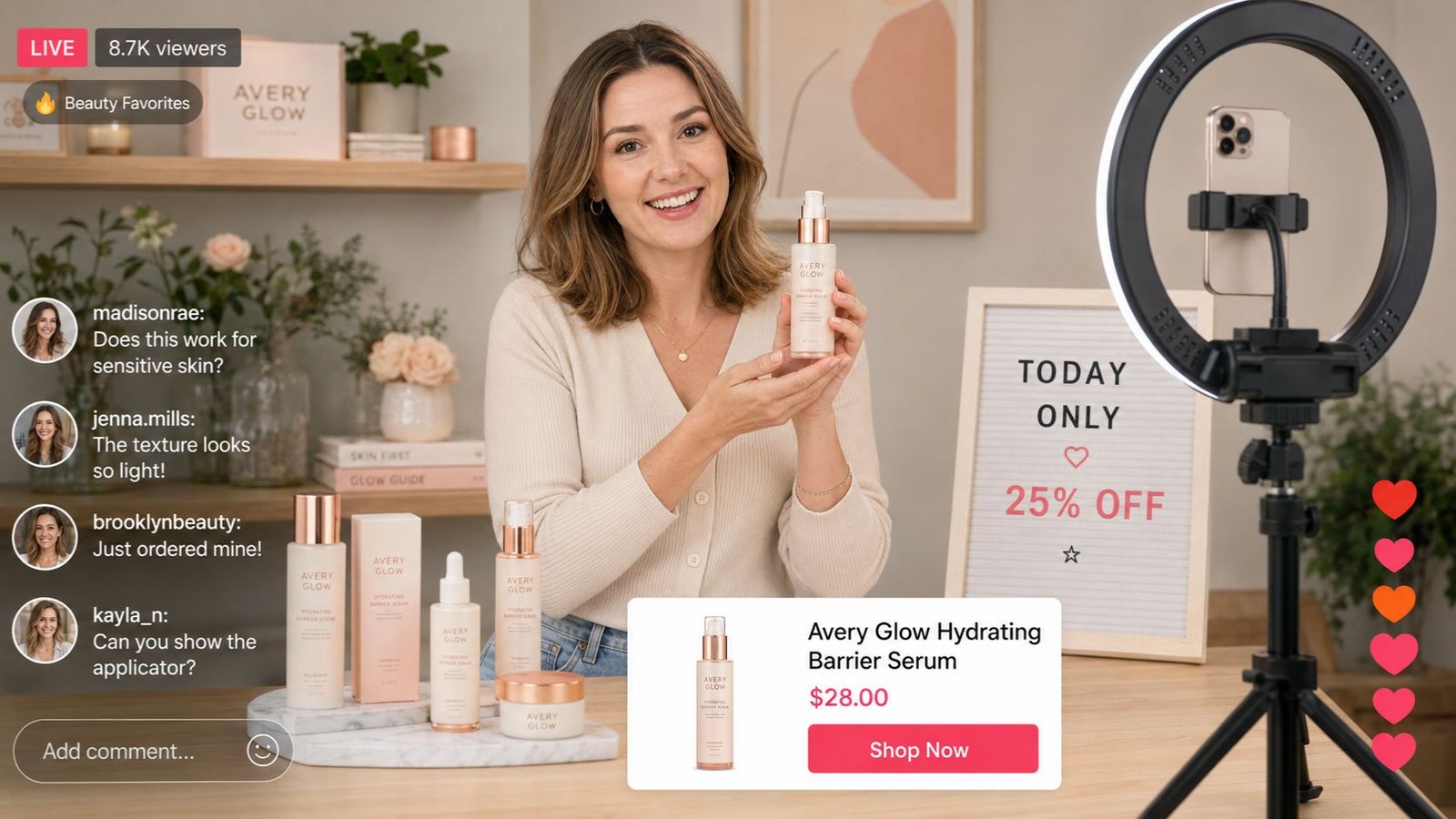
Searchability adds a fourth dimension that many sellers underuse. Aligning audio, overlays and captions around consistent search terms transforms single videos into durable traffic assets, supporting both social commerce discoverability and product listing optimization over time. Campaign planning that accounts for search intent from the start will outperform content built only for the feed.
RGC Mkt works with brands and sellers navigating TikTok Shop growth, from TikTok Ads management and TikTok Shop marketplace management to creator and influencer outreach. If you’re looking to apply these practices at scale and build a content system that converts consistently, reach out to the team for a focused conversation about your TikTok Shop setup.