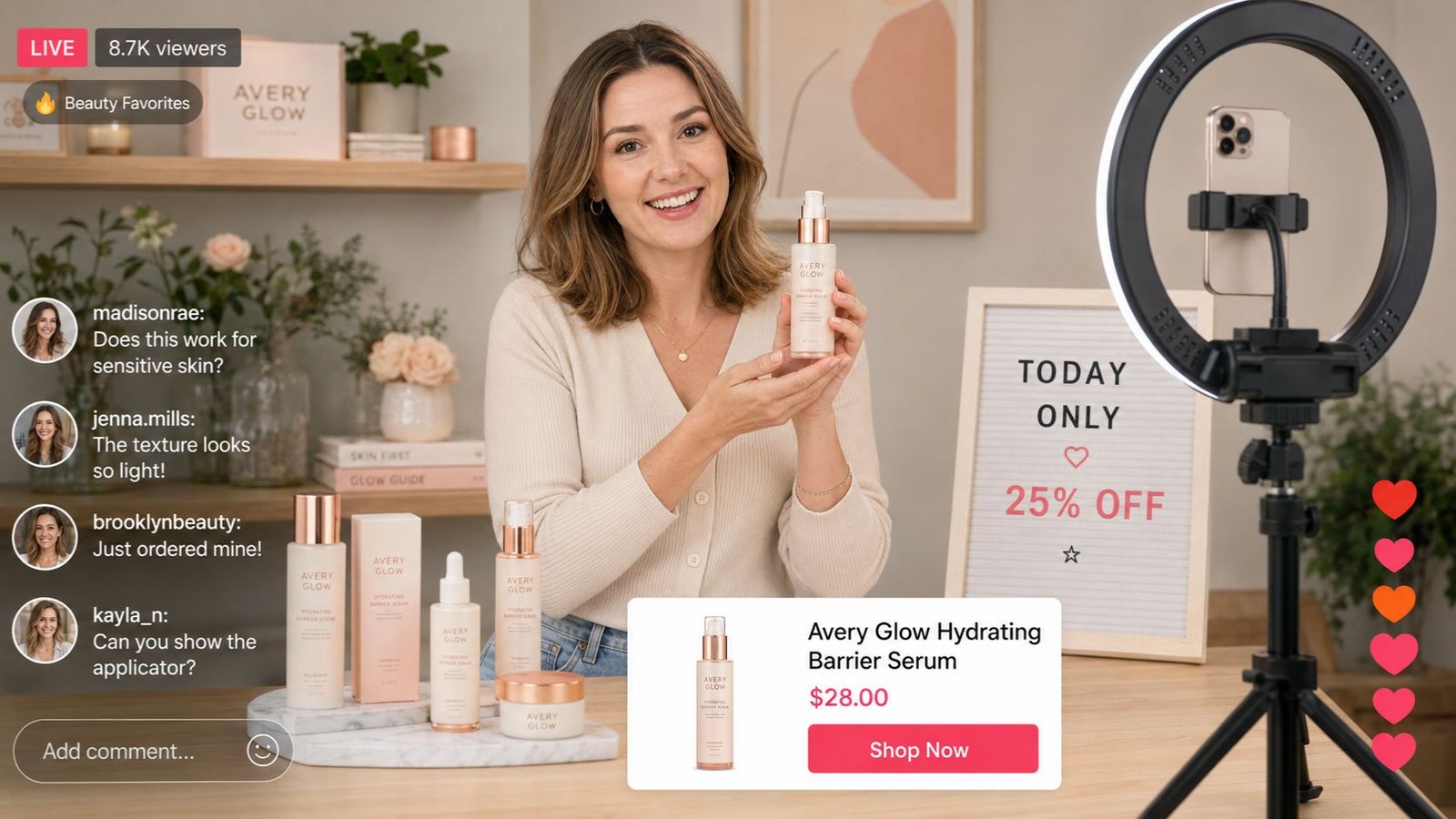

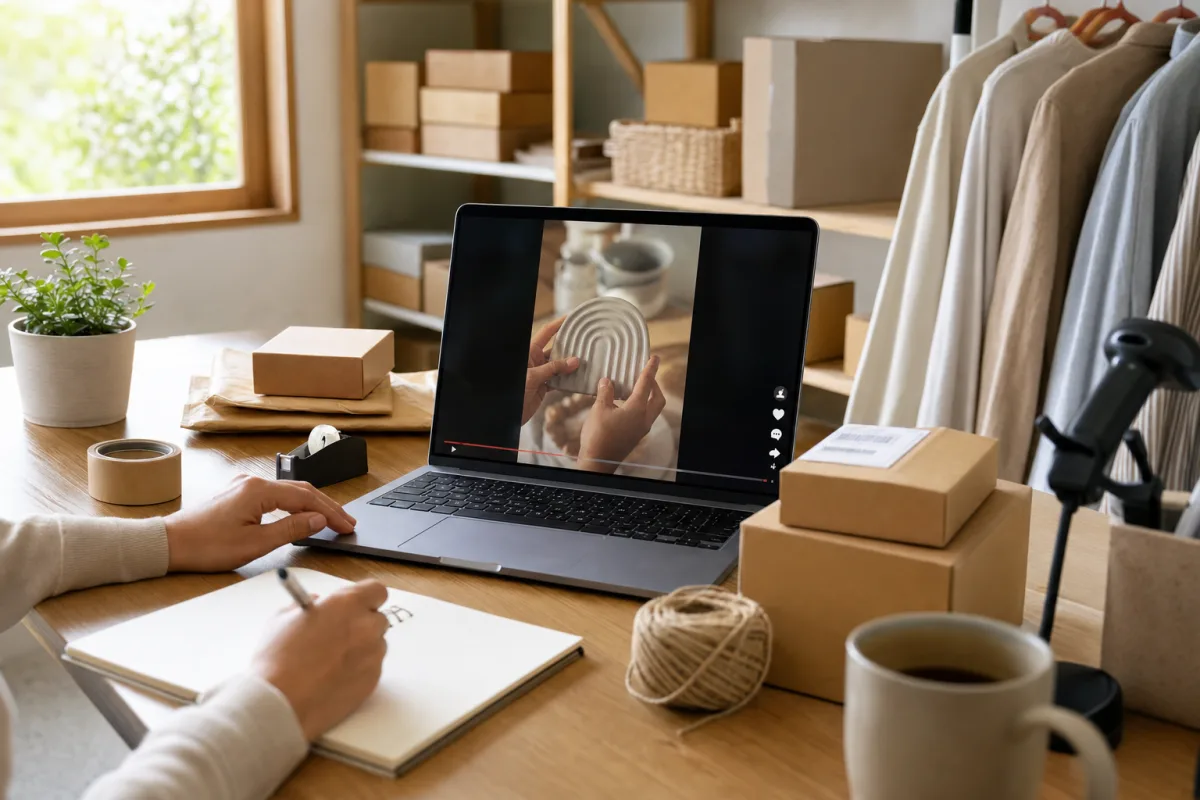
Launching a TikTok Shop is an exciting milestone, but the weeks immediately after going live are where many sellers make costly missteps. The platform offers genuine opportunities for rapid product discovery, yet early traction rarely happens on its own. Without a clear plan covering paid ads, creative quality, influencer outreach and pricing, a new shop can stall before it ever gains real momentum.
The first 90 days function as a proving ground. Decisions made during this window set the trajectory for growth, profitability and operational stability. This guide breaks down each priority in order, so sellers can move through the early phase with purpose rather than guesswork.
The 90-Day Honeymoon: what to expect
New TikTok Shop accounts benefit from a short window of platform support and algorithmic visibility. Think of it as a honeymoon period: the platform has an incentive to show your products to users, but that extra attention fades quickly if it is not backed by real sales signals. Organic subscribers and followers alone rarely generate consistent orders at this stage, so relying on them as a primary growth channel is a common and expensive mistake.
To make the most of this window, track a focused set of KPIs rather than chasing vanity metrics. In days 0 to 30, your goal is to validate product-market fit through small ad tests and monitor your conversion rate and CPA. From days 31 to 60, use the data from those early tests to sharpen your creative strategy and refine your audience targeting. By days 61 to 90, you should have enough performance data to begin scaling spend safely while managing ROAS and order volume in parallel.
A practical checklist for the first 90 days looks like this:
- Launch paid ads early, even with a modest test budget
- Build a library of ad creatives and test variations continuously
- Start influencer sampling outreach within the first few weeks
- Confirm your pricing covers ad costs and leaves a healthy margin
- Audit your fulfillment workflow before scaling order volume
Mapping your activity to these three phases keeps you focused on what actually moves the business forward instead of spending time on tasks that feel productive but have little commercial impact.
Why paid ads are essential in the early phase
TikTok’s organic algorithm rewards engagement and watch time, but a brand new shop has no history and no audience. Waiting for organic reach to take hold means lost time during the most receptive window the platform gives you. Paid advertising closes that gap by putting your product in front of targeted users immediately, generating the orders and engagement signals that begin to build your shop’s reputation on the platform.
Budget framing matters here. The goal in the early phase is not to spend big; it is to spend smart. Start with a test budget designed to identify which creatives and audiences convert. Run a creative for 24 to 72 hours, review performance against your CPA target and ROAS expectations, then make a data-backed decision on whether to scale or replace it. Ad approvals on TikTok can sometimes move quickly, so having creatives ready to deploy is a gating factor that sellers should plan for in advance.
One anonymized example worth noting: a seller using a focused paid campaign with approximately £2,000 in ad spend generated roughly £18,000 in gross orders. While results will vary based on product, creative quality and audience fit, the example illustrates that well-managed paid traffic can deliver a strong return relative to budget when the fundamentals are in place. No specific outcome is guaranteed, and every campaign should be evaluated against its own targets.
The key principle is that ad spend should always be anchored to a defined CPA ceiling and a minimum acceptable ROAS. Spending without those guardrails makes it impossible to know whether a campaign is profitable or simply generating revenue at a loss.
Designing high-performing ad creatives and controlling CPA
Creative quality is the single biggest lever available to a TikTok Shop seller. The platform is built around short-form video, and an ad that fails to stop the scroll in the first few seconds will deliver poor results regardless of how well the campaign is structured. A strong creative typically has three components: a compelling hook in the opening three seconds, a clear and engaging product demonstration, and a direct call to action that tells the viewer exactly what to do next.
Testing should be systematic, not random. Launch multiple creative variants simultaneously, isolate variables (such as different hooks or product angles), and compare them on conversion rate and CPA. Once a winning variant emerges, it becomes the control and new challengers are tested against it. This test-and-learn cycle is how CPA improves over time, because each iteration removes a weak element and replaces it with something stronger.
Weak creatives do more than underperform. They actively inflate your CPA by consuming budget without delivering proportional conversions. Scaling a poor creative early is one of the most common ways new sellers burn through their initial budget. The rule of thumb is to never increase daily spend on a creative before it has demonstrated a consistent CPA at or below your target over a statistically meaningful sample of impressions.
Creative fatigue is also a real risk. Even a strong video will eventually see declining performance as its audience sees it repeatedly. Building a creative refresh cadence into your workflow, planning new variants every few weeks, keeps your CPA stable during scaling and prevents a sudden drop in ROAS from catching you off guard.
Influencer sampling, commissions and fulfillment workflow
Creator partnerships are a practical way to generate social proof and incremental sales during the first 90 days. The general approach involves selecting a group of relevant creators, shipping product samples to them, briefing them on key talking points and tracking their content performance against your baseline ad results. Starting with a cohort of five to ten creators allows you to test the tactic without over-committing on product and logistics costs.
Commission structures for TikTok Shop creators typically fall in the range of 10 to 15 percent of the sale value. That cost needs to be factored into your margin planning from the start. One strategic advantage of building a strong paid ad operation alongside creator outreach is that ad-driven sales reduce your overall dependency on commission-based orders. When ads are converting efficiently, the blended cost of sales across both channels becomes more predictable and easier to manage.
Fulfillment workflow is often overlooked until it becomes a problem. Before sampling at any meaningful scale, confirm that your courier process is reliable, tracking is in place and orders can be shipped promptly. Creator content drives traffic in concentrated bursts, and if fulfillment is slow or inconsistent at that moment, the result is negative reviews and a damaged shop reputation during the exact window you need positive signals most.
Measure the incremental impact of creator activity separately from your paid campaigns. If you cannot distinguish which orders came from creator content versus ads, you cannot make informed decisions about whether the commission cost is justified or whether to expand the sampling program.
Pricing, probation limits and scaling daily spend
Pricing on TikTok Shop is not just a marketing decision; it is a financial engineering problem. Before setting a retail price, calculate your break-even CPA: the maximum you can spend to acquire a customer while still covering product cost, platform fees, shipping and a target profit margin. Every ad bid and every commission paid to a creator needs to sit within that ceiling. A price that looks competitive but does not absorb realistic ad costs will produce a shop that generates revenue while losing money on every order.
New seller accounts on TikTok Shop are sometimes subject to probationary limits that cap the number of orders you can fulfill within a given period. A common example is an initial cap of around 100 orders. This constraint directly affects your ability to scale ad spend, because there is no value in driving more traffic than your account can actually process. Know your current limits, plan the operational steps required to have those limits lifted, and time your spend increases to align with expanded capacity.
Scaling daily ad spend should be gradual and evidence-based. A common mistake is to increase budget sharply after one strong day of performance, only to find that CPA worsens as the algorithm seeks a broader, less qualified audience. Instead, increase daily spend in increments, monitor CPA stability over 48 to 72 hours after each increase, and only continue scaling if performance holds within your target range.
- Confirm your margin supports your target CPA before launching ads
- Identify and work to remove any probationary order limits early
- Increase daily spend incrementally, not in large jumps
- Pause scaling if CPA rises above your defined ceiling
- Ensure fulfillment capacity matches the order volume you are targeting
Conclusion
The first 90 days on TikTok Shop reward sellers who treat the period as a structured test-and-learn phase rather than a passive launch. Paid ads drive the early traffic and sales signals the platform needs to recognize your shop as active and converting. Creative quality determines your CPA, which in turn determines whether growth is profitable or simply costly. Influencer sampling adds social proof and reach, but it works best when commission costs are weighed against ad-driven alternatives and fulfillment is reliable. Pricing must be built around a realistic break-even CPA from day one, and scaling spend should only happen once probation limits are understood and performance data is consistent.
These priorities form the operational backbone of successful TikTok Shop management in the social commerce space. Services like Initial TikTok Shop Setup, TikTok Ads Management, Creator and Influencer Outreach, Product and Pricing Management, and Campaign Optimization each address a specific layer of that backbone, making it easier for sellers to execute without gaps in strategy or execution.
If you are preparing to launch or looking to improve results on an existing shop, the RGC Mkt team works directly with brands on TikTok Shop strategy and growth across all of these areas. Reach out to the RGC Mkt team to discuss your current situation and get practical support for the road ahead.