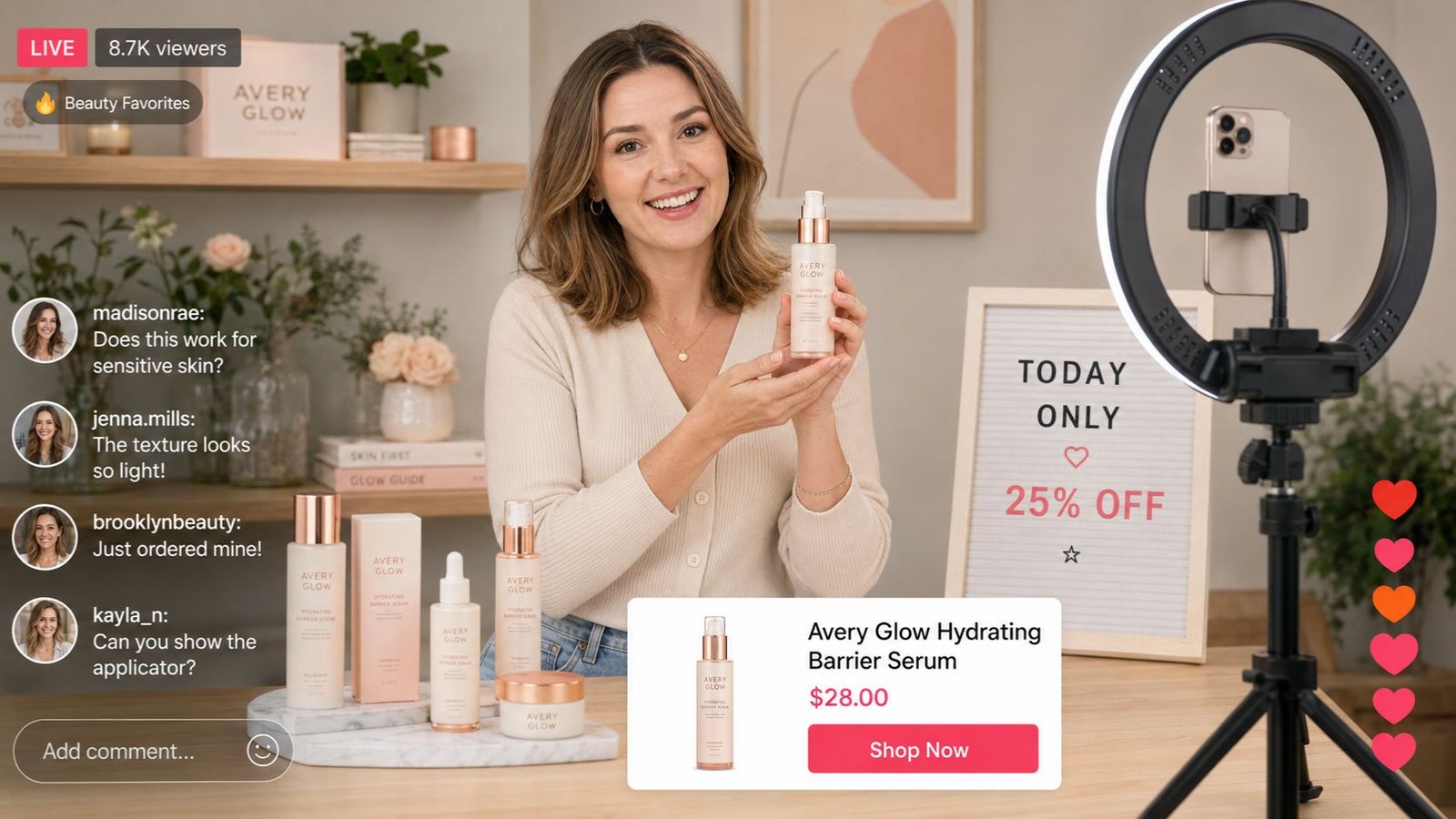


If you run a direct-to-consumer brand, TikTok is no longer optional. The platform reaches hundreds of millions of active users, and its commercial tools have evolved well beyond organic posting. Today, brands face a genuine strategic decision: invest in TikTok Ads to push products in front of new audiences, or build a TikTok Shop to convert followers into buyers without ever leaving the app.
The answer depends on where your brand stands right now. A store launching to a cold market has different needs than one sitting on a loyal, engaged following. This guide walks through both options with clarity, covering setup requirements, creative best practices, measurement, and the scenarios where running both together makes the most sense.
How TikTok Ads Drive Product Discovery
TikTok Ads place your content directly into the For You Page feed and stories, reaching users who have never encountered your brand before. That placement is the core strength of paid reach on TikTok: it is algorithm-assisted but paid, meaning you are not waiting for organic momentum to build. For a newly launched product or a brand entering a new market, that visibility matters immediately.
Before launching, define your campaign objective. TikTok’s ad platform organizes campaigns around goals including brand awareness, sales and lead generation. Choosing the wrong objective at the start misaligns the platform’s optimization engine with your actual business goal. A product that requires a short sales conversation benefits from a lead generation objective, while an impulse-buy item fits better under a sales or conversion objective.
Installing the TikTok pixel on your e-commerce platform before spending meaningful budget is non-negotiable. Whether your store runs on Shopify, Wix or another platform, the pixel tracks site visits, add-to-cart events and purchases. Without it, the platform optimizes in the dark and you lose the data needed to measure return on ad spend accurately.
Paid ads outperform organic efforts in one specific scenario: when you need to reach a cold audience at scale and speed. Organic content can still support discovery, but its reach is unpredictable. Ads give you control over who sees your product, how often and in what context, which makes them the right primary investment when your goal is growth beyond your existing following.
When TikTok Shop Is the Better Choice
TikTok Shop enables an in-app checkout experience that removes the steps between product discovery and purchase. Instead of redirecting a user to an external website, the transaction happens inside TikTok. That reduction in friction can meaningfully improve conversion rates for brands whose audiences are already engaged and ready to buy.
The key prerequisite is audience volume. TikTok Shop performs best when a brand or creator already has an active following. An engaged community of viewers who trust the content creates a natural buyer pool. Without that existing relationship, Shop listings receive limited visibility and the checkout advantage becomes irrelevant because not enough people are seeing the products in the first place.
Product-based DTC brands with strong content presence are the clearest fit. A brand that regularly posts demonstration videos, lifestyle content or creator collaborations can tag products directly and let interested viewers complete a purchase in seconds. A creator-driven storefront that links product mentions to in-app shop listings works in the same way, reducing the gap between recommendation and transaction.
It is worth noting that TikTok Shop has setup requirements, product listing standards and regional availability considerations that vary. Before committing to it as your primary channel, verify current platform policies and eligibility for your business category and location. Shop is a powerful tool, but it rewards brands that come in prepared.
Key Setup Steps and Technical Requirements
Regardless of which path you choose, setup quality determines how well the platform can support your goals. Rushing through account creation or skipping technical integrations creates problems that compound as you scale.
For TikTok Ads, the foundational steps include:
- Creating a business account and accessing the campaign dashboard.
- Installing the TikTok pixel on your e-commerce platform and verifying that key events such as page views, add-to-cart and purchase are firing correctly.
- Establishing clear naming conventions for campaigns, ad groups and creatives to keep reporting readable as accounts grow.
- Running a small test budget to confirm tracking works before increasing spend.
For TikTok Shop, the setup priorities shift toward the product side:
- Creating optimized product listings with clear titles, high-quality images and accurate inventory details.
- Connecting your payment and checkout flows and confirming the purchase process works end-to-end.
- Reviewing product listing optimization standards, including descriptions and category tagging, to improve in-app discoverability.
- Testing the buyer experience from product page to confirmation before driving any traffic.
Pixel verification deserves extra attention. Many brands install the pixel correctly but never confirm the events are passing data accurately. Before scaling any campaign, run test transactions and check that your dashboard reflects the expected events. Skipping this step makes optimization unreliable and attribution reports misleading.
Creative and Targeting Best Practices
Creative quality is frequently the variable that separates campaigns that scale from those that stall. Even with precise targeting and correct setup, a weak opening hook will cause viewers to scroll past before your message lands. On TikTok, the first two to three seconds of a video determine whether the rest of the content gets watched. Test multiple opening approaches, including direct product demonstrations, questions that create curiosity and short social proof statements, to find what holds attention for your specific audience.
A/B testing should be continuous rather than a one-time exercise. Run variations on hooks, captions, calls to action and video formats simultaneously. When a creative shows strong performance, study what it does differently and build the next test around those elements. Relying on a single strong creative for too long leads to audience fatigue and diminishing returns.
On the targeting side, TikTok offers interest-based, demographic and geographic audience options alongside lookalike audiences and retargeting. Lookalike audiences built from your existing customer list allow the platform to find new users with similar profiles. Retargeting users who watched a significant portion of a product video, say 50 percent or more, with a conversion-focused follow-up ad is a straightforward sequential strategy that uses warm signals efficiently.
Geography matters more than brands often expect. Promoting a product with clear seasonal or regional relevance requires targeting the locations where demand actually exists. Sending a seasonal product ad to an audience in a region where the product has low contextual relevance wastes budget and skews performance data. Align your targeting with where your product naturally fits before expanding broader.
Budgeting, Measurement and When to Combine Both
Budget allocation between discovery and conversion depends on where you are in your growth cycle. Early-stage brands should weight their spend toward discovery through prospecting campaigns while keeping a smaller portion available for retargeting and shop-driving content. As your audience grows and conversion data accumulates, you can shift allocation toward the tactics that show the strongest return.
The metrics worth monitoring closely include impressions, click-through rate, video view rate, add-to-cart events, conversion rate and ROAS. Each metric tells a different part of the story. A high view rate with a low CTR signals a creative that holds attention but fails to prompt action. A strong CTR with poor conversion rate often points to a mismatch between the ad message and the landing experience. Reading these signals together guides better optimization decisions than focusing on any single number.
Using TikTok Ads and TikTok Shop together creates a full-funnel approach. Prospecting ads introduce the product to cold audiences. Retargeting ads re-engage users who showed interest. Shop listings provide the frictionless checkout endpoint for users who are ready to buy. This sequential structure, where paid reach feeds social commerce conversion, tends to outperform either channel used in isolation once a brand has enough creative assets and tracking data to manage both.
The right time to scale is when three conditions are met: creatives are validated, conversion rates are stable and tracking is confirmed accurate. Increasing budget before those conditions exist amplifies inconsistency rather than results. Start with a test budget that is large enough to gather meaningful data, then grow from a foundation of evidence.
Conclusion
The choice between TikTok Ads and TikTok Shop is not a permanent one. It is a decision based on your current situation. TikTok Ads are the right starting point when your primary need is discovery, when you are reaching cold audiences at scale, or when you need paid reach to compensate for limited organic visibility. TikTok Shop becomes the stronger choice when you already have an engaged audience and want to streamline the path to purchase through in-app checkout and social commerce tools.
As your brand matures on the platform, combining both channels into a connected funnel, using ads to build awareness and shop optimization to capture conversion, is often the most effective long-term strategy. Key investments along the way include TikTok Shop setup, product listing optimization, creator partnerships and ongoing campaign optimization to keep performance improving as the platform evolves.
RGC Mkt specializes in TikTok Shop and social commerce for direct-to-consumer brands, covering services that range from Initial TikTok Shop Setup and TikTok Ads Management to TikTok Shop Marketplace Management, Creator and Influencer Outreach, Product Listing Optimization and Campaign Planning. If you are ready to evaluate which approach fits your brand or want to build a combined strategy, reach out to the RGC Mkt team for a consultation and next steps.